


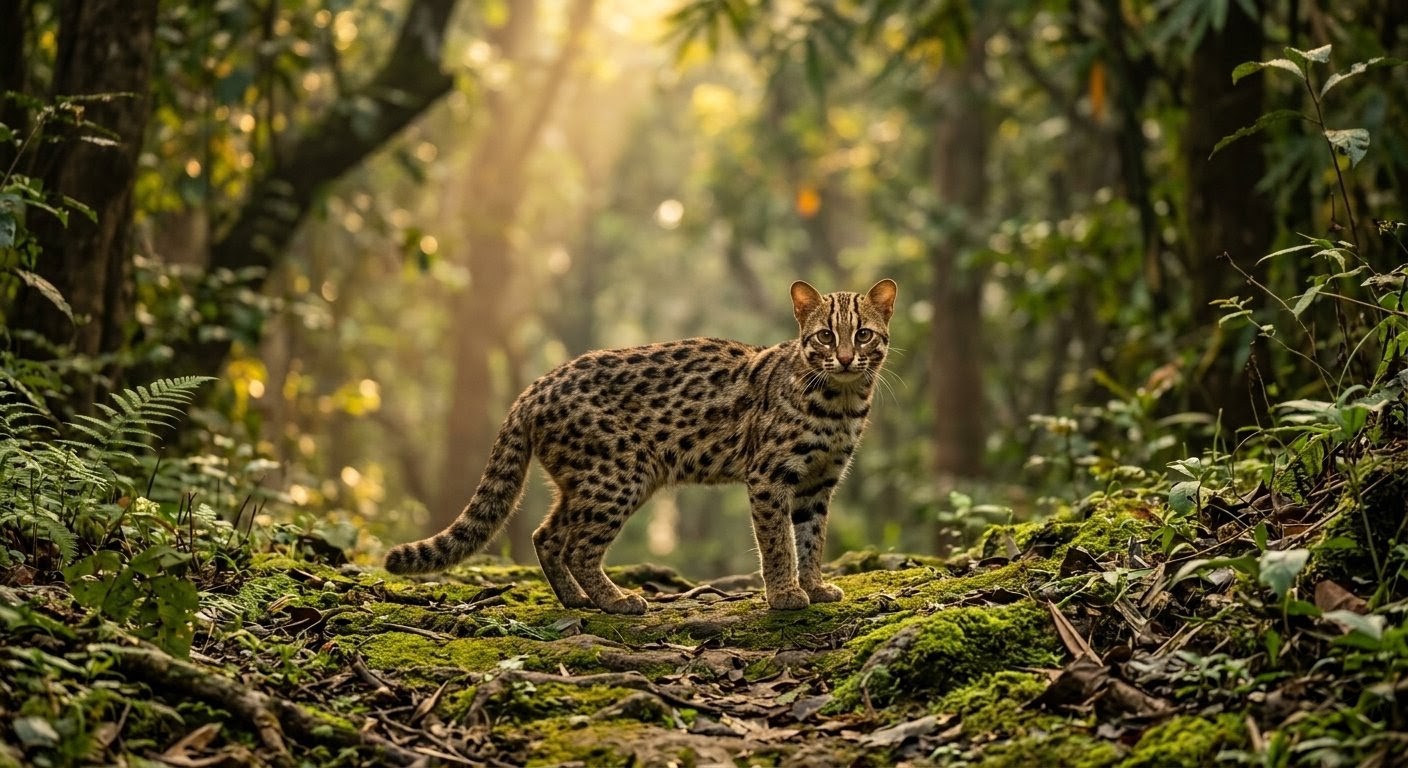
Did you know that Odisha is home to some of India’s most secretive wild cats?
While tigers and leopards often dominate wildlife conversations, a lesser-known group of feline predators quietly roams Odisha’s forests, wetlands, grasslands, and mangrove ecosystems. Most people may never spot them in the wild, yet these elusive hunters play a crucial role in maintaining ecological balance.
From the wetland-loving Fishing Cat to the tiny Rusty-spotted Cat, Odisha supports a remarkable diversity of small wild cats. Their presence reflects the health of the state’s ecosystems and highlights the importance of conserving habitats beyond those traditionally associated with large carnivores.
In this article, we explore the small cats in Odisha, where they are found, the challenges they face, and why protecting them matters.
Table of Contents
Why Odisha Is Important for Small Cat Conservation
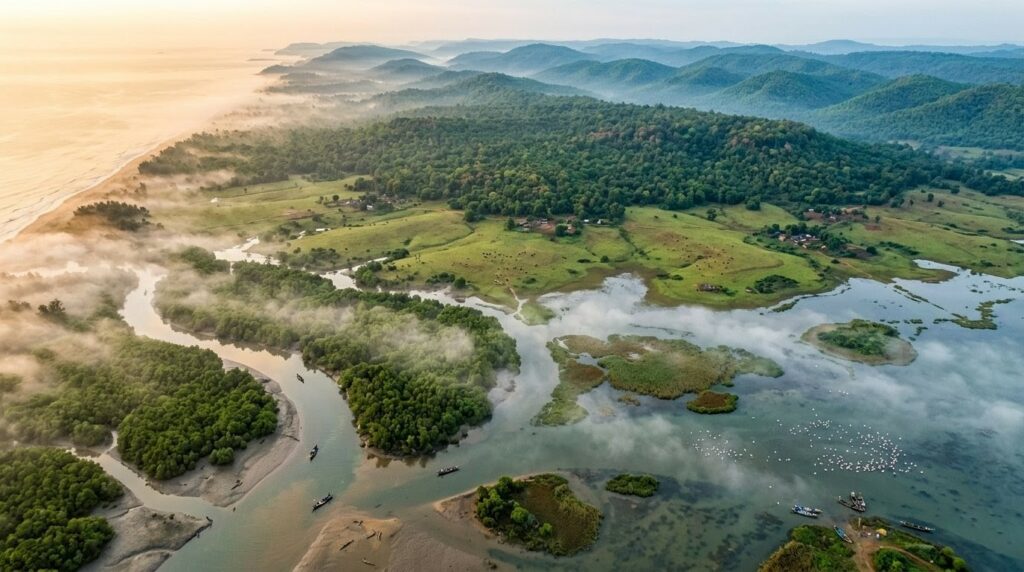
Odisha is one of India’s most biodiverse states. Its landscapes range from the mangrove forests of Bhitarkanika and the wetlands of Chilika to the dense forests of Similipal and the Eastern Ghats.
According to recent forest assessments, Odisha continues to maintain significant forest and tree cover, providing vital habitat for numerous wildlife species. The state’s protected area network, including national parks, wildlife sanctuaries, tiger reserves, and conservation reserves, supports both large and small carnivores.
While tigers and elephants receive much of the conservation attention, small cats act as important predators that regulate rodent populations, maintain ecological balance, and serve as indicators of habitat quality.
Small Cats in Odisha
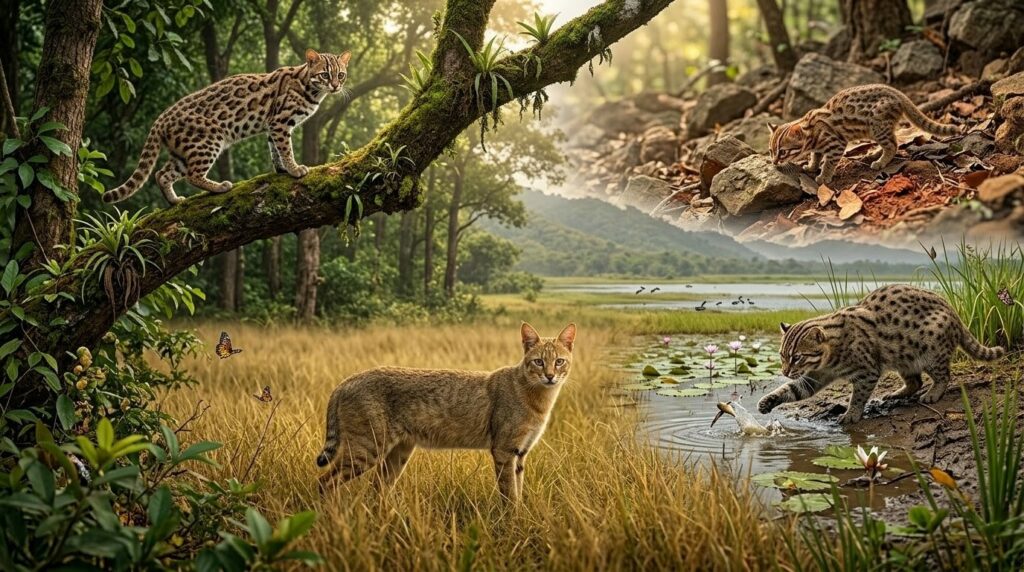
Wildlife records and scientific studies confirm the presence of several small cat species in Odisha. Among them, four species are regularly documented today.
Jungle Cat (Felis chaus)
The Jungle Cat is the most widespread small wild cat in Odisha.
Larger than a domestic cat, it is recognized by its long legs, sandy-grey coat, and distinctive black-tipped ears. Despite its name, the species is commonly found in grasslands, scrublands, agricultural edges, wetlands, and open forests.
Jungle Cats are highly adaptable and often survive near human settlements. Their diet includes rodents, birds, reptiles, and small mammals. Because they help control agricultural pests, they provide an important ecological service in rural landscapes.
Unlike many other small cats, the Jungle Cat remains relatively stable across its range due to its ability to adapt to different habitats.
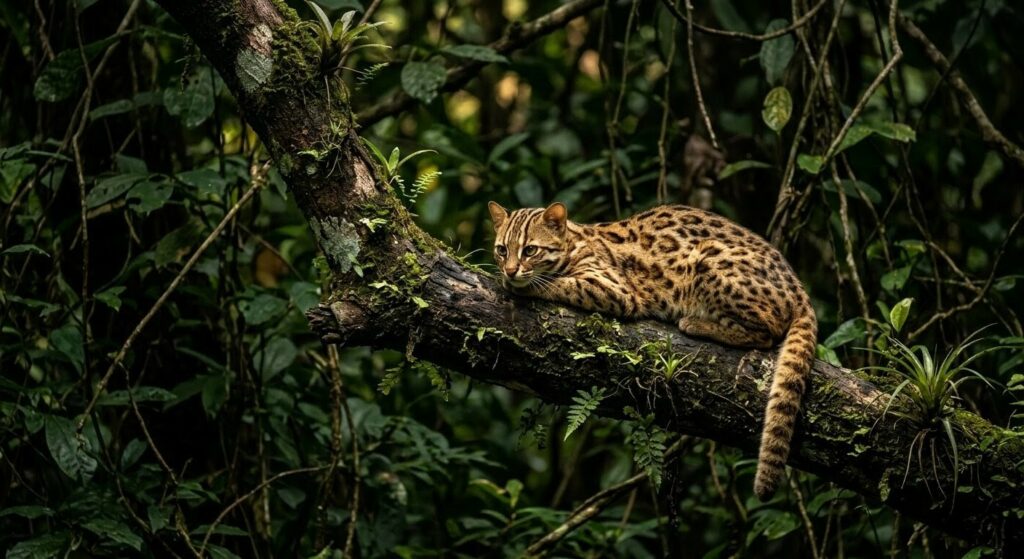
Leopard Cat (Prionailurus bengalensis)
The Leopard Cat is one of the most beautiful and elusive wild cats found in Odisha.
Its spotted coat resembles that of a miniature leopard, making it easy to identify. Leopard Cats are primarily nocturnal and prefer dense forests where they hunt rodents, birds, reptiles, and insects.
In Odisha, they have been recorded from forested landscapes including Similipal and parts of the Eastern Ghats. Habitat fragmentation remains a major concern for the species because it depends heavily on intact forest ecosystems.
Although sightings are rare, camera-trap surveys continue to document their presence across suitable habitats.
Fishing Cat (Prionailurus viverrinus)
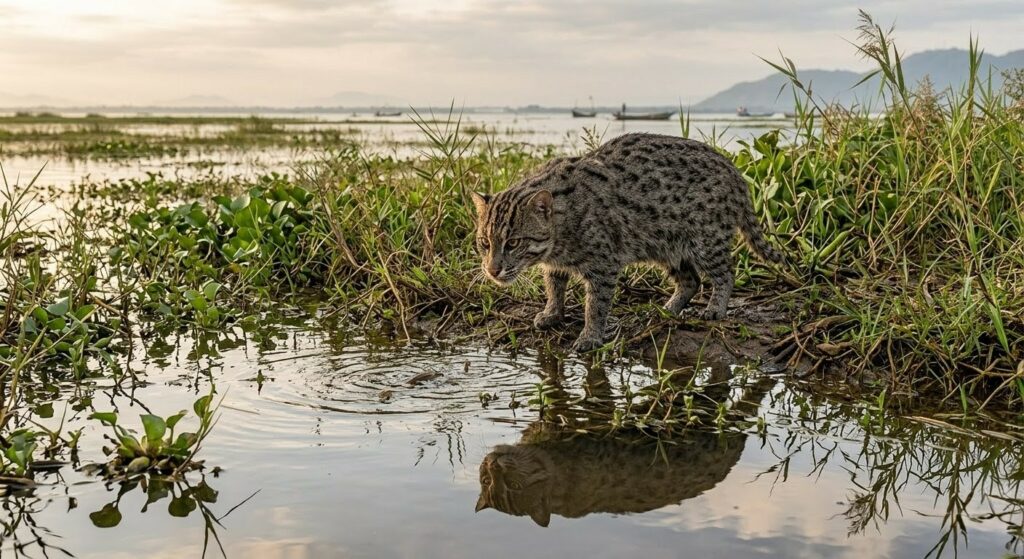
The Fishing Cat is perhaps Odisha’s most unique small feline.
Unlike most cats, it has evolved to thrive in wetlands and is an excellent swimmer. It hunts fish, frogs, crabs, and other aquatic prey, making it one of the few truly semi-aquatic cat species in the world.
In Odisha, Fishing Cats are associated with wetlands, mangroves, river systems, and coastal habitats such as Bhitarkanika and Chilika. These ecosystems provide ideal conditions for the species.
However, wetland degradation, pollution, habitat conversion, and increasing human activity pose significant threats to Fishing Cat populations. Conservationists consider the species an important flagship animal for wetland protection.
Rusty-Spotted Cat (Prionailurus rubiginosus)
The Rusty-spotted Cat holds a special distinction: it is among the smallest wild cat species in the world.
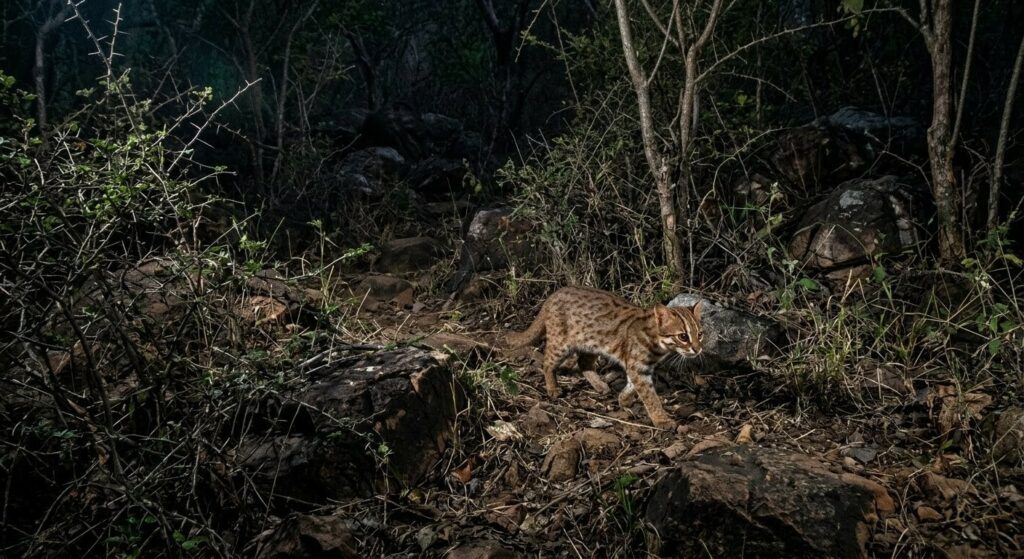
For decades, its status in Odisha remained poorly understood. Earlier reports suggested that the species might be extremely rare or even absent from many areas. However, recent scientific studies and camera-trap evidence have confirmed its presence in multiple districts and protected areas across the state.
This tiny feline weighs only a fraction of what larger wild cats do, yet it is a highly effective predator. It feeds on rodents, birds, insects, and small reptiles.
Because of its secretive nature and nocturnal behavior, the Rusty-spotted Cat remains one of Odisha’s least understood mammals.
Also Read: Animals That Gone Extinct in Last 200 Years
Habitats That Support Small Cats in Odisha
Different species occupy different ecological niches.
Jungle Cats prefer grasslands, agricultural landscapes, and open habitats. Leopard Cats depend largely on forest ecosystems. Fishing Cats require healthy wetlands, mangroves, and riverine habitats. Rusty-spotted Cats are found in forests, scrublands, rocky landscapes, and even areas close to human habitation.
This diversity highlights an important conservation lesson: protecting wildlife is not just about saving forests. Wetlands, grasslands, mangroves, and scrub ecosystems are equally important for biodiversity.
Major Threats Facing Small Cats
Despite legal protection, Odisha’s small cats face numerous challenges.
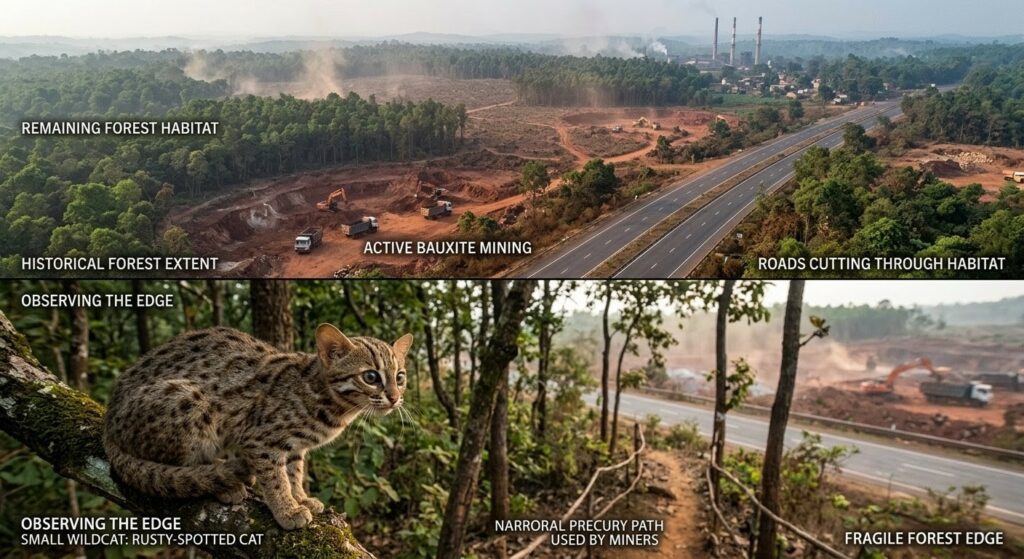
Habitat Loss
Expanding infrastructure, mining activities, urban growth, and land-use changes continue to reduce natural habitats.
Wetland Degradation
For Fishing Cats in particular, the loss of wetlands is one of the greatest threats. Draining wetlands for development directly impacts their survival.
Human-Wildlife Conflict
Small cats occasionally enter villages in search of food, especially poultry. This often leads to persecution or accidental killing.
Road Mortality
As transportation networks expand, road accidents are becoming an increasing threat to wildlife movement.
Lack of Public Awareness
Many people are familiar with tigers and leopards but know little about smaller wild cats. This lack of awareness can reduce support for their conservation.
Conservation Efforts in Odisha
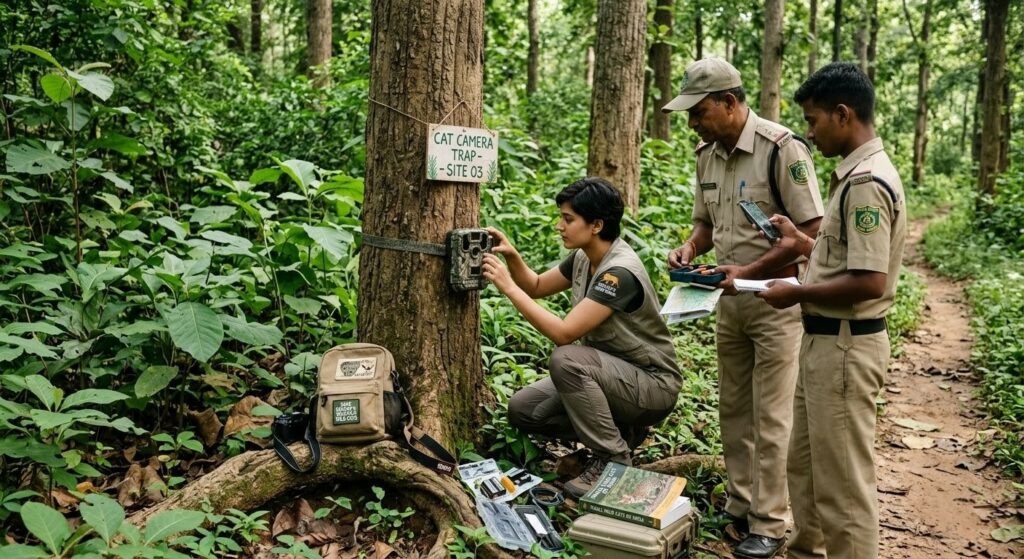
Odisha has made significant progress in wildlife conservation through protected area management, habitat restoration, wildlife monitoring, and camera-trap surveys.
Research institutions, forest departments, and conservation organizations are working to improve understanding of lesser-known species such as the Fishing Cat and Rusty-spotted Cat.
Recent photographic records and scientific studies have expanded our knowledge of these species and highlighted the need for long-term monitoring programs.
Future conservation efforts must focus on protecting wetlands, maintaining forest connectivity, reducing human-wildlife conflict, and increasing public awareness.
The story of Odisha’s wildlife is not limited to tigers and elephants.
Hidden within forests, wetlands, mangroves, and grasslands are small feline predators that quietly perform vital ecological roles. The Jungle Cat, Leopard Cat, Fishing Cat, and Rusty-spotted Cat represent an often-overlooked side of India’s biodiversity.
Their survival depends on healthy ecosystems, scientific research, and public support. By protecting these lesser-known wild cats, Odisha is also protecting the habitats that sustain countless other species.
The next time wildlife conservation is discussed, remember that some of the most important predators in the ecosystem are also the smallest and often the hardest to see.
Also Read: Beyond the Shell: Why Turtles Matter More Than We Think

