


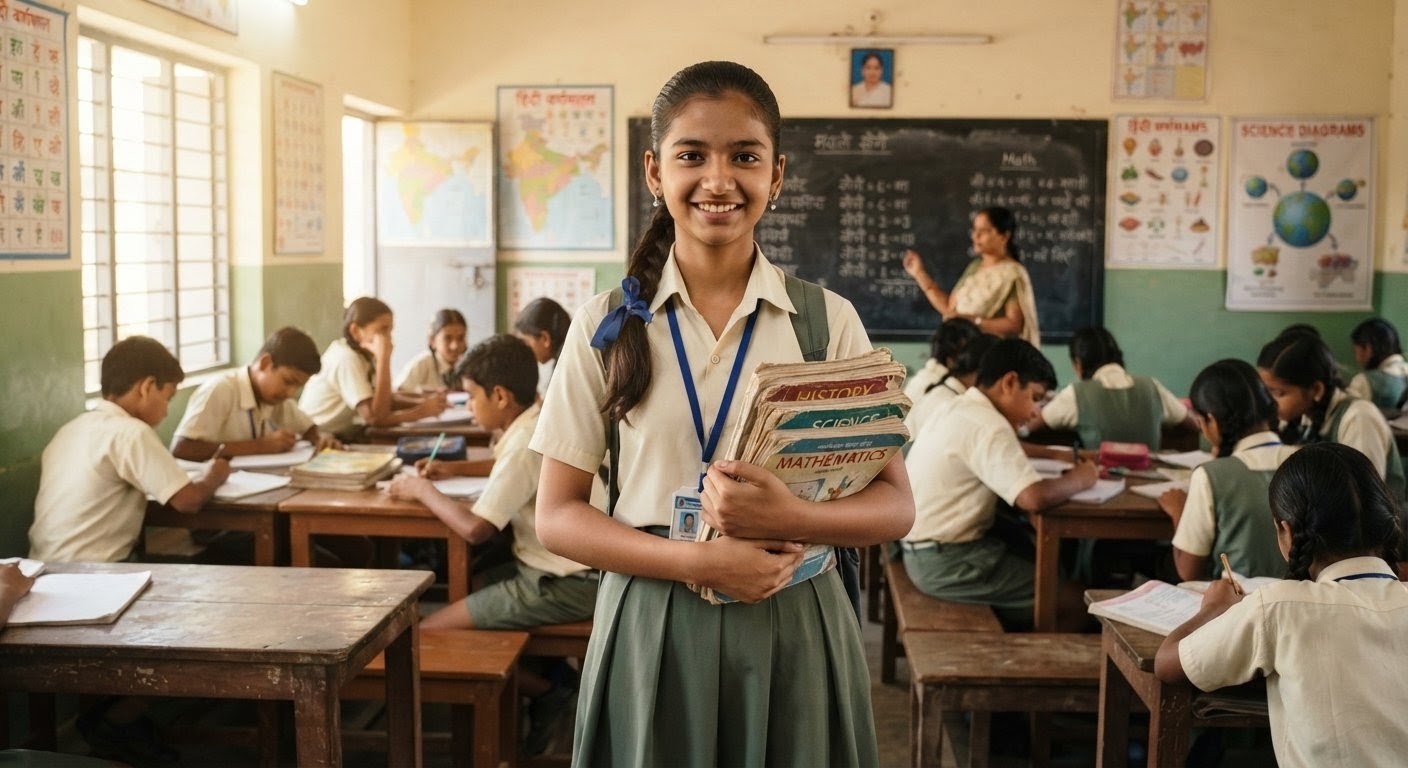
Every morning across India, millions of adolescent girls walk into classrooms carrying dreams far bigger than their school bags. Some want to become doctors. Some want to run their own business. Some simply want the freedom to decide what comes next in their own lives. Yet for a large number of them, that dream quietly fades before it ever gets the chance to grow.
India has made genuine progress in getting girls into school. Enrolment at the primary and upper primary levels is now close to parity with boys. But sitting in a classroom and thriving in life are two different things, and the gap between them is where the real crisis lives.
The numbers tell part of the story. More than 65 million children left school between 2019 and 2024, and close to 3 million of them were adolescent girls. At the secondary level alone, dropout numbers stood at over 42 lakh in 2024-25, even after a reduction from the previous year. Odisha, where a significant share of grassroots education work happens, recorded one of the steepest secondary dropout rates in the country. The state’s rate touched close to 26 percent, trailing only slightly behind Bihar and Meghalaya.
Marriage cuts many of these journeys short. The latest National Family Health Survey found that 20.1 percent of women aged 20 to 24 had been married before turning 18, a decline from 23.3 percent in the previous round. That is progress, but it still means one in five young women in India loses her childhood, and often her education, to a wedding she did not choose.
Then there is the phone in her hand, or the one she does not have. Nationally, 84 percent of men own a mobile phone compared to 56 percent of women, and nearly two out of three women cannot send or receive an email. In rural India, the gender gap in phone ownership among young women widens to 24 percentage points. An adolescent girl without a device cannot search for scholarships, cannot access online classes, cannot build a portfolio, and cannot even find out that other paths exist.
None of these numbers are really about school seats or SIM cards. They are about who gets to decide the shape of her own future, and who does not.
Table of Contents
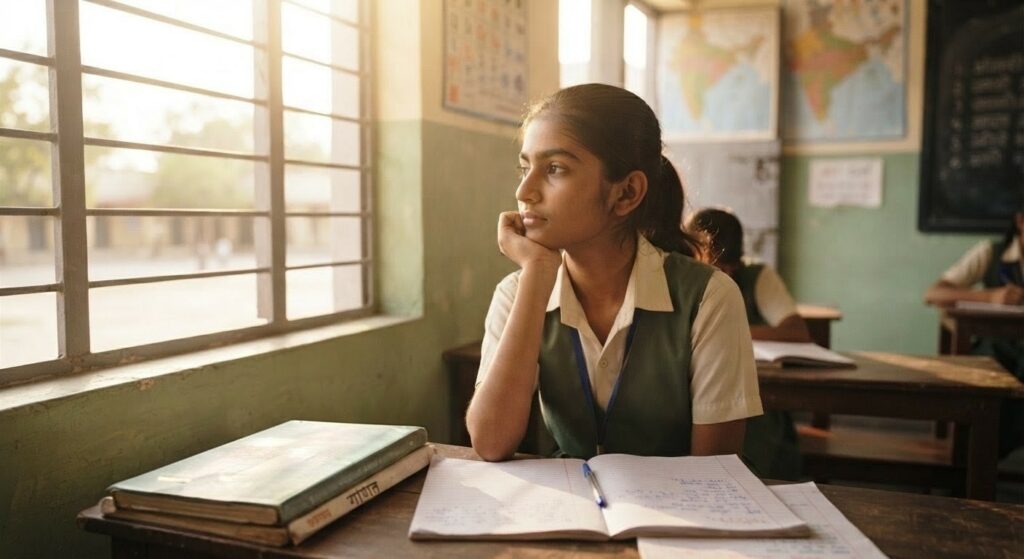
What Life Skills Actually Mean
The term life skills gets used often and explained rarely. It is not a vague motivational idea. It refers to a specific set of abilities that let a person navigate everyday challenges with clarity and confidence.
Communication
The ability to express a thought, a boundary, or a disagreement without shrinking from it. An adolescent girl who can communicate clearly can ask a teacher for help, explain a delay to her family, or tell a relative that a decision affecting her life needs her input too. Without this skill, even a girl with strong opinions often stays silent simply because she has never practised saying them out loud.
Financial literacy
Understanding money well enough to save it, budget it, and eventually control it, rather than depend entirely on someone else’s decisions. This might mean knowing how to open her first bank account, tracking a small stipend from a part time job, or understanding what interest actually means before signing up for a loan. Adolescent girls who grow up with even basic financial literacy are far less likely to remain financially dependent on a husband’s family after marriage.
Problem solving
Breaking down a difficult situation into steps instead of freezing in front of it. This could be as small as figuring out an alternate route when a bus is cancelled, or as significant as working out how to continue studying after a family setback. The habit of breaking a problem into manageable pieces, built early, tends to stay for life.
Emotional regulation
Recognising anger, fear, or sadness as it comes, and responding to it instead of being controlled by it. Adolescence already brings emotional volatility, and girls facing added pressure around marriage, mobility, and expectation carry an even heavier load. Learning to name a feeling before reacting to it gives a girl the pause she needs to respond thoughtfully rather than impulsively.
Digital literacy
Knowing how to use a phone or a computer for more than entertainment, including searching for information, applying for opportunities, and staying safe online. This includes recognising a scam message, filling out an online scholarship form correctly, and knowing how to protect her privacy on social media. For a girl in a household where the family phone is shared and closely monitored, even this basic fluency can open doors that were previously invisible to her.
Leadership
Taking initiative in a group, a classroom, or a household, even when no one has handed over that role formally. This might look like organising a group project, speaking up first in a discussion, or simply deciding to try something no one in her family has attempted before. Leadership at this stage is less about titles and more about the willingness to go first.
Conflict resolution
Working through a disagreement with a parent, a teacher, or a peer without it turning into silence or a shouting match. Adolescent girls are often taught to avoid conflict entirely, which leaves them without any practice in resolving it constructively when it does arise. Learning to disagree respectfully, and to stay in the conversation instead of withdrawing from it, changes how she handles every relationship going forward.
Critical thinking
Questioning an instruction or a norm instead of accepting it purely because it has always been that way. This is the skill that lets an adolescent girl ask why she cannot travel alone when her brother can, or why a decision about her education is being made without asking her first. It is often the quietest skill on this list, and also the one that unsettles the most entrenched norms.
These are not soft add ons to education. They are the difference between an adolescent girl who can only follow instructions and one who can make decisions for herself.
Why a 15 Year Old With These Skills Looks Different
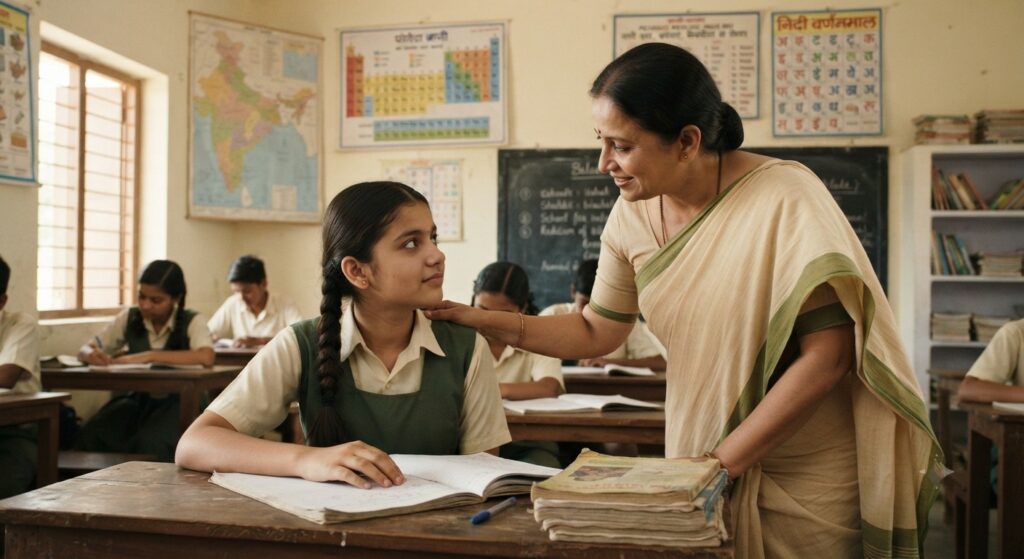
Picture a 15 year old girl in a village where most girls her age are already engaged or married. She has grown up hearing the same message everyone around her has heard, that her opinion matters less than her family’s plans for her.
Now picture the same girl after two years of structured SEL sessions in her school. She has learned how to state a disagreement calmly. She has learned how to negotiate for more time before a decision is made about her. When her family raises the subject of marriage, she does not simply comply and she does not simply rebel. She talks to her parents, explains what she wants to study, and asks for one more year. That single conversation, made possible by a skill as ordinary as negotiation, can be the difference between a wedding and a college admission.
This is not a hypothetical exaggeration. It is the pattern that shows up again and again in field programmes that work directly with adolescent girls. Confidence built inside a classroom does not stay inside the classroom. It follows her home.
Integrating Life Skills in Classrooms
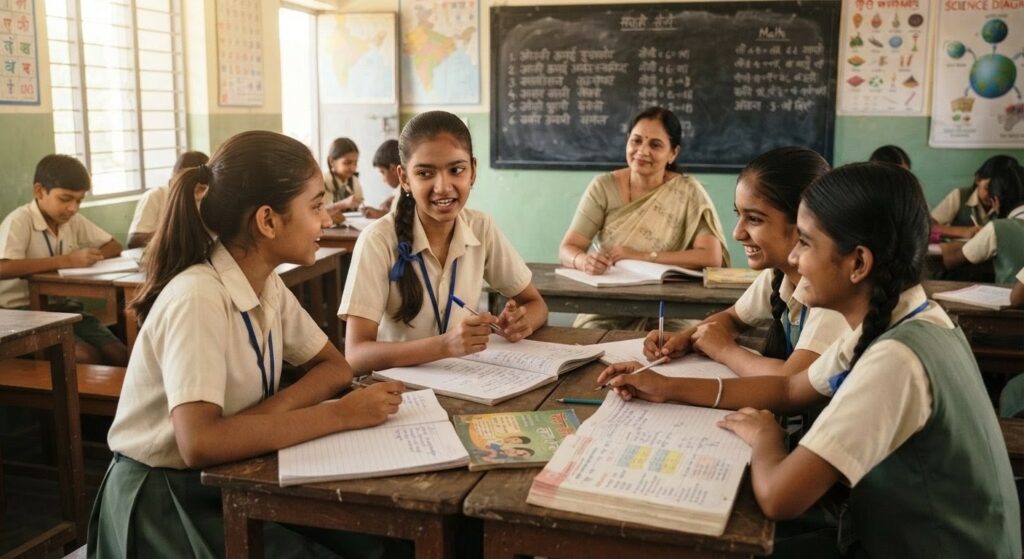
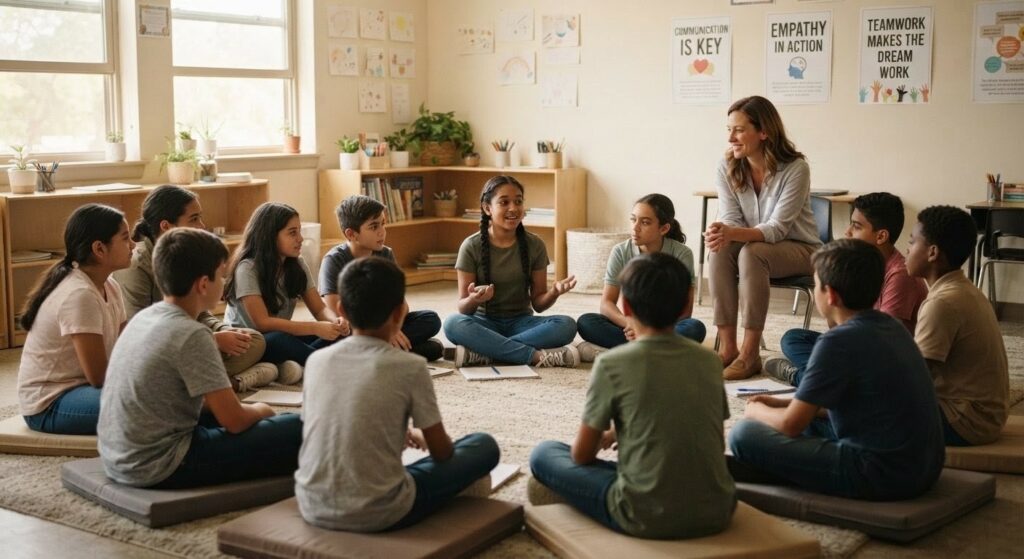
The strongest programmes treat life skills and social-emotional learning as something woven into every subject, not as an extra period bolted onto an already full timetable. A maths teacher explaining a word problem can also be teaching a student how to break down a real-life decision. A language teacher assigning a debate is also teaching negotiation and self-expression.
Government school teachers, when trained in this approach, often report that it changes how they teach across the board, not just during a designated SEL slot. A classroom built around reflection and open discussion naturally becomes a place where a quiet girl in the back row starts raising her hand.
SEL, done well, focuses on four pillars: communication, empathy, decision-making, and self-awareness. These are the same skills that later show up as employability, resilience, and self-belief. Teaching them early, inside subjects children are already studying, is far more effective than treating them as a separate module that competes for classroom time.
Lessons From the Field
Every state carries its own set of barriers, and a curriculum that works in Kerala will not automatically work in Bihar or Odisha. Contextualisation is not a nice addition, it is the difference between a programme that gets ignored and one that actually changes behaviour for adolescent girls.
In practice, this looks like a few concrete choices.
Local language storytelling
Lessons built around folk tales or local proverbs land differently than lessons translated from an English language toolkit. A girl connects faster with a story told in the language her grandmother used at bedtime.
Regional role models
Bringing in a woman entrepreneur, a local government official, or a nurse from a nearby village does more for an adolescent girl’s sense of possibility than any poster of a distant celebrity ever could. She can see herself in that woman’s life in a way she cannot in a stranger’s.
Community case studies
Discussing a real situation from a neighbouring village, handled without naming anyone, helps adolescent girls recognise patterns in their own lives rather than treating the lesson as abstract theory.
Parent involvement through school activities
An adolescent girl’s confidence does not grow in isolation. It is shaped by her teachers, her parents, her community, and increasingly, by government policy. For life skills education to move beyond a handful of pilot schools, all four of these forces need to move in the same direction.
Government partnerships bring scale. A programme that works in fifty schools stays a nice case study until it becomes part of a state’s actual curriculum and teacher training pipeline. Community and parent engagement brings staying power, because an adolescent girl who goes home to a household still resistant to her ambitions will struggle to hold on to what she learned in class. Peer support matters too. Adolescent girls who see their friends push back against early marriage or pursue further studies are far more likely to do the same themselves.
When these four pieces align, the results compound. An adolescent girl does not just finish school, she leaves it believing she has a say in what happens next.
Also Read: Why Making Friends as an Adult Feels So Hard (And How to Fix It)
Partnerships for Sustained Change
A girl’s confidence does not grow in isolation. It is shaped by her teachers, her parents, her community, and increasingly, by government policy. For life skills education to move beyond a handful of pilot schools, all four of these forces need to move in the same direction.
Government partnerships bring scale. A programme that works in fifty schools stays a nice case study until it becomes part of a state’s actual curriculum and teacher training pipeline. Community and parent engagement brings staying power, because a girl who goes home to a household still resistant to her ambitions will struggle to hold on to what she learned in class. Peer support matters too. Girls who see their friends push back against early marriage or pursue further studies are far more likely to do the same themselves.
When these four pieces align, the results compound. A girl does not just finish school, she leaves it believing she has a say in what happens next.
The Real Measure of Progress
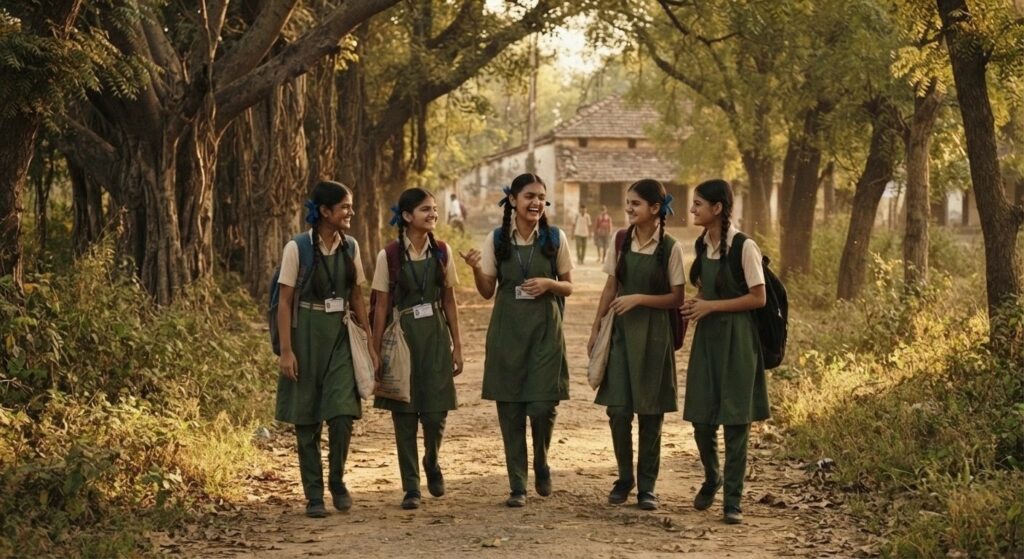
India’s progress in educating adolescent girls will not ultimately be measured by how many of them walk through a school gate. It will be measured by how many walk out believing they get to decide what their life looks like next. Enrolment gets an adolescent girl into the building. Life skills are what let her leave it on her own terms, whether that means resisting an early marriage, choosing a subject her family did not expect, or simply speaking up in a room full of people who assumed she would stay quiet.
Access opened the door. Life skills are what let her walk through it and keep going.
Frequently Asked Questions
What are life skills in education?
Life skills are practical abilities such as communication, decision-making, financial literacy, digital literacy, and emotional regulation that help adolescent girls handle everyday situations with confidence and independence.
Why are life skills especially important for adolescent girls in India?
Adolescent girls in India often face early marriage, restricted mobility, and limited digital access. Life skills such as negotiation and self-advocacy give them practical tools to push back on these barriers and stay in control of decisions about their own future.
How does social-emotional learning differ from a regular subject?
Social-emotional learning is not a standalone subject. It is woven into existing lessons through classroom discussion, reflection, and teacher training, rather than taught as a separate period on the timetable.
Can life skills actually reduce school dropout among girls?
Yes. Adolescent girls who develop negotiation, communication, and decision-making skills are better positioned to advocate for continuing their education, even when family or community pressure pushes toward early marriage or dropout.
What role do parents play in life skills education for girls?
Parents shape whether an adolescent girl’s growing confidence and ambition are supported at home. Programmes that involve parents through school activities and community engagement see far stronger and longer-lasting results than those that work with the girl alone.
How can schools with limited resources start integrating life skills?
Schools do not need a separate curriculum to begin. Teachers can weave communication, problem-solving, and reflection into existing subjects through classroom discussion, debate, and group activities, without adding new periods to an already full timetable.
Also Read: The Hidden Signs of High-Functioning Anxiety Most People Ignore

