


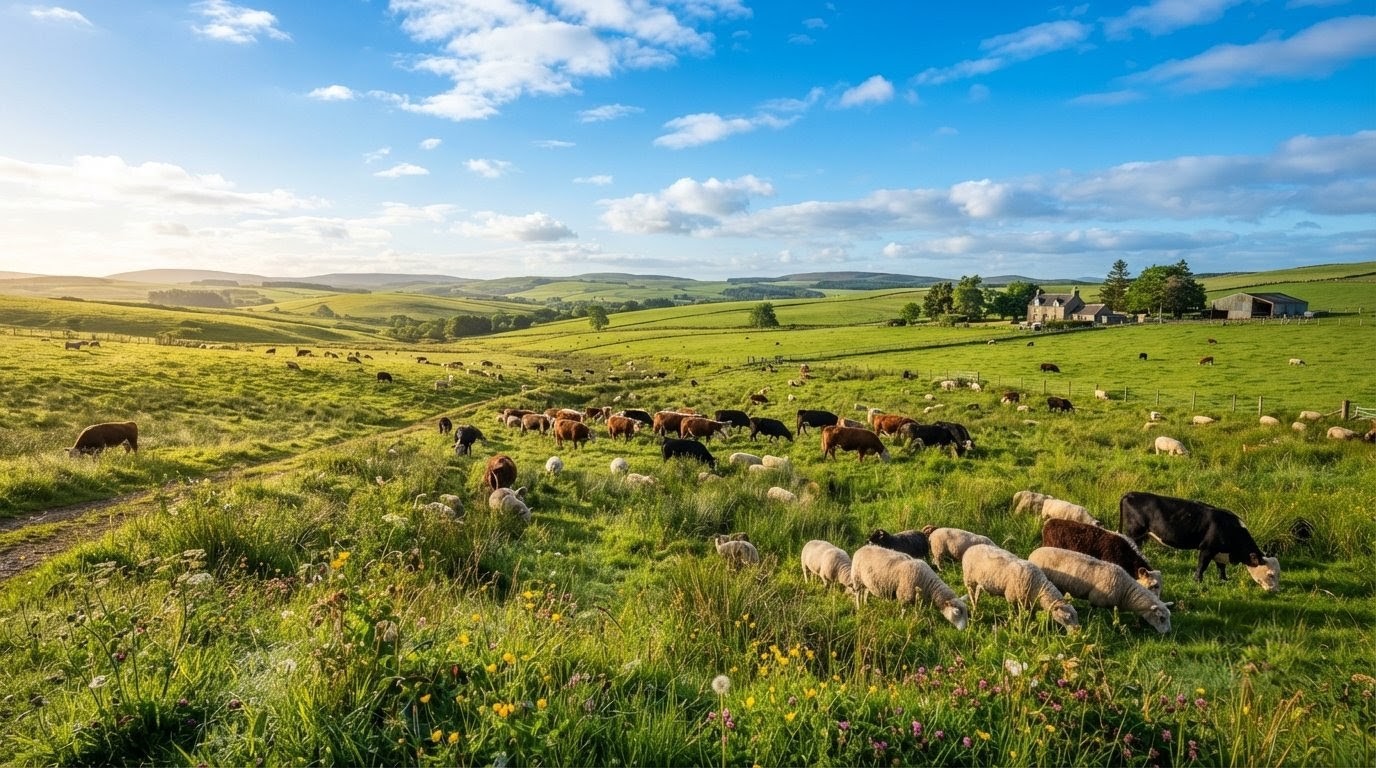
Healthy grasslands feed millions of livestock worldwide, yet many pastures lose productivity every year because of poor grazing practices, soil erosion, and invasive plants. Grassland management is the difference between land that keeps producing forage decade after decade and land that quietly degrades until it can no longer support a herd. Grasslands cover roughly 37 percent of the Earth’s terrestrial surface and supply most of the energy and protein that ruminant livestock need for meat and dairy production. Understanding how they function is the first step toward managing them sustainably.
Left unmanaged, grasslands degrade. Soils erode, weeds encroach, and forage quality drops. Managing them well takes more than deciding where animals graze. It takes a working understanding of ecological processes, timely intervention when nature needs a nudge, and consistent attention to the soil and water that everything else depends on. This post walks through the core principles behind effective grassland management.
Table of Contents
Understanding Ecological Succession in Grasslands
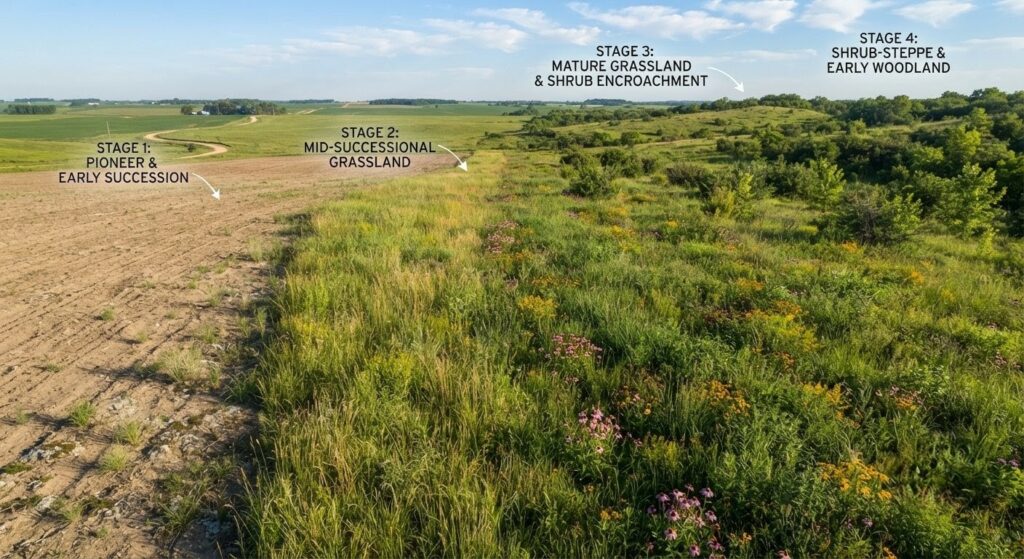
Every grassland is in motion. Ecological succession is the process by which plant communities change over time, moving from bare soil colonized by hardy pioneer species, through perennial grasses, and eventually toward shrubs or trees if disturbance is absent.
In grasslands, this process is neither linear nor fast. Research comparing ancient grasslands with those recovering from agricultural tillage suggests a disturbed grassland can take a minimum of 100 years, and in some cases over a millennium, to recover its original biodiversity.
Primary and Secondary Succession
Two types of succession matter to grassland managers. Primary succession occurs on bare land with no prior soil development, such as newly exposed land after a landslide. Secondary succession is far more common in managed landscapes. It takes place after a disturbance like overgrazing or fire, where soil remains intact but the plant community has been set back.
Understanding which stage a grassland is in helps managers decide when and how to intervene. A pasture dominated by annual weeds, for instance, is likely in an early successional stage and benefits from targeted restoration work to push it toward a more stable, productive plant community.
Why Disturbance Matters for Grassland Health
Many grassland ecosystems actually require disturbance, particularly grazing and fire, to remain grassland at all. Without it, succession drives them toward shrubland or forest. Managed disturbance, applied correctly, is not a threat to grassland health. It is a necessary part of maintaining it.
Assisted Ecological Methods for Guiding Succession
Natural succession is slow and does not always move in a direction that serves livestock production. Assisted ecological methods are deliberate interventions that steer the plant community toward more productive and sustainable outcomes. The two most widely used are bush cleaning and reseeding, and both sit at the center of sustainable grassland management on working farms.
Bush Cleaning
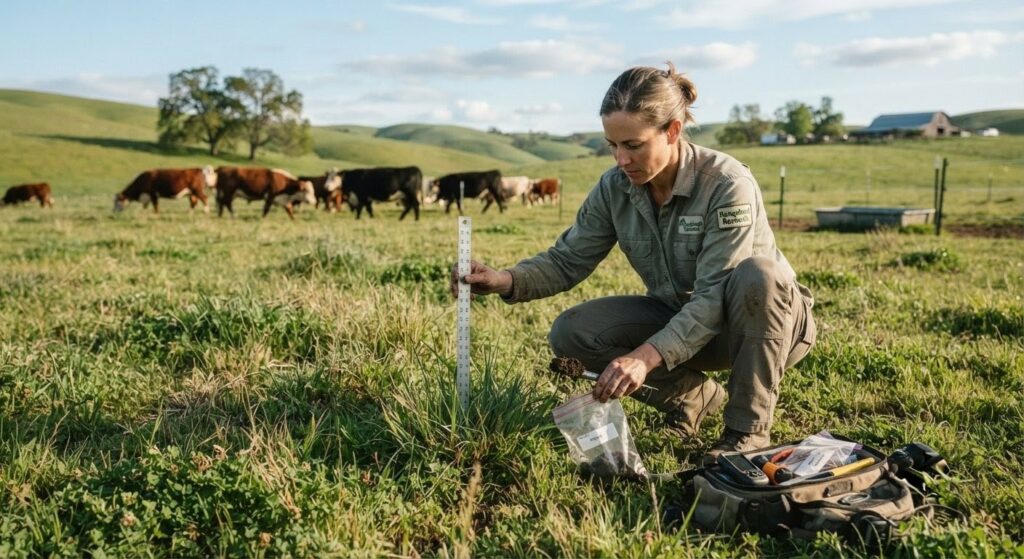
Woody shrubs and invasive trees are persistent competitors in grasslands. Once established, they reduce the area available for forage grasses, intercept rainfall before it reaches the soil, and speed up the shift away from open grassland. Bush cleaning, the selective removal of this woody vegetation, is a foundational step in restoring or improving degraded pastures.
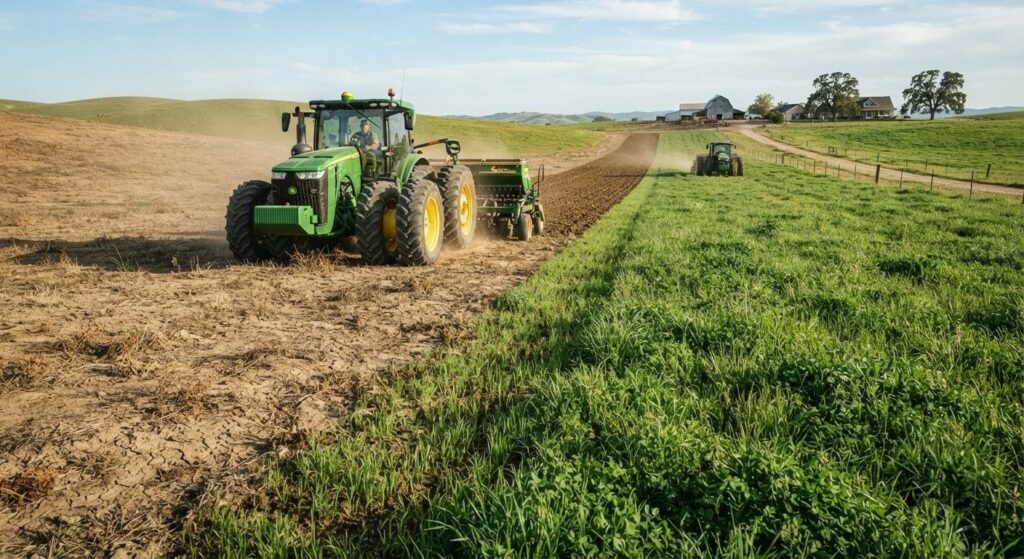
Mechanical methods such as cutting, mowing, and brush-hogging are the most common approaches. Biological control, particularly introducing goats or other browsers that preferentially target woody plants, can work well in certain systems. Chemical control using herbicides offers broader coverage but requires careful application so desirable grass species aren’t damaged in the process.
Research on grassland restoration in temperate environments shows that clearing bushes before reseeding, followed by plowing and sowing a productive grass-legume mixture, significantly improves both forage yield and pasture stability over time. Timing matters here too. Removing woody plants during their active growing season generally produces more durable results than treatment during dormancy.
Reseeding
When a grassland’s existing plant community lacks the species needed for good productivity, reseeding offers a way to reset it. Studies on degraded grassland restoration confirm that reseeding with appropriate native species can significantly speed up soil quality recovery compared to relying on natural succession alone. Reseeding with native species has also been shown to restore soil organic carbon more rapidly than waiting for spontaneous revegetation.
Effective reseeding depends on selecting species matched to local climate and soil conditions. Cool-season grasses like timothy and fescue suit temperate regions, while warm-season species like bermuda grass thrive in hotter climates.
Seedbed preparation matters just as much. The soil needs to be firm enough to support germination but loose enough to allow root penetration. Spring reseeding takes advantage of rainfall and moderate temperatures. Autumn reseeding allows root establishment before winter. Either way, the area should stay protected from grazing pressure until the new stand is well established.
Intensive Grassland Management Practices
Beyond restoring degraded land, many producers apply intensive management practices to get the most forage out of grasslands that are already functioning well. This includes strategic fertilization, irrigation, and weed control, and it forms the backbone of most modern pasture management programs.
Fertilization
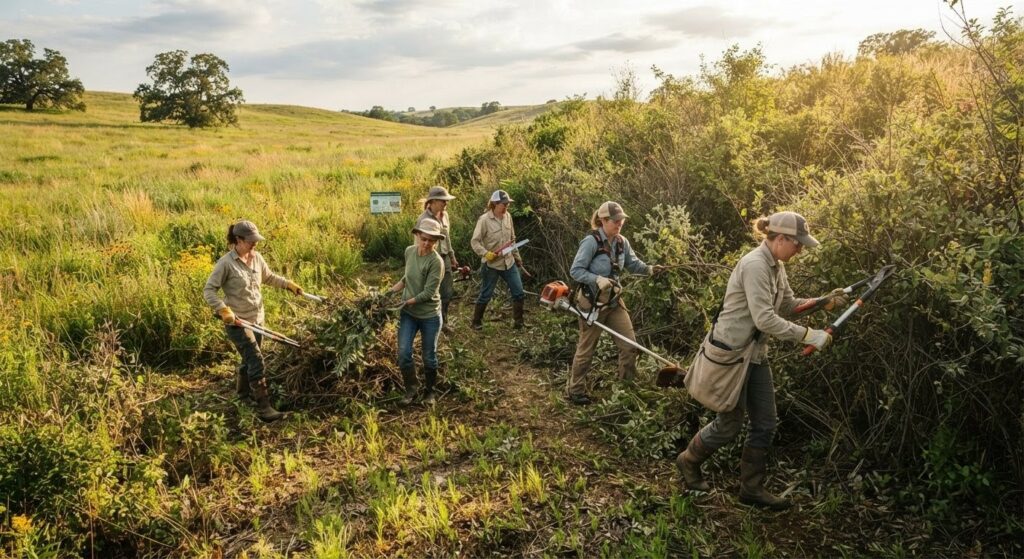
Grasslands, like any cultivated crop, respond to nutrition management. Optimizing nitrogen fertilizer rates is one of the most effective ways to increase grassland productivity. Nitrogen drives leaf growth and protein content. Phosphorus supports root development. Potassium improves stress tolerance and disease resistance.
Soil testing before fertilization prevents waste and keeps applications targeted to actual deficiencies. Organic inputs such as composted manure and crop residues improve soil structure over time and provide a slow-release nutrient base that reduces dependence on synthetic fertilizers.
Weed Control and Pasture Monitoring
Uncontrolled weeds are a steady drag on pasture productivity. Effective weed management means identifying problem species early and treating them before they set seed. Herbicide applications need to account for restrictions on re-entry and reseeding timelines.
Beyond chemical control, appropriate grazing height is itself a weed suppression tool. Grasses maintained at optimal height can outcompete weeds by shading them out. Regular monitoring of forage height, species composition, and soil condition lets managers catch problems early and adjust practices before they become bigger ones.
Soil and Water Conservation in Grasslands
Soil and water are the foundation of any grassland system. Without healthy soil and reliable water, even the most carefully designed management program will underperform. Soil conservation in grasslands isn’t a separate task from grazing management, it’s what makes grazing management sustainable in the first place.
Protecting Soil from Erosion
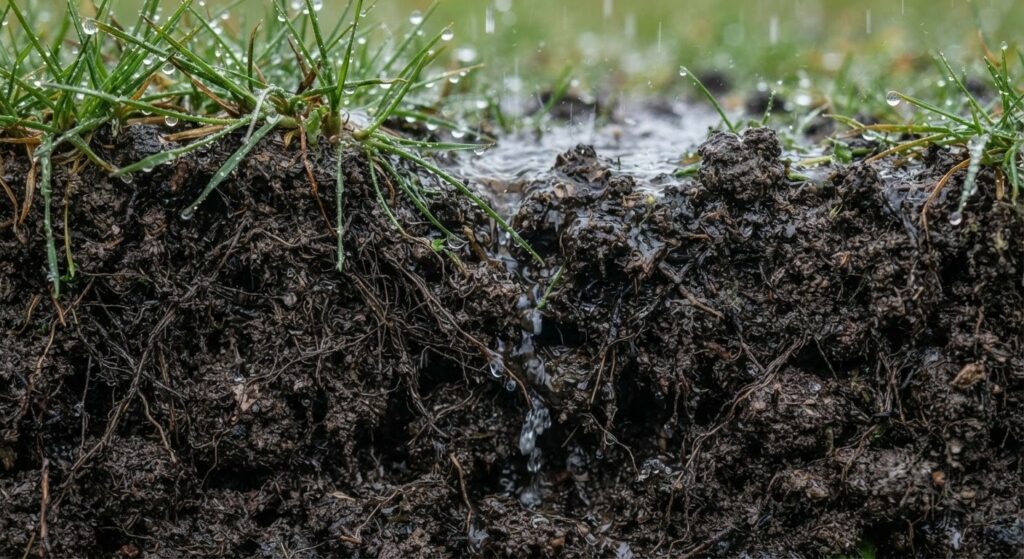
Maintaining continuous ground cover is the most direct defense against soil erosion. Grass roots bind soil particles, while the leaf canopy above absorbs the impact of rainfall before it dislodges soil. For long-term sustainability, producers need practices that increase water infiltration and retain soil organic matter, both of which depend on keeping soil covered and biologically active. On sloped terrain, contour grazing and strip grazing reduce the channeling of runoff that leads to erosion. Residual grass height after grazing should never fall so low that bare soil is exposed.
Water Management Strategies
Water management is widely recognized as the most critical factor in increasing the productivity of semi-arid grazing land. FAO-documented field trials in western Colorado found that grazing control alone reduced surface runoff by 30 percent and sediment yield by 35 percent.
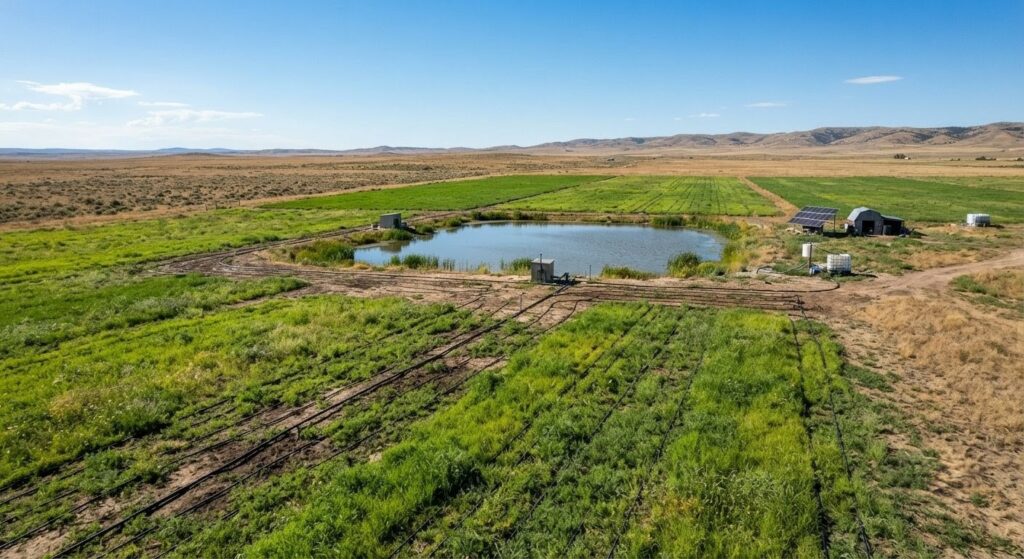
Practical water conservation measures include mulching to reduce evaporation, contouring the land to capture rainfall, and selecting drought-tolerant grass varieties. Where irrigation is used, drip and sprinkler systems allow precise application and reduce the risk of waterlogging. Water harvesting structures such as small dams and retention ponds can store rainwater for use during dry periods, extending the productive season in moisture-limited environments.
Also Read: Riverine Ecosystems and Livelihoods: Balancing Fisheries and Freshwater Conservation in India
Grazing Management Matching Animals to the Land
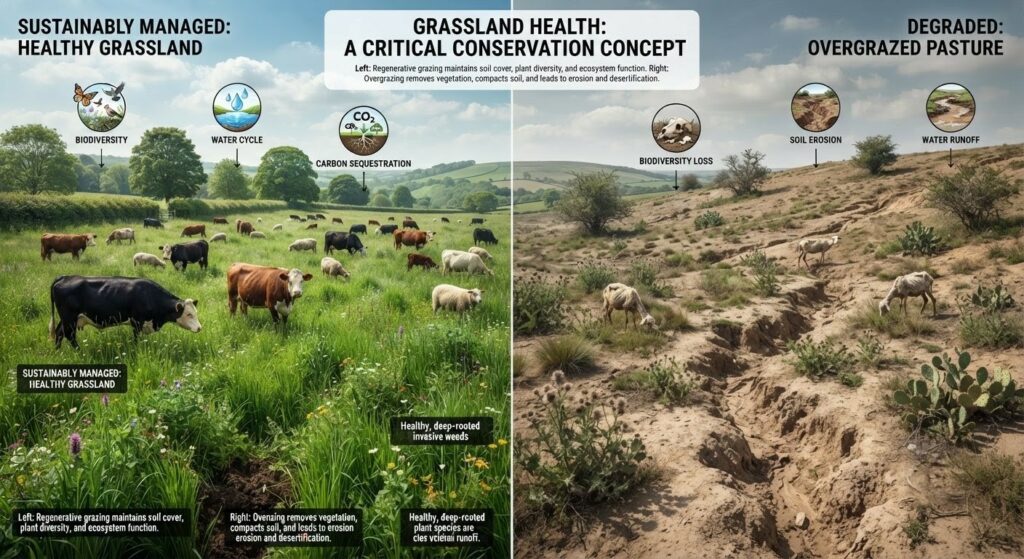
Grazing management is the deliberate manipulation of grazing to meet specific production and conservation goals. Its tools are grazing intensity, stocking method, and timing, and how these are combined determines whether a grassland improves, holds steady, or degrades over time.
Stocking Rate
Stocking rate, the number of animals relative to the land’s carrying capacity, is the primary factor controlling rangeland sustainability. Overstocking weakens plants, exposes soil, and speeds up erosion. Understocking leaves forage underutilized and can encourage rank, low-quality growth.
The right stocking rate keeps consumption in balance with forage production, leaving enough residual vegetation to protect soil and support plant recovery. Flexible stocking, adjusting animal numbers in response to seasonal forage availability, works better than holding a fixed herd size through drought or peak-growth periods.
Rotational Grazing and Its Benefits
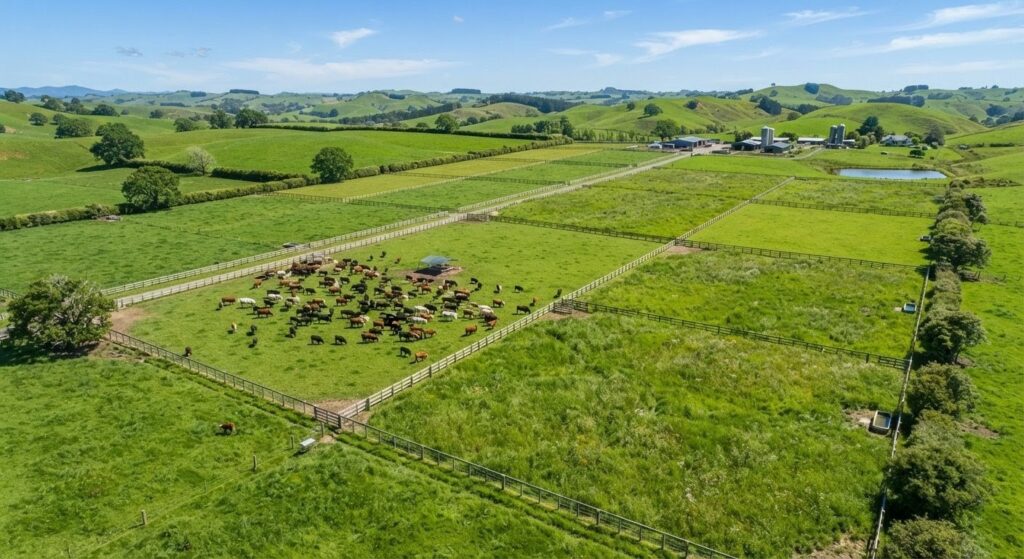
Rotational grazing divides pasture into smaller paddocks and moves livestock through them on a planned schedule, giving each paddock a recovery period between grazing events. Research from the University of Minnesota Extension indicates that intensive rotational systems can produce 30 to 50 percent more forage per hectare compared to continuous grazing, while also improving manure distribution and reducing weed pressure.
In many semi-arid regions of India, farmers have turned to rotational grazing as a way to stretch limited forage further into the dry season while giving degraded patches a chance to recover. Practices like this show how the same principle plays out differently depending on climate and land pressure, but the underlying logic of rest and recovery holds everywhere.
The recovery period itself is what makes the system work. It allows grasses to rebuild root reserves, which supports both plant health and long-term soil organic matter. When root mass increases, soil water-holding capacity also improves, making the system more resilient to drought.
Timing of Grazing
Timing, meaning when in the plant’s growth cycle livestock are introduced, matters just as much as stocking rate or rotation. Grazing too early, before grasses have built adequate reserves, weakens stands over time. Grazing too late means lower nutritional quality and excessive trampling of mature material. A practical rule of thumb is to begin grazing when grasses reach 8 to 10 inches in height, and move animals to the next paddock once residual height drops to around 4 inches.
Monitoring and Adaptive Management
No management plan survives contact with a variable climate without adjustment. Grassland management is not a set-and-forget system, it needs ongoing observation and the willingness to change course when conditions shift.
Tracking grass species composition over time reveals whether management is moving the system toward more productive species or letting less desirable ones gain ground. Soil testing every few years monitors pH and nutrient status. Animal performance, meaning weight gain and body condition scores, reflects forage quality as much as any lab test does. When multiple indicators point the same wrong direction, that’s the signal to revise stocking rates, rotation schedules, or fertility programs before degradation becomes harder to reverse.
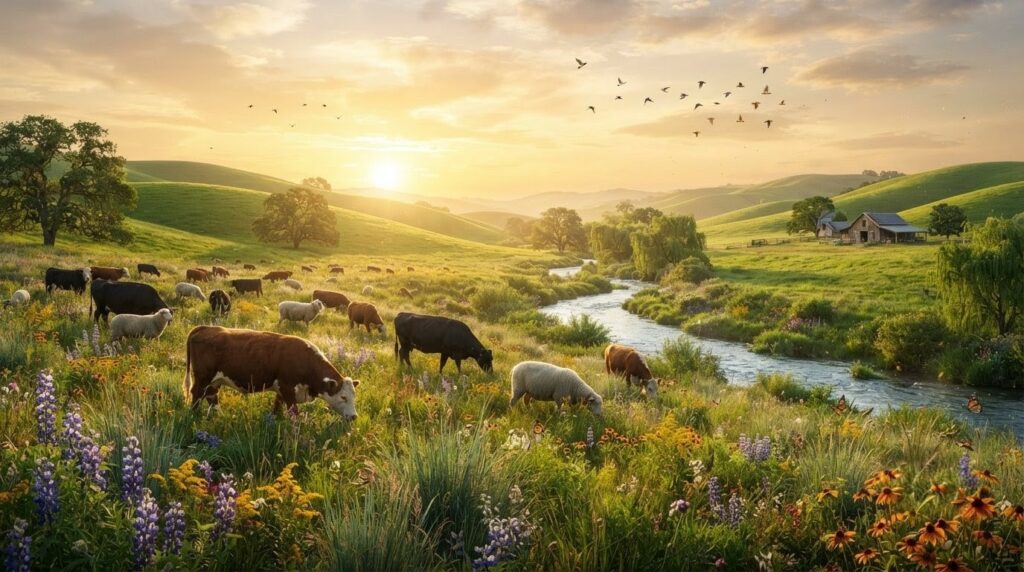
Effective grassland management is not about maximizing grazing today. It’s about maintaining healthy, productive ecosystems for decades to come. By balancing ecological succession, assisted restoration, intensive management, and soil and water conservation, farmers can improve livestock production while protecting the natural resources future generations depend on. Sustainable grassland management, done consistently, strengthens farm economics as much as it strengthens the land itself.
Frequently Asked Questions
Why is grassland management important for livestock farming?
Grassland management directly determines how much forage a pasture can produce, which in turn affects livestock weight gain, milk yield, and overall farm profitability. Poorly managed grasslands degrade over time, while well managed ones stay productive for decades.
What is the difference between grassland management and pasture management?
The two terms are often used interchangeably. Pasture management typically refers to the day-to-day practices on a specific grazed field, while grassland management covers the broader ecological principles, including succession, restoration, and long-term land use planning.
How does rotational grazing improve grassland health?
Rotational grazing gives grasses a recovery period between grazing events, which allows root reserves to rebuild. This improves both plant health and soil water-holding capacity, and research shows it can significantly increase forage output compared to continuous grazing.
How long does a degraded grassland take to recover?
Recovery timelines vary widely depending on the severity of degradation and the restoration methods used. Research comparing disturbed grasslands to undisturbed ones suggests natural recovery of original biodiversity can take a minimum of 100 years, though assisted methods like reseeding can speed up soil quality recovery considerably.
Also Read: Ogallala Aquifer Depletion: Will It Run Dry in Our Lifetime?

