


Poor hand hygiene continues to place children in Odisha at a higher risk of preventable diarrhoeal and respiratory illnesses.That is not a guess. It is what the state’s own survey data shows.
Hand hygiene in Odisha ranks among the weakest in the country, not because people lack water or awareness campaigns, but because handwashing with soap has never been treated as a health priority in its own right. This article looks at where Odisha stands today, why the numbers matter, and what the state’s policies still get wrong.
Table of Contents
Key Findings, Odisha’s Hand Hygiene Numbers at a Glance
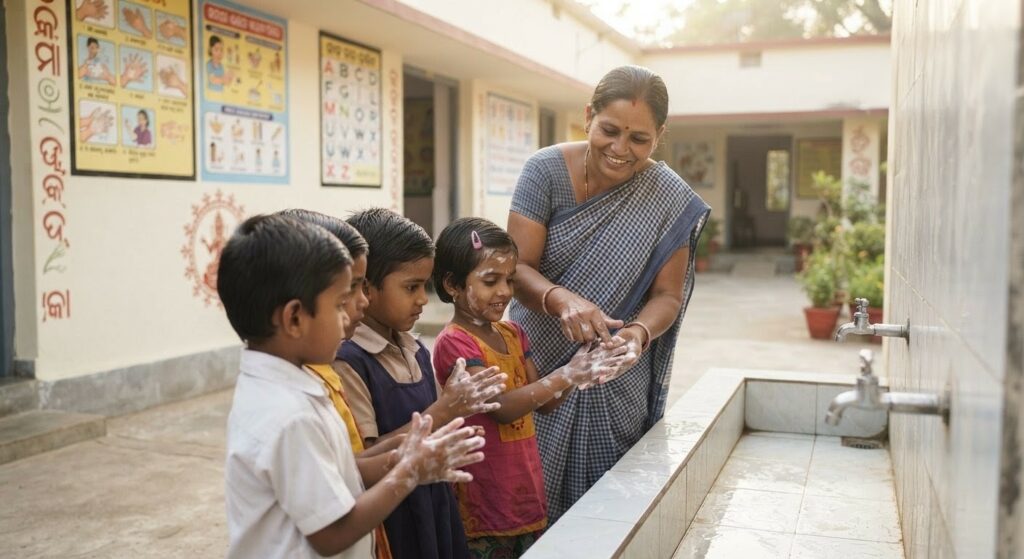
The most recent evidence comes from a 2025-published intervention study run across rural Anganwadi centres in Odisha, with fieldwork carried out through 2024. It offers the clearest recent signal of what targeted hygiene programmes can do, and it also shows how low the starting point still is.
- Handwashing before meals among enrolled children rose from 0 to 82.6 percent after a structured hygiene intervention
- Safe drinking water usage rose from 0 to 60.9 percent over the same period
- Footwear use in toilets rose from 17.4 to 78.3 percent
- Infection symptoms among children fell from 39.1 to 4.4 percent
This was a small pilot across 4 Anganwadi centres and 45 children, so it is not a state-wide figure, but the near-zero baseline it recorded before the intervention lines up closely with the last full state-level survey. To be clear, these results describe one localized programme and should not be read as representative of Odisha as a whole.
For state-wide context, the NSS 76th Round Survey (2018-19), still the most recent large-scale survey with Odisha-specific handwashing data, found only 9.2 percent of households washed hands with soap and water before meals, and 46.3 percent did so after defecation, among the lowest rates in India. Himachal Pradesh and Sikkim reported 85 to 100 percent compliance on the same indicators in that survey, for comparison. Odisha has not had a state-wide survey since that captures the same indicators at the same scale, which is itself part of the problem this article gets into below.
Why These Numbers Matter
A baseline of 9.2 percent before meals is easy to skim past. What it actually means is that roughly nine out of ten households in Odisha ate food without washing their hands with soap first as of the last full survey, which directly raises the risk of diarrhoeal and respiratory illness in children under five.
The 2025 Anganwadi pilot study backs this up in a different way. Its enrolled children started at a 0 percent handwashing-before-meals rate, and infection symptoms nearly disappeared once that number rose to 82.6 percent through a structured intervention. That is a small, localized sample rather than a state-wide result, but it shows the same gap the state-wide survey pointed to, and it shows how directly closing it improves child health.
Hand hygiene is also one of the cheapest public health interventions available. Unlike a hospital or a water treatment plant, a handwashing station and a bar of soap cost very little, yet Odisha’s low starting point suggests the barrier is not cost but habit, awareness, and access working together.
The Challenges Odisha Faces
Several factors compound to keep Odisha’s hand hygiene numbers low.
Geography and Disaster Exposure
Odisha’s terrain and its regular exposure to cyclones and floods disrupt water supply and toilet access, which makes consistent hand hygiene harder to sustain in the aftermath of every disaster cycle.
Soap Access Over Water Access
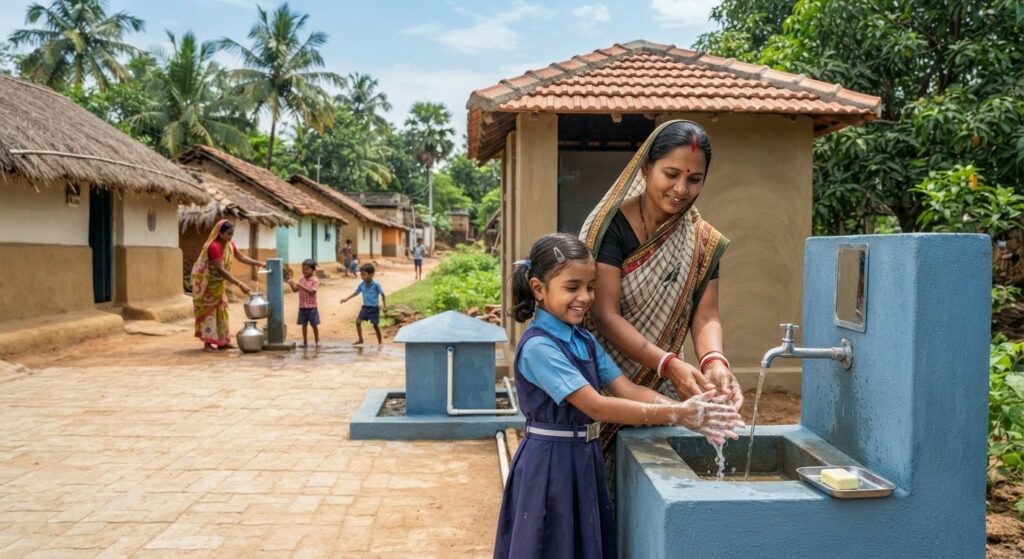
Odisha has made real progress on water and sanitation infrastructure, but soap availability at the point of handwashing has lagged behind. Nearly half of households default to ash, mud, or sand instead, which points to a soap gap rather than a water gap.
No Dedicated Nodal Department
Hand hygiene sits across four separate departments, Panchayati Raj and Drinking Water, Health and Family Welfare, School and Mass Education, and Women and Child Development. None of them owns it as a primary mandate, so it consistently becomes a secondary line item inside larger water and sanitation schemes.
Behaviour Lags Behind Infrastructure
Even where toilets and water points exist, the NSS data shows the practice of washing hands at critical moments, before meals, after defecation, after handling child waste, has not caught up. Infrastructure alone has not shifted behaviour.
Also Read: Small Cats in Odisha: The Hidden Wild Felines of Eastern India
What Odisha Has Done So Far
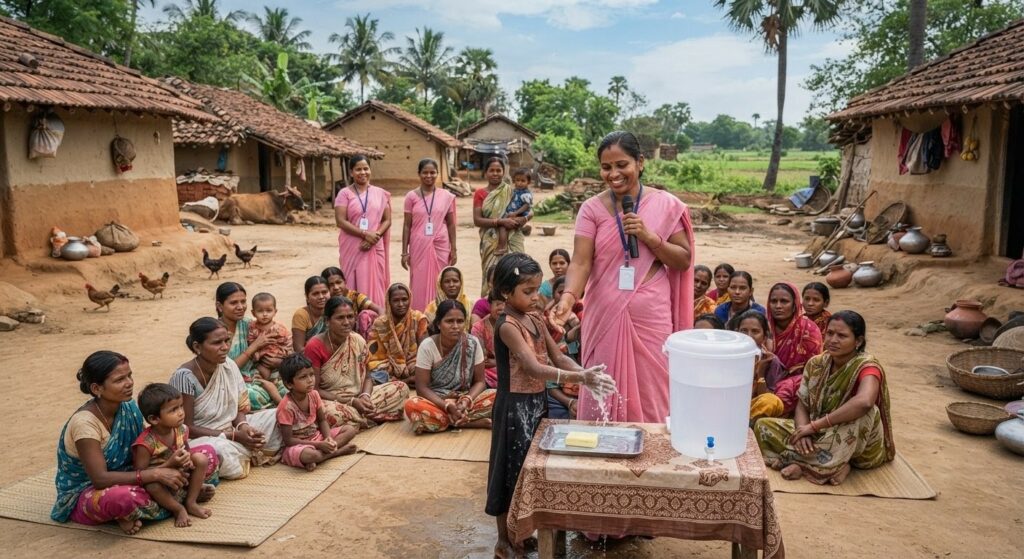
Odisha marks Global Handwashing Day every October 15, and government departments, UNICEF, and NGOs have run school-based awareness campaigns since 2020. The 2021 theme, “Our Future is at Hand, Let’s Move Forward Together,” pushed for more coordinated action across the state.
Four departments carry most of the relevant schemes.
Panchayati Raj and Drinking Water
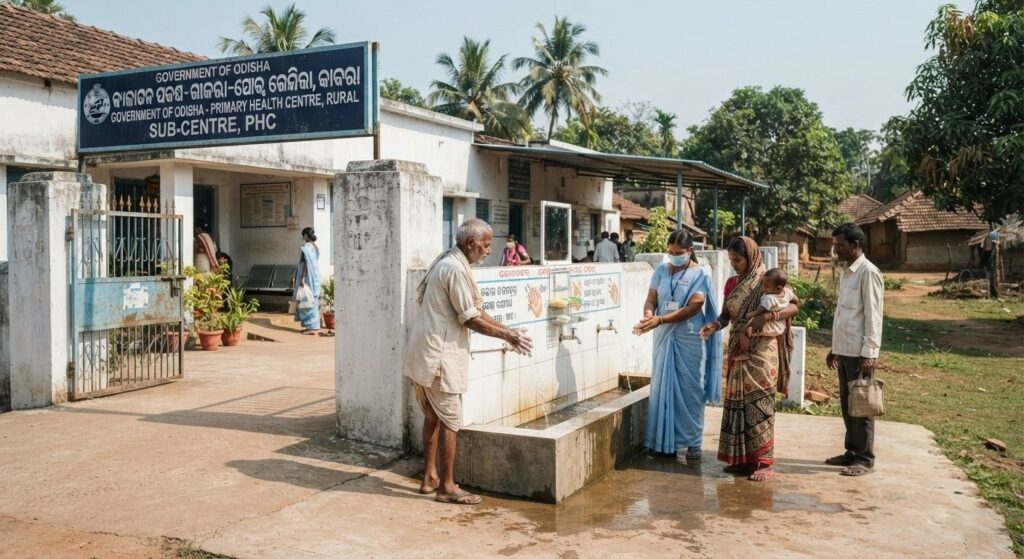
The BASUDHA scheme supplies piped water to rural households but does not mention hand hygiene directly. The Odisha Rural Sanitation Policy 2020 is the state’s clearest hygiene-focused document, targeting handwashing at critical times and safe child faeces disposal across households, schools, and health centres.
Health and Family Welfare
The National Health Mission has expanded paediatric care funding, and its VISHWAS campaign has folded hand hygiene into a broader village-level water and sanitation push. No other state health scheme currently carries a specific hand hygiene component.
School and Mass Education
The MO School Abhiyan funds school infrastructure through flexible grants that schools can direct toward handwashing stations, though hygiene is not a stated goal of the scheme. The 2021-22 Mid-Day Meal budget specifically funds multi-tap handwashing stations for students before meals.
Women and Child Development and Mission Shakti
The MAMTA maternity benefit scheme has no hygiene component, but related state policies on early childhood care and child protection reference hand hygiene. Anganwadi centre planning is where a dedicated hygiene budget line could realistically be added.
Key Recommendations
The pattern across all four departments is the same. Hand hygiene appears as a side effect of other schemes rather than a funded, monitored objective. A three-phase strategy would close that gap.
- Response phase (0 to 12 months), fix hand hygiene infrastructure in schools, health centres, and anganwadis
- Rebuild phase (2 to 3 years), add dedicated budget lines and run hand hygiene indicator surveys
- Reimagine phase (5 years), embed hygiene behaviour change through sustained communication campaigns
On finance and institutions, the priority actions are straightforward.
- Budget separately for hand hygiene hardware, maintenance, and communication, not just water infrastructure
- Name one nodal department for cross-sector hand hygiene planning
- Pair ASHA and Anganwadi frontline workers on shared hygiene outreach
- Publish hand hygiene data consistently so progress can be tracked year on year
- Back low-cost private sector innovations such as tap devices and discounted soap bars
Odisha does not have a water problem so much as a soap and habit problem, and the data makes that distinction clear. Closing it will take less money than building new infrastructure, but it will take a department willing to own hand hygiene as a goal in itself rather than a footnote inside larger schemes.
Handwashing in Odisha will not improve through one more awareness week in October. It will improve when a budget line, a monitoring indicator, and a named department sit behind it every month of the year.
Frequently Asked Questions
Why is hand hygiene in Odisha lower than in most other Indian states?
Survey data attributes it to low soap access at the point of handwashing, disaster-driven disruptions to water and sanitation, and the absence of a single department responsible for hygiene outcomes.
What percentage of Odisha households wash hands with soap before meals?
The most recent state-wide figure, from the NSS 76th Round Survey of 2018-19, found only 9.2 percent of households in Odisha washed hands with soap and water before meals. A 2025 pilot study in a small number of rural Anganwadi centres found handwashing rates could be pushed above 80 percent with targeted intervention, though that result reflects one localized programme, not the state as a whole.
Which government scheme addresses hand hygiene most directly in Odisha?
The Odisha Rural Sanitation Policy 2020 is the most hygiene-specific policy, covering handwashing at critical times and safe disposal of child faeces across households and institutions.
When is Global Handwashing Day observed?
Global Handwashing Day falls on October 15 every year and has been marked in Odisha through school campaigns and government-NGO partnerships since 2020.
Also Read: Beyond the Promise of MSP: Structural Realities of Paddy Procurement in Odisha

