


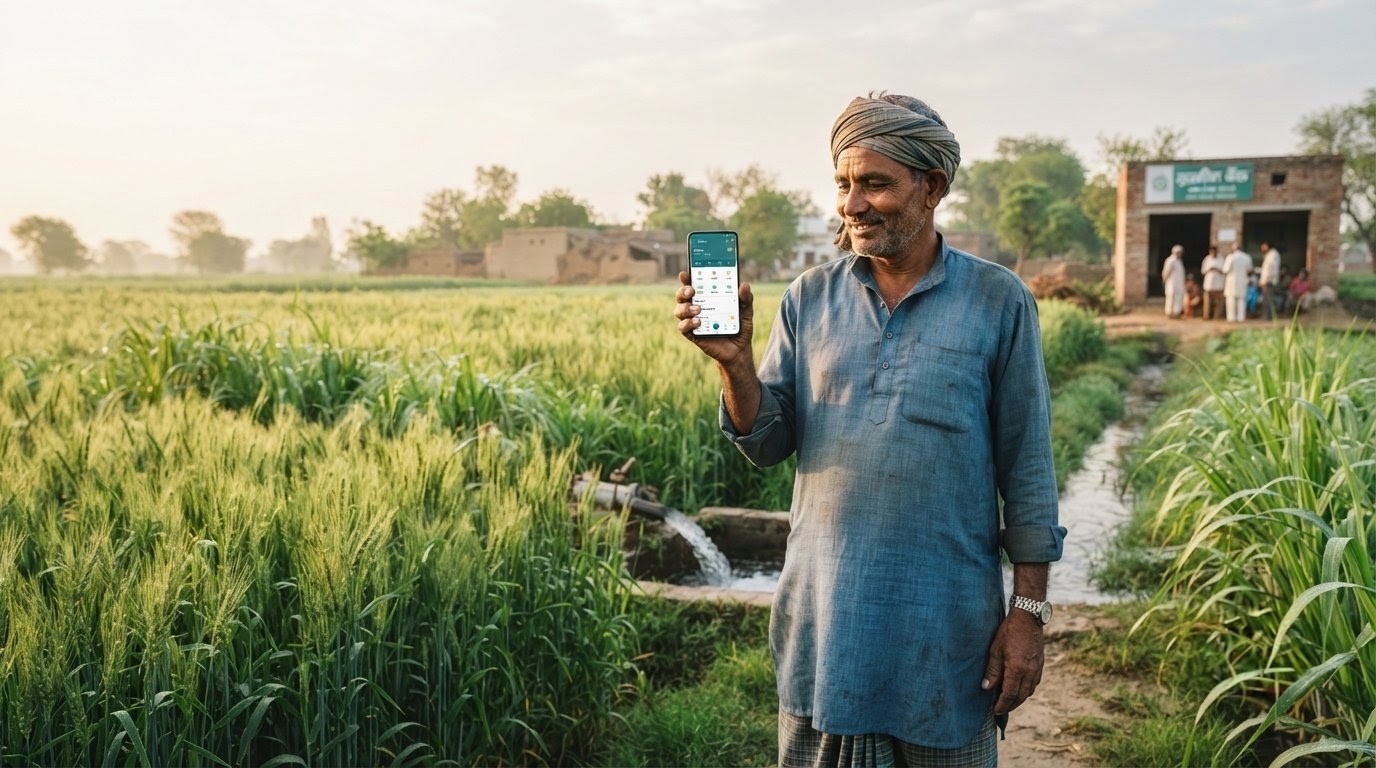
Banks are no longer just places where farmers deposit savings or take a loan before the sowing season. They have become one of the central pillars holding up India’s rural economy. From issuing a Kisan Credit Card to a small farmer in Odisha to refinancing a self help group in Tamil Nadu, banks touch nearly every part of rural life today. Understanding the role of banks in agriculture and rural development has become essential for anyone tracking how India’s rural economy is changing.
Agriculture still supports a large share of India’s workforce, and rural households continue to depend on formal credit for everything from crop inputs to their children’s education. This blog examines the role of banks in agriculture and rural development in India, exploring how banks, Regional Rural Banks, and NABARD collaborate, the changes that have occurred in recent years, and the areas that still require improvement. By the end, the connection between formal credit and rural progress should be much clearer.
Table of Contents
Why Banking Matters for Agriculture and Rural Development
India’s economy has grown steadily over the past decade, yet the health of the agricultural sector still shapes rural incomes and consumption patterns far more than headline GDP numbers suggest. When farm incomes are strong, rural demand for goods and services rises with it. When credit dries up or a season fails, that effect ripples through the wider economy. This is exactly why banks remain central to policy discussions about rural India year after year.
Access to formal banking gives rural households a way to invest in better seeds, irrigation and equipment instead of relying on informal lenders who often charge extremely high interest. It also gives them a cushion against the seasonal swings in income that are common in farming. Rural households that hold a Kisan Credit Card, for instance, can draw on sanctioned credit at the start of a season rather than scrambling for cash when input costs are highest. This is why financial inclusion in rural India and stronger agricultural finance in India are treated as development priorities and not just financial ones.
The scale of this need also explains why so much policy attention goes into strengthening Regional Rural Banks specifically. Regional Rural Banks were designed from the outset to sit closer to farmers than large commercial banks, and that proximity still matters when a household needs a loan sanctioned quickly during a planting window.
Role of Banks in Agricultural Development
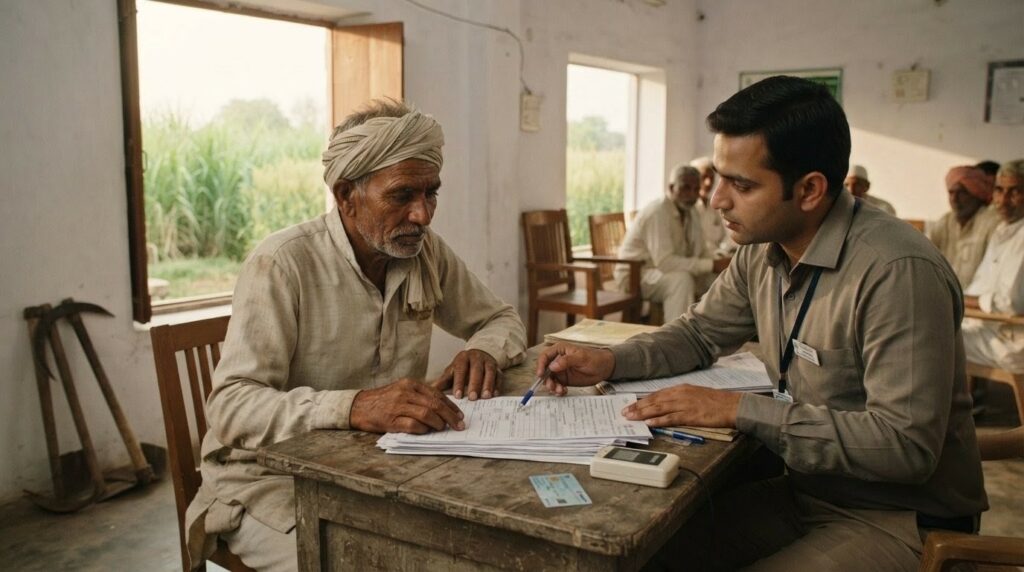
Banks support agriculture in a few distinct ways, and each of them ties back to the same underlying goal, which is making sure farm households are not left without options when they need money the most.
Credit for farming operations
Short term crop loans and long term loans for machinery, irrigation and land development help farmers plan beyond a single season. Agricultural credit in India has grown from about Rs 8 lakh crore in 2014-15 to a target of Rs 27.5 lakh crore for 2024-25, with Rs 19.28 lakh crore disbursed by the end of December 2024, roughly 70 percent of the target for the year. A large share of this credit now flows through the Kisan Credit Card, which has become the default entry point for most farmers seeking formal crop finance.
Support for small and marginal farmers
The share of credit going to small and marginal farmers has risen from around 41 percent in 2014-15 to 57 percent in 2023-24. This shift matters because these are the farmers who historically had the least access to formal credit, and Regional Rural Banks in particular have played a large role in reaching this group, since their branch networks sit deeper in rural districts than most commercial bank branches.
Financing allied activities
Banks now fund dairy, poultry, fisheries and animal husbandry alongside crop loans, recognising that rural income today comes from more than one source. A Kisan Credit Card can now be used to finance these allied activities as well, not just crop production, which has widened its usefulness considerably.
Crop insurance and risk cover
Bank linked insurance schemes have expanded the area under coverage in recent years, giving farmers some protection against weather related losses. Insurance premiums are frequently deducted directly through linked farm loan accounts, which keeps enrollment simple for farmers who might otherwise skip a separate application process.
Role of Banks in Rural Development
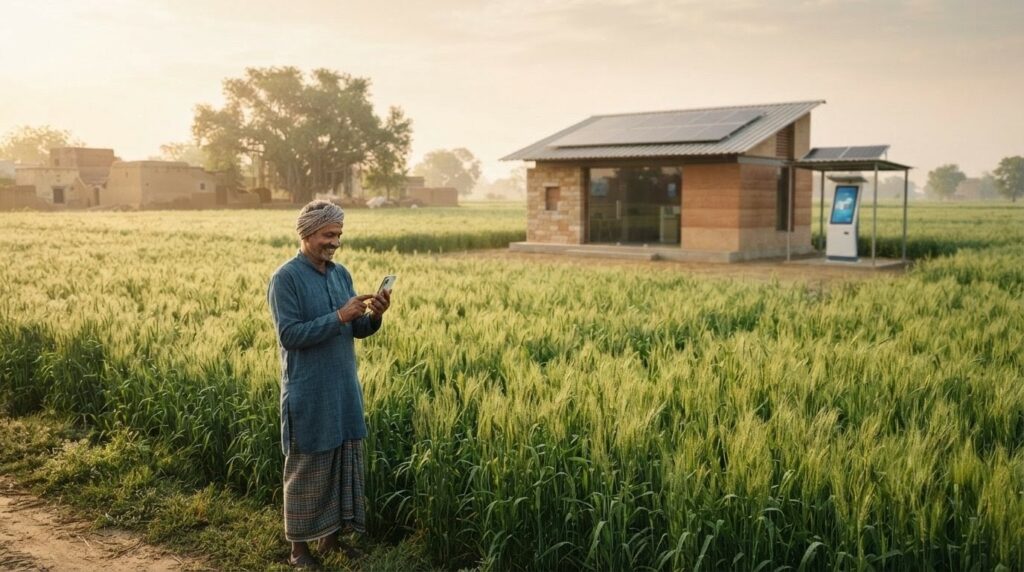
Beyond agriculture, banks support the broader rural economy in ways that are easy to overlook. This is really where the role of banks in agriculture and rural development stops being just about farming and starts being about the wider rural economy.
Funding rural entrepreneurship
Loans to small businesses, weavers, artisans and rural micro enterprises help diversify rural income beyond farming alone. Many of these loans are also routed through Regional Rural Banks, which understand local trades and typically have simpler documentation requirements than larger banks.
Enabling savings and remittances
A basic savings account lets rural households build a safety net and receive money from family members working elsewhere without relying on informal channels.
Supporting rural infrastructure
Bank funded projects, along with NABARD’s Rural Infrastructure Development Fund, have supported roads, irrigation and storage facilities in areas that would otherwise struggle to attract investment.
Backing women led self help groups
Bank linkage programmes for self help groups have given millions of rural women access to credit for the first time, often through group based lending models that reduce individual risk. Several of these groups eventually graduate to individual products such as a Kisan Credit Card once their credit history is established.
Regional Rural Banks (RRBs) and Their Importance
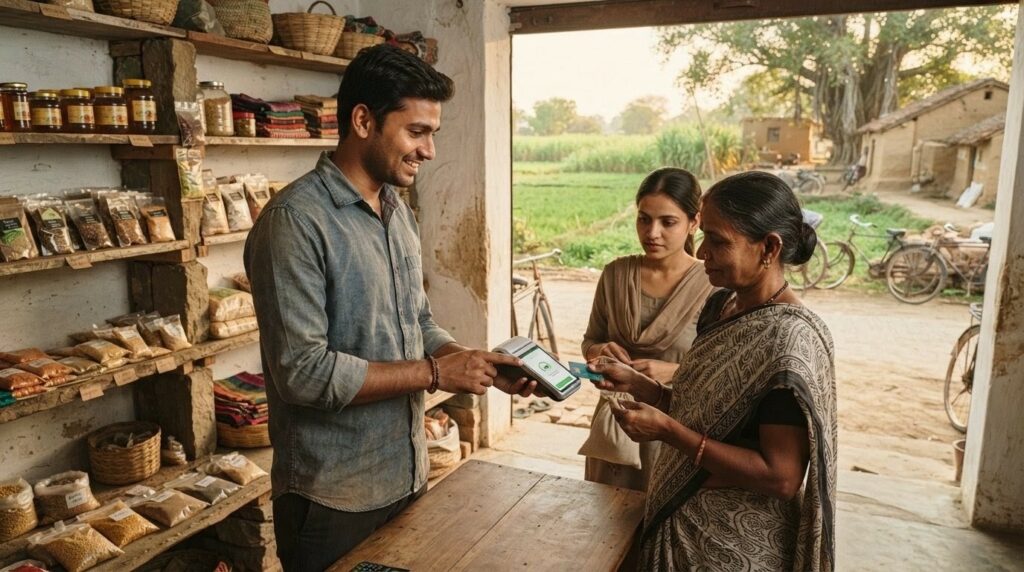
RRBs were set up in 1975 following the recommendations of the Narasimham Committee, with the first RRB, Prathama Grameen Bank, established that October. Their purpose was straightforward. Take banking to areas where commercial banks were not reaching and do it at a cost rural households could afford. Nearly five decades later, Regional Rural Banks remain one of the most direct expressions of the role of banks in agriculture and rural development, precisely because they were built for this purpose from day one.
RRBs have gone through a long consolidation process since their founding. Following the Vyas Committee’s 2001 recommendations, the number of Regional Rural Banks was brought down from 196 to 43 between 2004-05 and 2020-21. A fourth phase of consolidation in 2024 reduced this further to 28 RRBs operating across 26 states and 2 union territories, under what is often called the One State One RRB model. Fewer, larger and better capitalised Regional Rural Banks are expected to serve farmers more reliably than a fragmented network of smaller ones.
Today RRBs remain one of the largest rural lending networks in the country, and the role of Regional Rural Banks in rural development is still expanding rather than shrinking. Agriculture continues to account for the largest share of their outstanding advances, and they remain especially important in states with limited commercial bank presence. Their ownership structure is also distinct. The central government, the concerned state government and a sponsor bank jointly hold equity in each RRB, with the sponsor bank typically playing the lead role in day to day operations.
Regional Rural Banks are not without problems. Weak capital positions, asset quality issues in agricultural lending and gaps in technology adoption have all been flagged in recent NABARD and government reviews. The 2009 Chakrabarty Committee recommended recapitalisation of weaker Regional Rural Banks and stricter capital adequacy norms, and later reform efforts have continued to focus on strengthening governance and pushing digital adoption across the network. A farm loan issued by an RRB, for example, still needs the same digital backbone as one issued by a large commercial bank, and closing that gap has been a slow but steady process.
NABARD, SHGs and Kisan Credit Cards
NABARD and rural development in India are closely tied together, since NABARD functions as the apex development bank for agriculture and rural India, refinancing Regional Rural Banks, cooperative banks and commercial banks while also directly supporting self help groups and rural infrastructure projects. Its State Focus Papers, published every year, map out district level credit potential and help guide how banks plan their lending in each state.
The Kisan Credit Card scheme, introduced in 1998, remains one of the most widely used instruments for agricultural credit. As of March 2024, there were 7.75 crore operational Kisan Credit Card accounts with an outstanding loan amount of Rs 9.81 lakh crore. The scheme has been extended over the years to cover fisheries and animal husbandry as well as crop loans, and it continues to be the single most recognisable product tied to the role of banks in agriculture and rural development. Most RRBs now issue the Kisan Credit Card as a standard product alongside commercial banks and cooperative banks, which has helped standardise access to farm credit across different types of lenders.
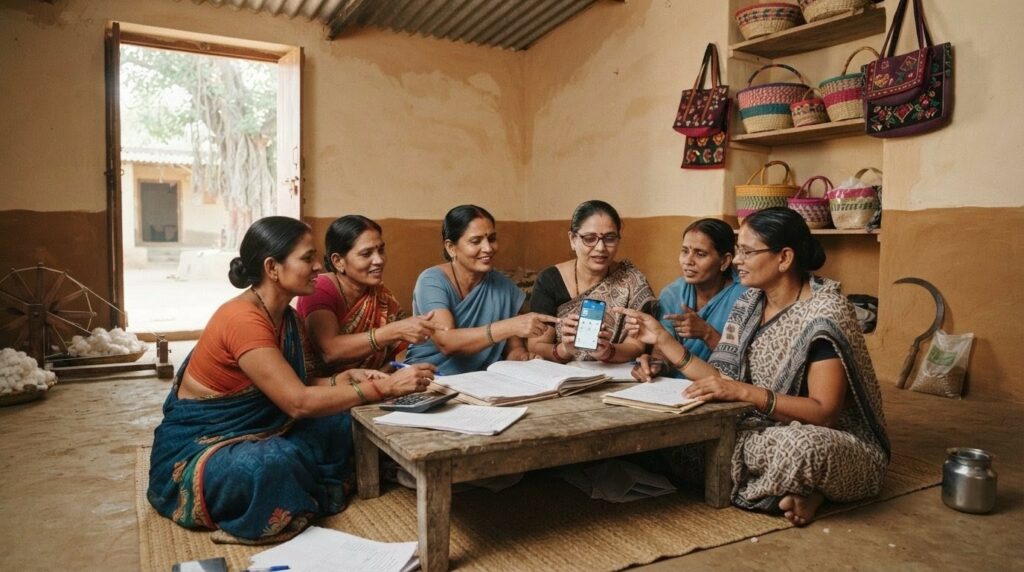
Self help groups linked to banks have also become a major channel for rural credit, particularly for women. NABARD’s SHG bank linkage programme has helped normalise small, group guaranteed lending in villages where individual collateral based loans were never realistic. Many Regional Rural Banks report that their self help group portfolios carry lower default rates than individual agricultural loans, which has encouraged further expansion of this model.
Financial Inclusion in Rural India
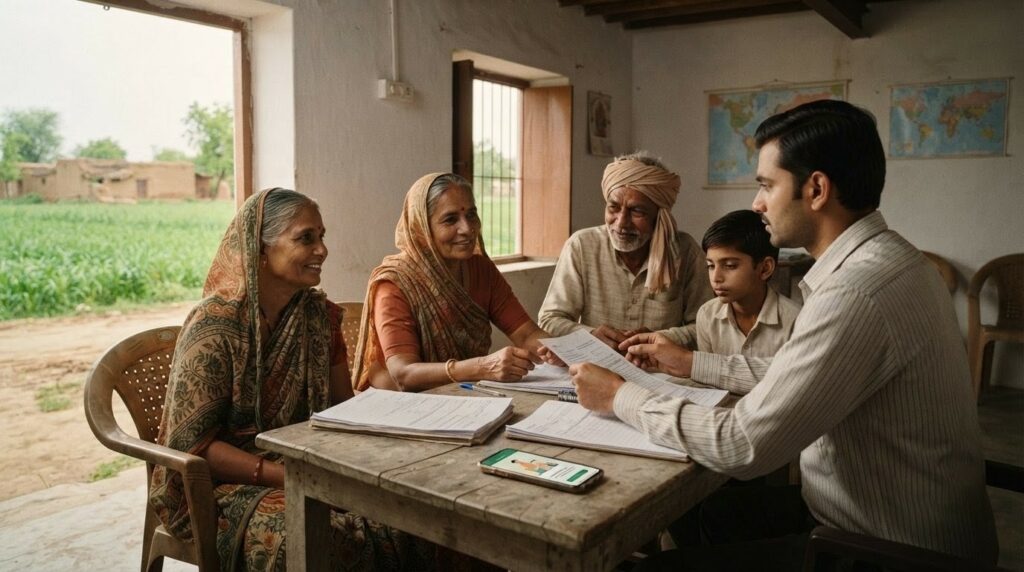
Financial inclusion has moved a long way from where it stood two decades ago. The RBI’s Financial Inclusion Index stood at 67.0 in March 2025, up from 64.2 the year before, with gains recorded across access, usage and quality of financial services.
The Pradhan Mantri Jan Dhan Yojana has been central to this shift. It had brought over 55.98 crore people into the formal banking system as of August 2025, with more than 55 percent of these accounts held by women. A network of roughly 13.55 lakh Bank Mitras, along with over a hundred Digital Banking Units, has helped extend basic banking services into areas that still lack a physical branch. Many of these Bank Mitras operate in villages served primarily by RRBs, which gives them an outsized role in actually delivering financial inclusion on the ground rather than just enabling it on paper.
That said, having an account is only the first step. The real marker of financial inclusion is whether rural households actually use credit, insurance and digital payments in a meaningful way, and on this front there is still ground to cover, particularly in India’s more remote and underserved districts. A household that opened a Jan Dhan account but has never applied for a Kisan Credit Card or taken a formal loan is only partially included, in the fuller sense of the term.
Major Challenges in Rural and Agricultural Credit
Despite the progress, several structural challenges still shape rural credit in India.
Uneven credit distribution
Rural areas still see lower credit to deposit ratios compared to urban centres, meaning rural savings often end up funding lending elsewhere.
Asset quality pressure
Crop failures, price volatility and natural disasters continue to push up loan defaults in agricultural lending, which weighs on the financial health of Regional Rural Banks and cooperative banks in particular. Since a large share of Kisan Credit Card lending is short term and tied directly to a single crop cycle, a bad season can quickly show up in asset quality numbers for the lenders most exposed to agriculture.
Limited reach in remote areas
Poor connectivity and thin banking infrastructure still leave some regions underserved, despite the expansion of digital banking units and banking correspondents.
Dependence on informal lenders
While institutional credit has grown, some rural households, particularly the poorest, continue to rely on informal moneylenders charging high interest rates. This remains one of the clearest gaps in the role of banks in agriculture and rural development, since formal credit still has not fully displaced informal lending in every pocket of rural India.
Capacity and skill gaps
RRBs and rural branches often struggle to attract and retain skilled staff, which affects service quality and risk management in these institutions.
Also Read: Farmers’ Suicides in India: The Issue of Concern
Government and RBI Initiatives
The push toward stronger rural credit has been backed by consistent policy support.
Priority sector lending norms
Banks are required to direct 40 percent of adjusted net bank credit toward priority sectors, which includes agriculture, ensuring a baseline level of rural credit flow regardless of market conditions.
Recapitalisation and consolidation of Regional Rural Banks
Government backed capital support combined with the ongoing One State One RRB consolidation aims to build fewer but financially stronger RRBs that can support agriculture and rural development on a larger scale.
Digital push through Kisan Rin Portal
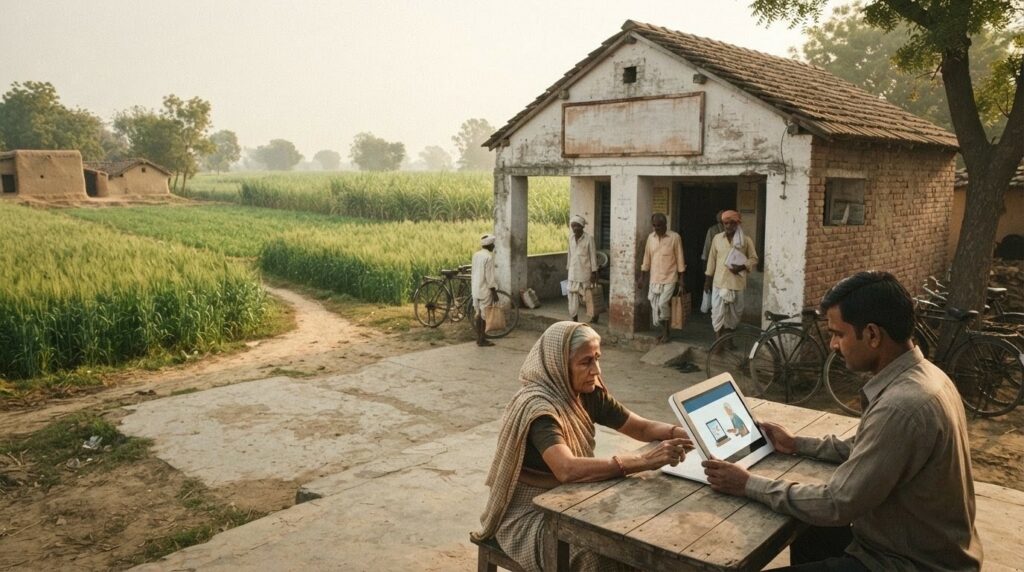
The Modified Interest Subvention Scheme is now processed digitally through the Kisan Rin Portal, which has sped up claim settlement for banks offering subsidised crop loans, including many issued against a Kisan Credit Card.
Expansion of PM Kisan and crop insurance
Direct income support through PM Kisan, alongside an expanding crop insurance base, works alongside credit access to reduce farmer distress during bad seasons.
How Banks Can Strengthen Rural Development
Looking ahead, a few shifts could meaningfully improve how banks serve rural India and strengthen the overall role of banks in agriculture and rural development.
Move from directed lending to opportunity led lending
Treating rural and agricultural lending as a genuine business opportunity rather than a mandated obligation tends to produce better outcomes for both banks and borrowers.
Expand digital and doorstep banking
Continued investment in banking correspondents, digital banking units and mobile based services can close the last mile gap that still excludes some rural households from products like the Kisan Credit Card. This matters especially for Regional Rural Banks, since their customer base is more likely to be in areas without reliable internet access.
Strengthen Regional Rural Bank governance
Better risk management, stronger boards and continued capital support will help RRBs stay financially stable while expanding their reach.
Build farmer specific financial products
Weather linked insurance, flexible repayment schedules tied to harvest cycles and warehouse receipt financing can all reduce the mismatch between farm income patterns and standard loan structures. Expanding what a Kisan Credit Card can be used for, beyond input purchases and into post harvest storage or transport, could also help farmers hold on to better prices for their produce.
Future of Rural Banking in India
The direction of rural banking in India points toward deeper digital integration, fewer but stronger Regional Rural Banks, and credit products designed specifically around how rural and agricultural income actually behaves. The rise in the Financial Inclusion Index, the steady growth in ground level agricultural credit and the ongoing RRB consolidation all suggest a system that is maturing rather than simply expanding for its own sake.
The task ahead is less about adding more bank branches and more about making sure the credit, insurance and digital tools already available actually reach the households that need them most, particularly small and marginal farmers and rural women. Wider and simpler access to a Kisan Credit Card, paired with a stronger network of Regional Rural Banks, is likely to remain central to that effort for the foreseeable future.
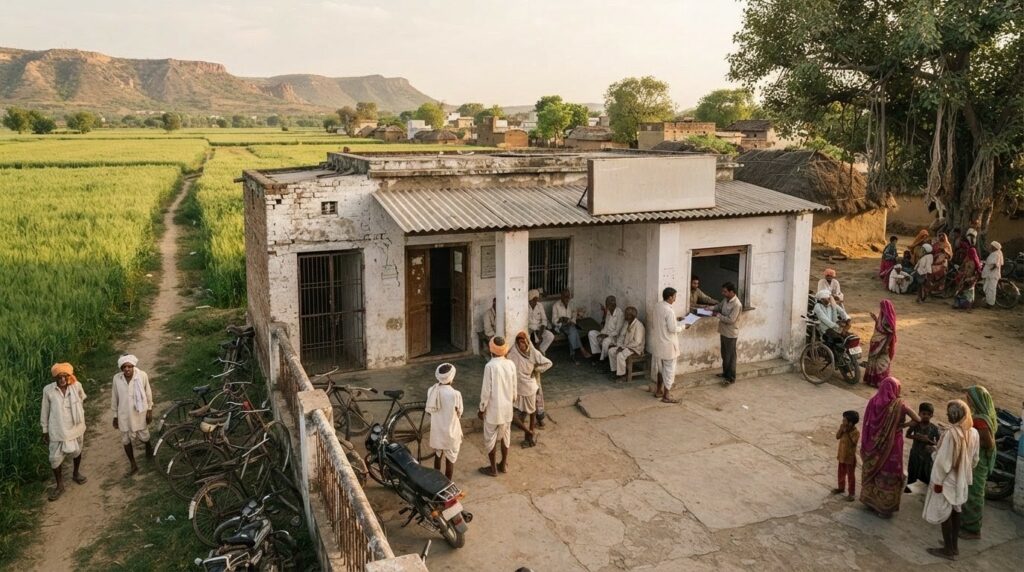
The role of banks in agriculture and rural development goes well beyond lending. Banks and agricultural development in India are now closely linked through infrastructure support, rural entrepreneurship, financial inclusion and long term sustainable growth. RRBs, NABARD, self help groups and the Kisan Credit Card each play a distinct role in this system, and together they have moved rural credit access forward substantially over the past decade.
Challenges around asset quality, remote area reach and institutional capacity remain real, but the direction of policy and consolidation efforts suggests a rural banking system that is being built for the long term rather than patched together season by season. Anyone trying to understand the role of banks in agriculture and rural development today has to look at this full picture, from Regional Rural Banks and NABARD down to something as simple and widely used as the Kisan Credit Card.
Frequently Asked Questions
What is the role of banks in agricultural development in India?
Banks provide credit for crop production, farm equipment, irrigation and allied activities like dairy and fisheries, while also offering insurance products that help farmers manage risk. This is one of the clearest examples of the role of banks in agriculture and rural development in practice.
What are RRBs and why do they matter?
Regional Rural Banks are jointly owned by the central government, state governments and sponsor banks, and they exist specifically to extend affordable credit and banking services to rural and agricultural areas that commercial banks often do not reach as effectively.
How does NABARD support rural development?
NABARD refinances Regional Rural Banks, cooperative banks and commercial banks for agricultural and rural lending, supports self help group linkage programmes and funds rural infrastructure through schemes like the Rural Infrastructure Development Fund.
What is a Kisan Credit Card used for?
A Kisan Credit Card gives farmers access to short term credit for crop production as well as term loans, and has been extended over the years to also cover fisheries and animal husbandry needs.
What is financial inclusion in the context of rural banking?
Financial inclusion means ensuring rural households have real access to and actually use savings accounts, credit, insurance and digital payment tools, not just that an account exists on paper.
Also Read: Digital Literacy in Rural India: Why It Matters and How It Can Transform Lives

