


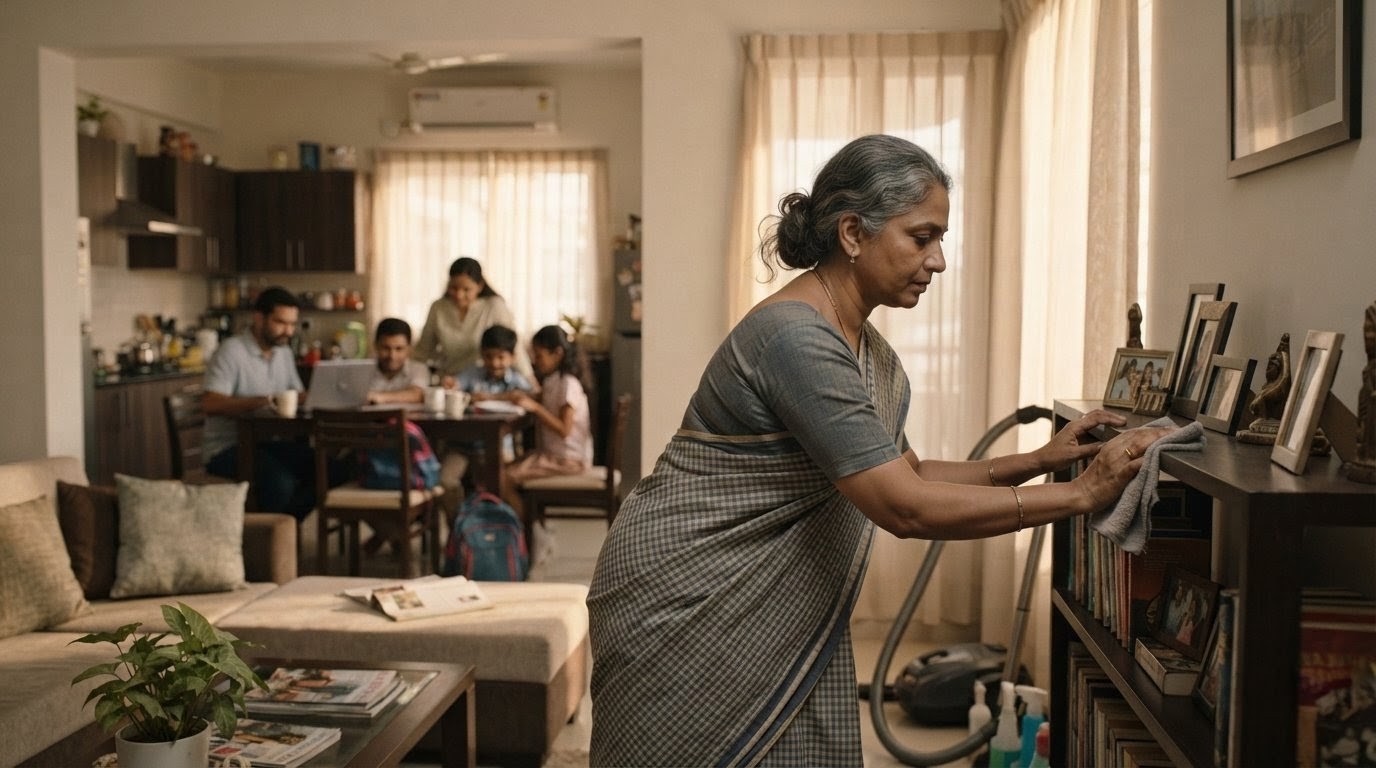
The abuse a young help worker faced inside her employer’s home in Gurgaon sparked national outrage in 2025. For a few days, domestic workers were finally part of the public conversation. Then the story faded, as it always does. Violence against this workforce has been documented for decades, yet the exploitation only draws attention when a single case reaches the media.
The government response tends to follow the same pattern. A committee is formed, a probe is ordered, and the underlying problem goes untouched. There is still no uniform national policy governing domestic workers in India. Because most of them migrate from one state to another for work, the absence of coordination between the Union and State Governments leaves millions without protection.
This piece looks at who India’s domestic workers actually are, what the numbers say about their lives, the patchwork of domestic workers laws in India meant to protect them, and what a genuine domestic workers’ rights in India framework would need to include.
Table of Contents
Who Are Domestic Workers in India
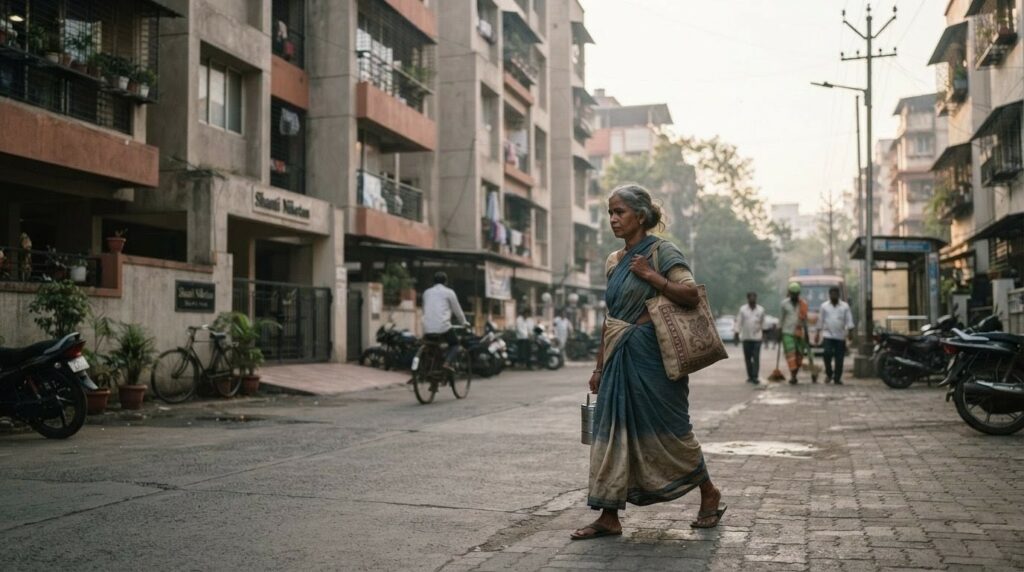
Domestic workers form a large share of India’s informal urban workforce. A typical worker, usually a woman, moves across five to six households a day, spending roughly 30 minutes in each home to clean, wash, mop, dust or cook. Most render their services twice daily, once in the morning and once in the evening, with a work day that can stretch from 5 am to noon and then 5 pm to 7 pm.
Pay varies sharply by household, depending on family size and the volume of work involved. Monthly wages commonly range between Rs. 800 and Rs. 3,500, figures that have stayed strikingly low even as the cost of living has climbed. Some employers add small gestures during festivals such as Diwali, Dussehra, Holi or Pongal, a saree or a bit of cash, along with occasional help with basic medicines. These remain informal gestures rather than entitlements, and workers have no legal claim to them.
Girls and women aged six and above are several times more likely than boys and men to take on domestic and care work, a pattern that starts early and shapes the life trajectory of millions of Indian women before they even reach adulthood.

How Domestic Workers Are Categorised
The International Labour Organisation’s Domestic Workers Convention, 2011 (C189) defines domestic work as work performed in or for a household, and a domestic worker as anyone engaged in that work within an employment relationship. Someone who helps out occasionally, and not as an occupation, does not count as a domestic worker under this definition.
Based on hours and the nature of employment, domestic workers in India generally fall into three categories.
| Category | Definition |
| Part-Time Worker | Works for more than one employer for a specified number of daily hours, or performs specific tasks for each employer every day |
| Full-Time Worker | Works for a single employer every day for a fixed number of hours and returns home after work |
| Live-In Worker | Works full time for a single employer and stays on the employer’s premises, without returning home |
This classification matters because protections, and the lack of them, look different depending on which category a worker falls into. Live-in workers face the highest risk of exploitation, since they are cut off from family and community oversight for extended stretches.
Current Status of Domestic Workers in India
Estimating the number of domestic workers in India is harder than it should be, and the range of figures in circulation says a lot about how invisible this workforce remains in official data. Government estimates put the number at around 4.2 million, including a large share of women, based on Periodic Labour Force Survey data. The National Domestic Workers’ Movement, which works directly with the community on the ground, puts the real figure above 50 million once informal and unregistered help is counted.
Whichever number is closer to reality, domestic workers rank among the largest categories of informal workers in India, behind only agriculture and construction. More than two-thirds are based in urban areas, and between 2000 and 2010, women accounted for roughly 75 percent of the growth in this workforce, according to the National Domestic Workers’ Movement.
Most domestic workers in India are illiterate or minimally educated, and child labour remains a documented problem within the sector, with children still employed as help and in roadside dhabas despite a legal ban on the practice since 2006. The bulk of them migrate from states including Odisha, Jharkhand, West Bengal, Assam and Chhattisgarh, travelling within their state, across state lines and sometimes abroad in search of work.
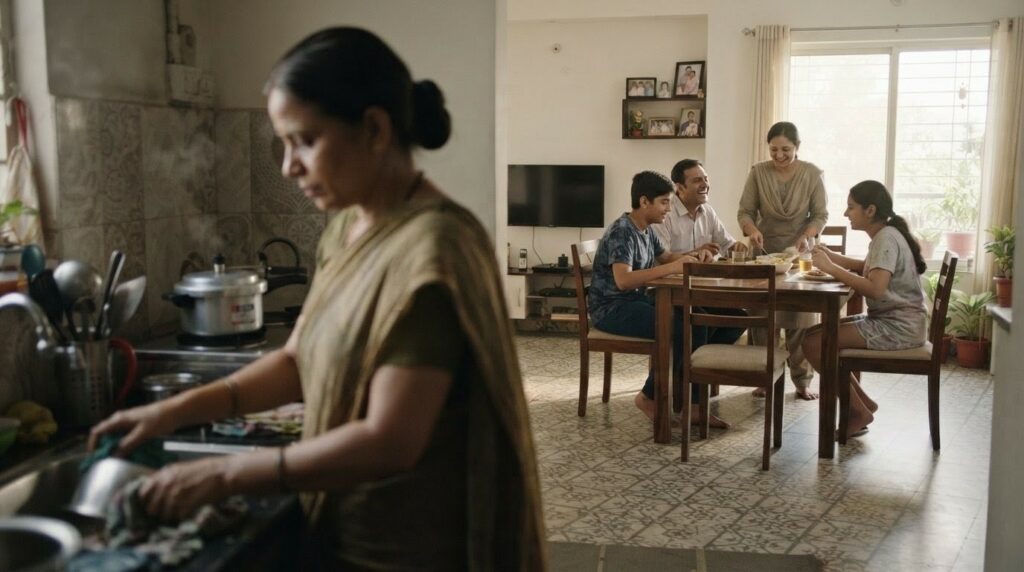
Wages, Working Hours and the Reality on the Ground
Exploitation of domestic workers is not an occasional failure of the system, it is close to a structural feature of it. With almost no legal protection in practice, many end up working 16 to 18 hours a day, without proper food, adequate rest or safe living conditions. Placement agencies operate with little regulation in many states, and there are documented cases of women and children being trafficked and exploited during transit, inside agency offices and inside the very homes where they are meant to work.
On paper, the standards that should apply are fairly clear. No worker should be required to put in more than nine hours a day or 48 hours a week. Live-in workers should not work beyond 12 hours including rest breaks, and live-out full-timers should be capped at 8 hours. Anyone asked to exceed 48 hours a week, up to a hard ceiling of 60 hours including overtime, should be paid at twice her ordinary wage rate for the extra hours. Every worker should also get a break of at least half an hour after every five hours of continuous work, and a weekly day off, regardless of whether she works part-time, full-time or lives in.
The problem is that almost none of this is enforceable. These standards exist mostly as recommendations and draft provisions rather than binding law, which is precisely why this workforce remains one of the few large occupational groups in India without a dedicated labour code of its own.
The Caste Dimension of Domestic Work
Domestic work in India cannot be separated from caste. Data on caste composition shows Scheduled Castes made up 33.4 percent of this workforce in 2004-05 and 31.2 percent in 2009-10, Other Backward Classes rose slightly from 30.7 percent to 32.4 percent over the same period, and upper caste representation fell from 30.3 percent to 28.4 percent. Workers from marginalised castes and communities routinely face compounded discrimination, poverty, patriarchy and caste bias layered on top of each other, which shapes both the wages they are offered and how they are treated inside employers’ homes.
Domestic Work and the Invisibility of Women’s Labour
Indian households have long assumed that certain jobs, cooking, cleaning, childcare, and the constant emotional labour of holding a family together, belong to women by default. Because this work does not produce anything that shows up in a market transaction, economists routinely leave it out of GDP and employment statistics altogether. The result is that an enormous share of the work Indian women do every day is treated as duty rather than labour, whether it happens for a family unpaid or as paid help for someone else’s household.
The scale of this gap is striking. Women in India spend an average of 352 minutes a day on domestic work, compared to 51.8 minutes for men, according to time-use data cited by the World Economic Forum. On average 66 percent of women’s total work in India is unpaid. The 2011 Census counted 159.9 million women whose main occupation was household work, yet officially classified them as non-workers. The International Monetary Fund has estimated that closing the gap between male and female economic participation could grow India’s GDP by 27 percent.
Globally, unpaid domestic labour by women is valued at around 13 percent of GDP. In India, that figure is closer to 40 percent of current GDP, which makes the case for recognising this labour, paid or unpaid, less a matter of goodwill and more a matter of basic economic accounting. For millions of Indian women, that recognition gives them a claim to equality inside a structure that has historically only valued paid work done by men, and it opens the door to demanding a fairer division of that labour rather than simply absorbing it as an unquestioned duty.
None of this means empowerment lies in rejecting domestic work altogether in favour of paid employment outside the home. When women step out to work, the question of who does the housework does not disappear, it usually falls right back on women, reinforcing the same tired idea that women are somehow less serious workers because they carry a double burden.
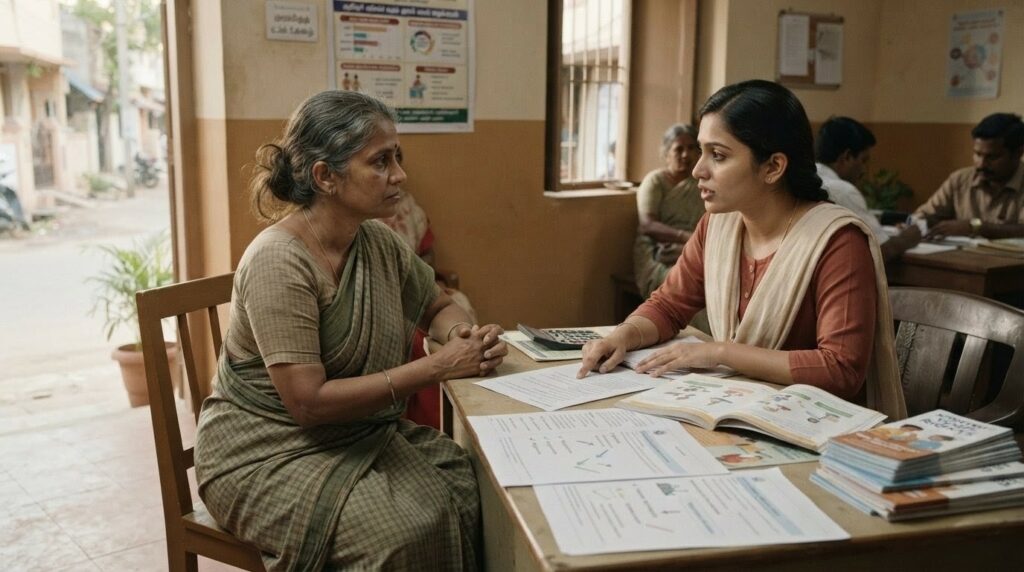
Existing Domestic Workers Laws in India
India still lacks a single, comprehensive law dedicated to domestic workers. What exists instead is a scattered set of general domestic workers laws in India that apply only partially, and often only on paper.
The Unorganised Workers’ Social Security Act, 2008
This law was meant to extend social security to all unorganised sector workers, this group included, with State Governments responsible for welfare schemes covering provident fund benefits, injury compensation, housing, education for workers’ children and skill upgrades. It did not require employers to contribute anything toward a worker’s social security, registration and awareness stayed low, and implementation varied wildly between states. This Act was subsequently repealed and its provisions absorbed into the Code on Social Security, 2020, though practical protection has not meaningfully improved as a result.
The Minimum Wages Act, 1948
Roughly half of Indian states have brought this occupation under the Act as a scheduled employment, but enforcement is weak because workers typically receive less than the notified minimum wage, monitoring is difficult given that the workplace is a private home, and there is no registration requirement linking workers and employers to any authority.
The Payment of Wages Act, 1936
This law requires timely payment of wages, yet employers routinely delay or withhold pay without facing any penalty, largely because the informal nature of the employment relationship leaves little legal recourse.
The POSH Act, 2013
This workforce is technically covered under the Sexual Harassment of Women at Workplace Act, but the law assumes a formal workplace with an Internal Complaints Committee, a structure that simply does not exist inside private homes. Fear of losing income and social stigma keep most workers from ever filing a complaint.
The Equal Remuneration Act, 1976
This Act mandates equal pay for equal work, but wage discrimination against domestic workers, most of whom are women from marginalised communities, remains common and largely unchallenged.
The Bonded Labour System (Abolition) Act, 1976
Bonded labour has been formally abolished in India, yet children and adults in domestic roles continue to be trapped in debt bondage and forced labour through informal and often illegal arrangements.
The Interstate Migrant Workmen Act, 1979
This law covers migrant workers broadly, including those who cross state lines to take up domestic work, but it does not specifically address the particular vulnerabilities they face as migrants working inside private households.
Also Read: All About Consumer Protection Laws in India
Draft Legislation That Never Became Law
Several attempts have been made to give this workforce a dedicated law, and every single one has stalled. The Domestic Workers (Registration, Social Security and Welfare) Bill was proposed in 2008, followed by the Domestic Workers Welfare and Social Security Bill, 2010, drafted by the National Commission for Women in response to widespread reports of abuse. A further attempt, the Domestic Workers’ Welfare Bill, 2016, tried again to define a private household as a legitimate workplace. None of these bills has been passed by Parliament, and India still has no standalone law for domestic workers today, a gap that keeps domestic workers’ rights in India dependent on scattered general statutes.
The new labour codes offer a partial, indirect route to coverage. Domestic workers fall within the scope of the Code on Wages, 2019, meant to guarantee minimum wages and timely payment, and the Code on Social Security, 2020 uses the broader category of wage worker in a way that can extend health insurance, pension and maternity benefits to them. Whether this translates into real protection depends entirely on rules, notifications and enforcement at the state level, most of which are still a work in progress.
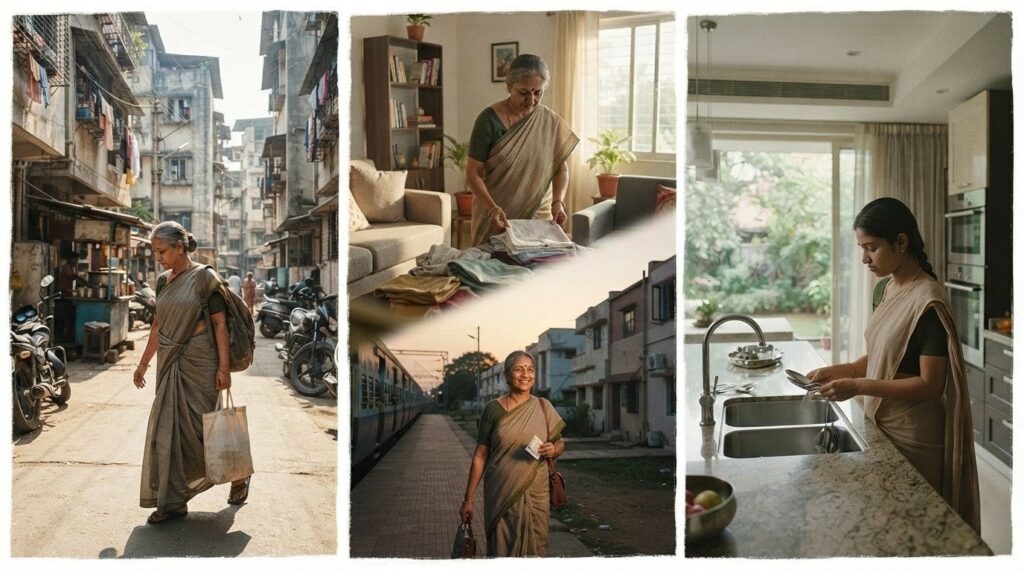
India and International Standards for Domestic Workers
The ILO’s Domestic Workers Convention, 2011 (C189) was the first international treaty to set binding standards specifically for this workforce, covering fair wages, reasonable working hours, safe living conditions for live-in staff and protection from abuse. More than 40 countries have ratified C189 to date. India has not ratified the Convention, even though Indian delegates supported its adoption in 2011, which leaves domestic workers in India outside the one international framework built specifically for them.
The Recurring Challenges Domestic Workers Face
Strip away the legal jargon, and the problems facing this workforce in India come down to a handful of persistent gaps.
There is still no dedicated law recognising domestic workers as formal employees with enforceable rights. Most of this work happens without a written contract, which leaves people exposed to sudden dismissal, unpaid wages and no proof of employment if a dispute arises. Caste and gender discrimination shape who gets hired, what they are paid and how they are treated once inside a household. Monitoring is close to impossible given that the workplace is someone else’s private home. Workers largely go without health insurance, maternity benefits, pensions or paid leave, benefits that formal sector staff take for granted. And abuse, from wage theft to physical and sexual violence, continues to surface in the media with little consequence for the employers involved.
What Real Reform for Domestic Workers Would Look Like
A workable path forward starts with a dedicated Domestic Workers’ Protection Act that formally recognises this work as employment, mandates written contracts specifying wages, hours and benefits, and puts real regulation around the placement agencies that currently operate with almost no oversight.
Alongside new legislation, the existing labour codes need to be applied in explicit, unambiguous terms rather than through vague references that leave room for non-implementation. State governments should set up dedicated Welfare Boards to register workers, monitor conditions and handle grievances, following the model Tamil Nadu built years ago. A national helpline, a functioning complaint mechanism, ratification of ILO Convention 189, and consistent awareness campaigns for both workers and employers would together close most of the gap between what the law says on paper and what actually happens inside households. A firm eight-hour workday with proper overtime pay should stop being an aspiration and start being enforced.
Tamil Nadu’s Model, and What It Shows Is Possible
Tamil Nadu offers the clearest example of what state-level action for domestic workers can look like. Domestic workers were brought under the Tamil Nadu Manual Workers (Regulation of Employment and Conditions of Work) Act, 1982 in 1999, and the state constituted a dedicated Domestic Workers Welfare Board in January 2007. Registered workers gain access to benefits including education assistance for their children, marriage assistance, maternity benefits and accidental death compensation, along with a state-notified minimum wage specific to domestic work.
Tamil Nadu’s experience shows that a functioning welfare structure is not some distant policy fantasy, it already exists in one state and could realistically be replicated elsewhere with political will and consistent funding.
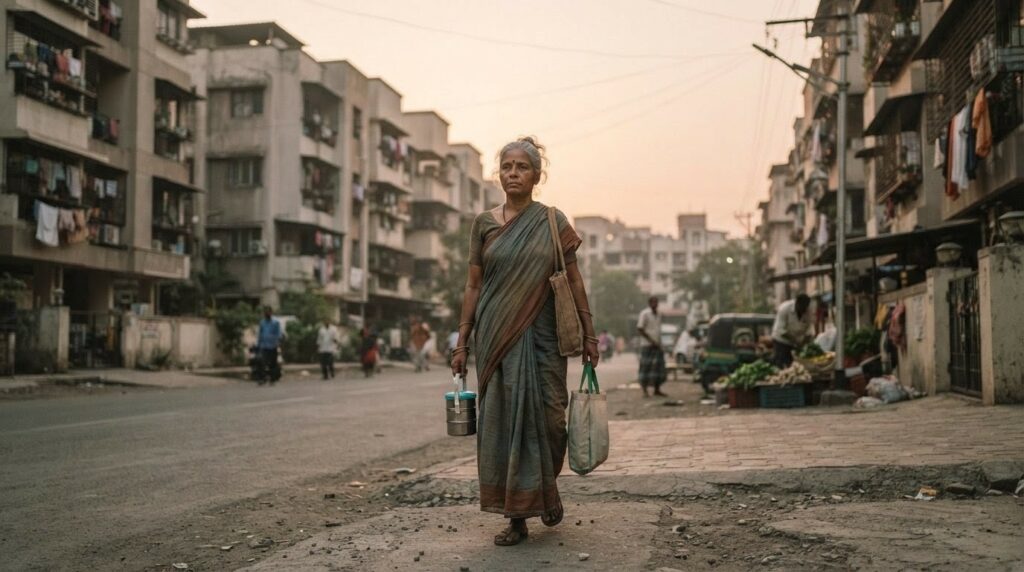
Domestic workers keep Indian households running, and by extension, they make it possible for millions of other people to go out and work. Yet the law still treats domestic workers as an afterthought rather than as workers with the same basic entitlements as anyone else in formal employment. Recognition on paper needs to translate into registration, fair wages, safe working conditions and an enforcement mechanism domestic workers can actually use without risking their livelihood. Until India passes a dedicated law for domestic workers and follows it up with real implementation, the exploitation exposed by cases like the one in Gurgaon will keep happening, and outrage alone will keep failing to fix it.
Frequently Asked Questions
Who counts as a domestic worker under Indian and international law?
A domestic worker is anyone who performs work inside or for a household on an employment basis, whether that work is cooking, cleaning, childcare or caregiving for the elderly or sick. Someone who helps out occasionally rather than as an occupation is not considered a domestic worker under the ILO’s C189 definition.
How many domestic workers are there in India?
Government estimates place the number of domestic workers at around 4.2 million, while the National Domestic Workers’ Movement estimates the real figure at more than 50 million once unregistered and informal domestic workers are included.
Is there a dedicated law for domestic workers in India?
No. India has no standalone law for domestic workers. Several draft bills, including proposals from 2008, 2010 and 2016, have failed to pass Parliament, leaving domestic workers covered only partially by general labour laws.
What are the working hour limits for domestic workers?
Domestic workers should not work more than nine hours a day or 48 hours a week under recommended standards. Live-in domestic workers should be capped at 12 hours including rest, and live-out full-time domestic workers at 8 hours, with overtime paid at twice the normal wage rate beyond the weekly limit.
Has India ratified the ILO Convention on domestic workers?
No. India has not ratified ILO Convention 189, the Domestic Workers Convention, 2011, despite supporting its adoption at the time and despite more than 40 countries having ratified it since.
Which state has the strongest protections for domestic workers
Tamil Nadu is widely regarded as the model, having brought domestic workers under state labour law in 1999 and set up a dedicated Domestic Workers Welfare Board in 2007, offering registered domestic workers benefits such as maternity assistance and accidental death compensation.
What reforms would improve conditions for domestic workers in India?
A dedicated Domestic Workers’ Protection Act, mandatory written contracts, regulation of placement agencies, state-level Welfare Boards, ratification of ILO C189 and consistent enforcement of an eight-hour workday would together close most of the current gaps facing domestic workers.
Also Read: 8 Things a Trustworthy Indian Education System Needs

