


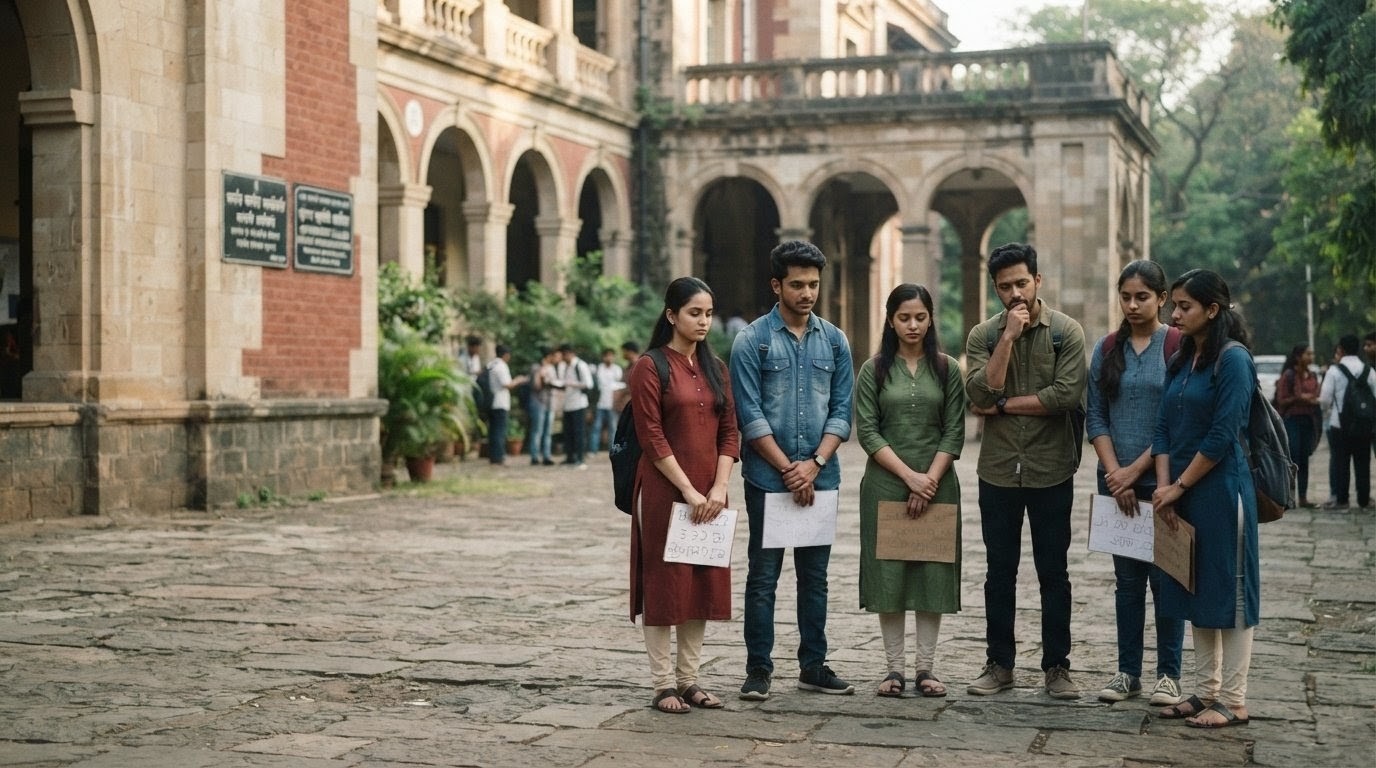
What happens when students stop believing that the Indian education system deciding their future is fair?
For most young people in India, examinations, admissions and results are not distant administrative processes. They represent years of preparation, family savings, late nights and the quiet hope of a better life. When that process breaks down, it does not just delay a result. It shakes something much harder to repair.
This is why the recent wave of student protests against the Indian education system deserves attention beyond the headlines. In New Delhi, a youth led movement forced the resignation of the national education minister after more than a month of sustained demonstrations. In Jharkhand, students and job aspirants have been marching, fasting and facing water cannons over alleged irregularities in state recruitment examinations. These are not isolated events. They are young people asking, loudly and publicly, whether the Indian education system meant to serve them can still be trusted.
International Youth Day gives this moment extra weight. It is not only a celebration of youthful energy and ambition. It is a chance to ask whether the systems around young people are actually giving them the fairness, security and voice they deserve.The real question after a protest is not simply what went wrong. It is what must change so that students do not have to protest just to be heard.
Table of Contents
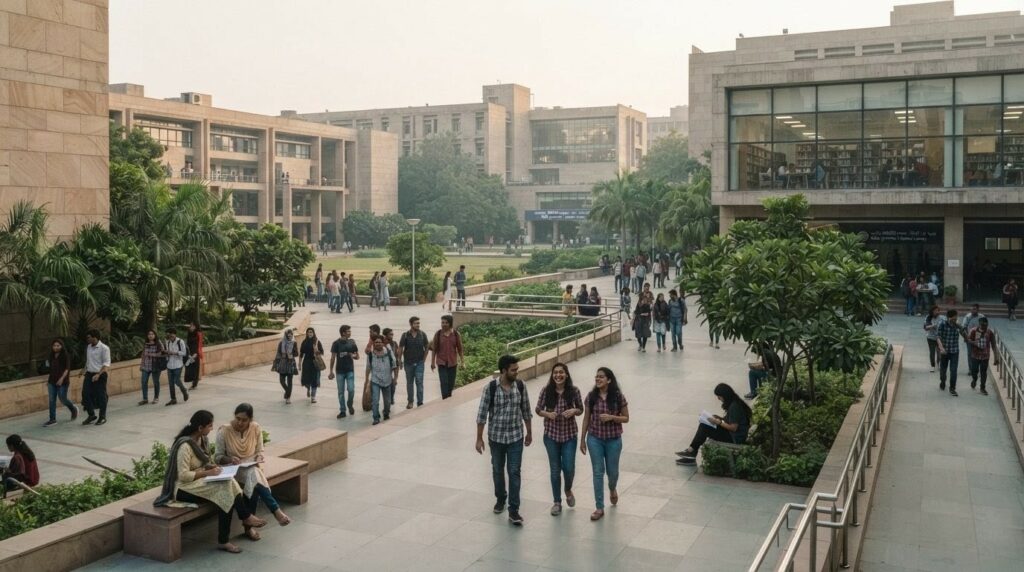
The Protest Was a Symptom, Not the Whole Story
Student protests often become the visible tip of a much larger problem within the Indian education system. Underneath the slogans and marches sit years of accumulated frustration, examination delays, unclear communication, and a growing sense that decisions affecting young lives are made without asking young people anything at all.
The Jharkhand protests are a clear example. What began as anger over alleged paper leaks and financial irregularities in the JPSC and JSSC recruitment exams grew into a broader demand for accountability. Students argued that a single flawed exam does not just cost them a chance at a government job. It costs them months or years of preparation, coaching fees, and the mental toll of starting over, which is why student rights around fair examinations have become such a visible demand.
It would be unfair to treat every protest as proof that the entire Indian education system has failed. Millions of students move through it every year without incident. But protests do reveal where trust between institutions and the people they serve has quietly worn thin. They are a signal, not a verdict.
There is a simple truth worth remembering here. A protest may last for days or weeks, but the consequences of the problem behind it can follow a student for years. An exam cancelled once can be rescheduled. A year lost to uncertainty cannot.
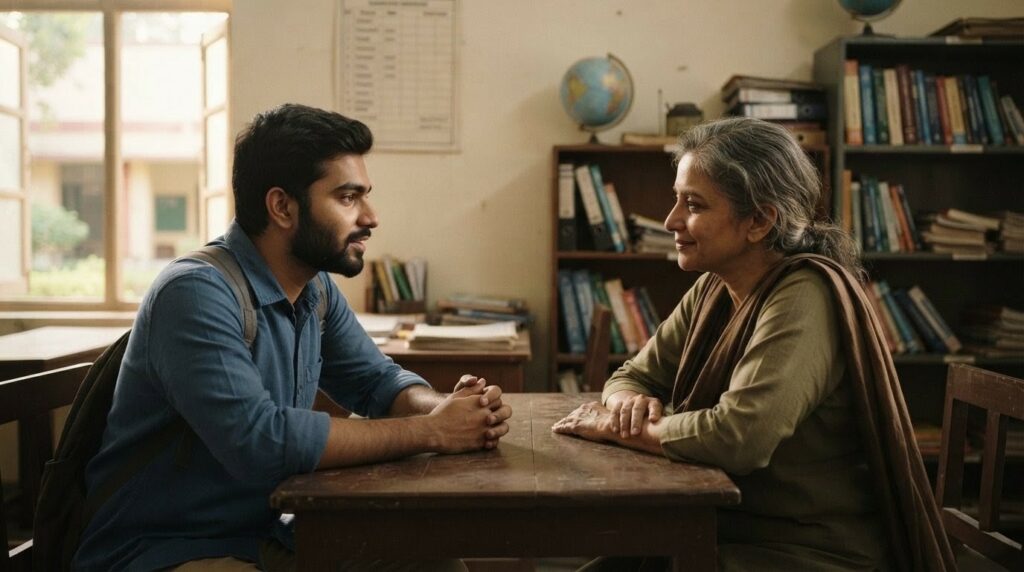
What Happened After the Protest
Because this section deals with a live and evolving situation inside the Indian education system, it is worth being precise about what has actually happened rather than what has merely been promised.
Immediate responses
In New Delhi, the education minister’s resignation after more than five weeks of protest marked an unusual outcome for a youth led movement, turning examination integrity within the Indian education system into a national political issue. In Jharkhand, after repeated rounds of negotiation, the state government agreed to cancel three disputed examinations, including the 14th JPSC preliminary exam and two backlog exams from 2023 and 2025. Three members of the Jharkhand Public Service Commission resigned, and a former JPSC chairman was arrested as part of a criminal investigation into the alleged irregularities. The state also referred the financial angle of the case to the Enforcement Directorate and proposed a fast track court to speed up prosecution.
What changed for students
Beyond the announcements, some structural steps followed in Jharkhand. The Jharkhand government agreed to set up an expert panel drawing on institutions such as IIT-ISM Dhanbad, IIM Ranchi and XLRI Jamshedpur to recommend reforms to the recruitment examination process itself, not just this year’s papers. A judicial inquiry was proposed for the separately contested JSSC-CGL exam. Still, students pushing for a central investigation into that exam were told the government could not order one, since the results had already been through court oversight and successful candidates had begun their postings. That disagreement was still unresolved as protests continued into the second week of August.
The bigger question
This is the part that matters most for understanding whether real change is underway. Cancelling an exam or accepting a resignation can calm a crisis in the short term. It does not automatically fix the process that allowed the irregularity to happen in the first place. An announcement can calm the moment. Reform is what prevents the next one. Whether the expert committees, investigations and judicial inquiries actually translate into a more transparent examination system will only be visible over the coming months, not the coming days.
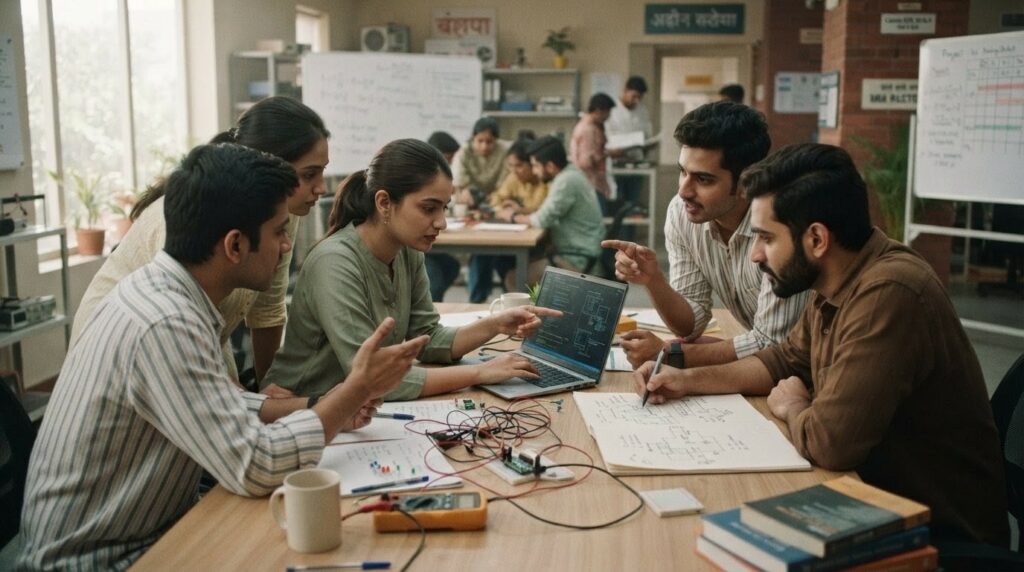
Why Trust Matters in Education
Step away from the specifics of any one protest and a bigger idea comes into focus. Trust is the quiet infrastructure that holds the Indian education system together.
Students need to believe that examinations are conducted fairly, that results reflect actual performance, and that institutions will communicate honestly when something goes wrong. They need to know that a complaint will actually be heard, that rules apply the same way to everyone, and that a genuine mistake will be acknowledged rather than buried.
A student does not only ask “will I get a good education.” They also ask a quieter, harder question underneath that one. Can I trust the Indian education system that decides whether this education actually leads somewhere?
When that trust is present, students can focus their energy on learning. When it erodes, energy shifts toward vigilance, suspicion and, eventually, protest. This is arguably the philosophical core of the entire conversation around the education system in India today.
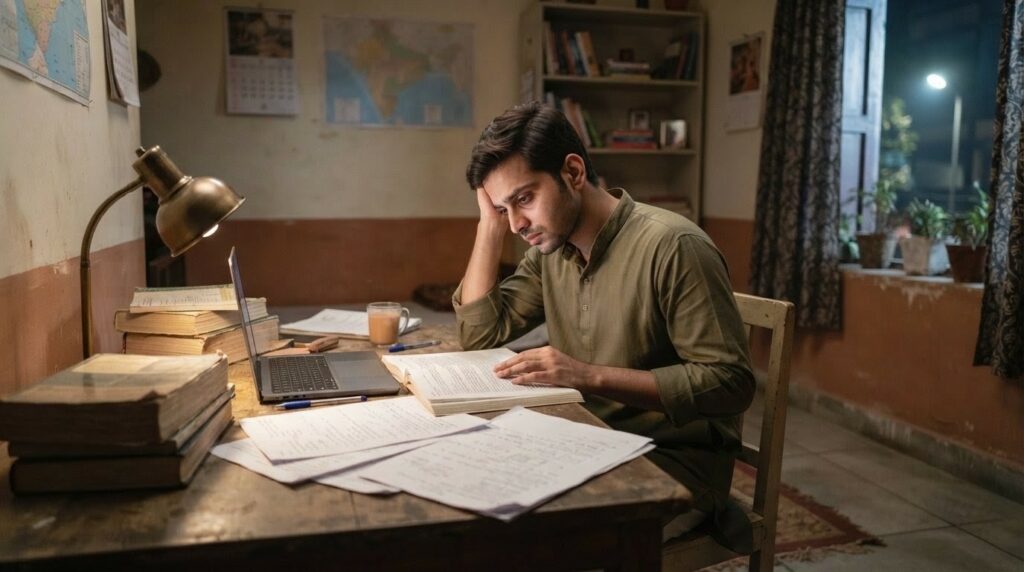
The Pressure Students Carry Long Before the Examination Hall
The problem is bigger than any single exam. Long before a student sits for a test, several layers of pressure have already built up around them.
Academic pressure
Marks, class rankings and competitive examinations dominate a student’s daily reality from a very young age, often crowding out curiosity in favour of memorised performance.
Career pressure
Teenagers are frequently expected to choose a career direction, a stream, and sometimes a whole life path, well before they have had the chance to actually explore their options.
Financial pressure
Private coaching, application fees, hostel costs and relocation for better opportunities place a heavy financial burden on families, particularly those with limited means.
Social pressure
Comparisons with peers, siblings and cousins, along with family expectations, add an emotional weight that rarely gets discussed openly.
Uncertainty about the future
Fast moving shifts in technology and employment leave many students wondering whether what they are studying today will still matter by the time they graduate.
Education reform, then, cannot only be about fixing exam papers. It has to address the student as a whole person navigating all of this at once, not merely as a candidate sitting for a test.
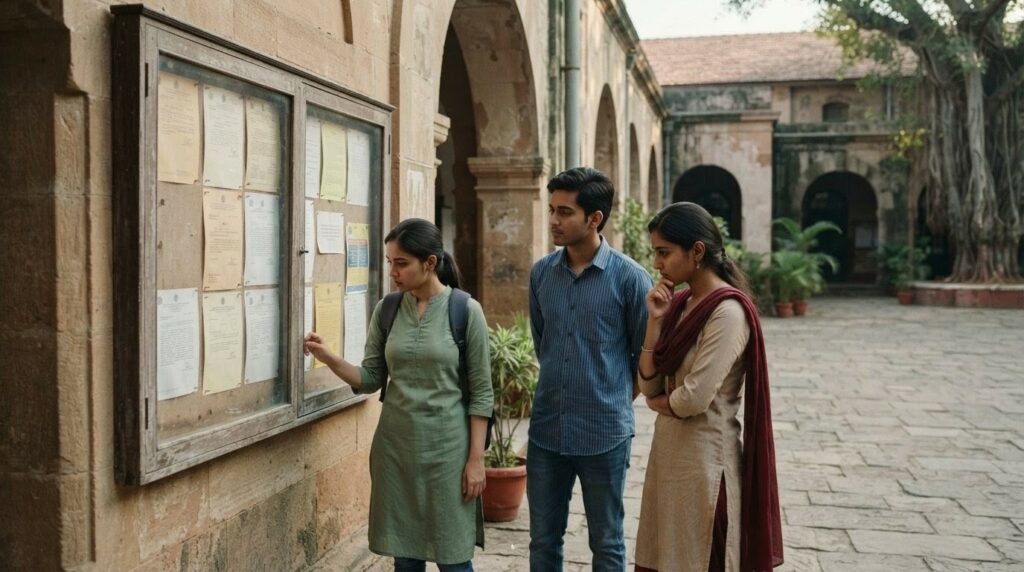
What Is Missing From the Indian Education System
Rather than simply pointing at problems, it helps to name specific gaps clearly enough that they can actually be addressed.
Learning beyond memorisation
Critical thinking, problem solving, creativity and communication are still treated as extras rather than essentials in much of the current curriculum, which affects the overall quality of student education nationwide.
Education beyond marks
A single number on a report card should not be allowed to define a student’s entire potential, yet for many families it still does.
Career awareness
Large numbers of students, especially in rural and underserved areas, simply do not get meaningful exposure to the range of careers available to them.
Digital and technological literacy
Students today consume technology constantly, but far fewer are taught to actually understand how it works or how to use it responsibly and productively.
Financial and life skills
Budgeting, basic financial literacy, communication and decision making rarely appear in a formal syllabus, despite being essential for adult life.
Mental and emotional wellbeing
Without turning this into a clinical discussion, it is worth acknowledging plainly that sustained academic pressure affects how students feel, sleep and cope, and that this deserves more attention within the system itself.
The underlying argument across all six points is simple. A modern Indian education system should prepare students for life, not only for examinations.
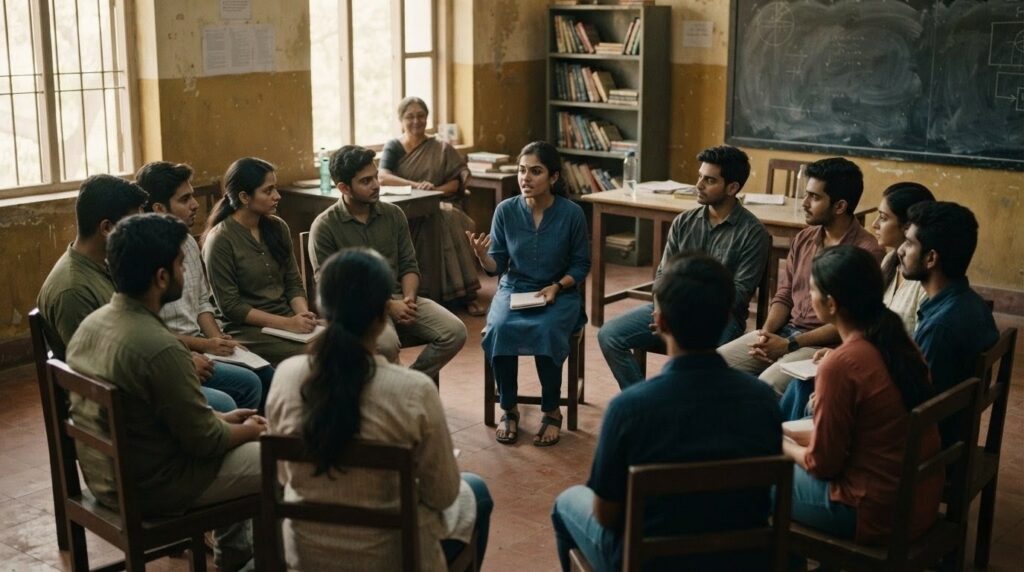
Students Need a Voice, Not Just a Seat in the Classroom
How much real say do students actually have in decisions that shape their own futures within the Indian education system? For most, the honest answer is very little.
A system that genuinely respects student rights invests in a few concrete things. Regular student feedback channels. Grievance systems that are actually accessible rather than buried in bureaucracy. Real student representation in decision making bodies. Transparent communication when policies change. Consultation before, not after, major reforms are announced. And a willingness to hear from students across different economic and social backgrounds, not just the loudest or most connected voices.
There is an important distinction worth making here. Listening to students and simply reacting once they protest are not the same thing. A mature Indian education system should not need thousands of people on the street before it discovers what its own students have been experiencing all along, and student rights should not depend on how loudly they are demanded.
Also Read: Motivation vs Discipline vs Obsession: Which One Drives Long-Term Success?
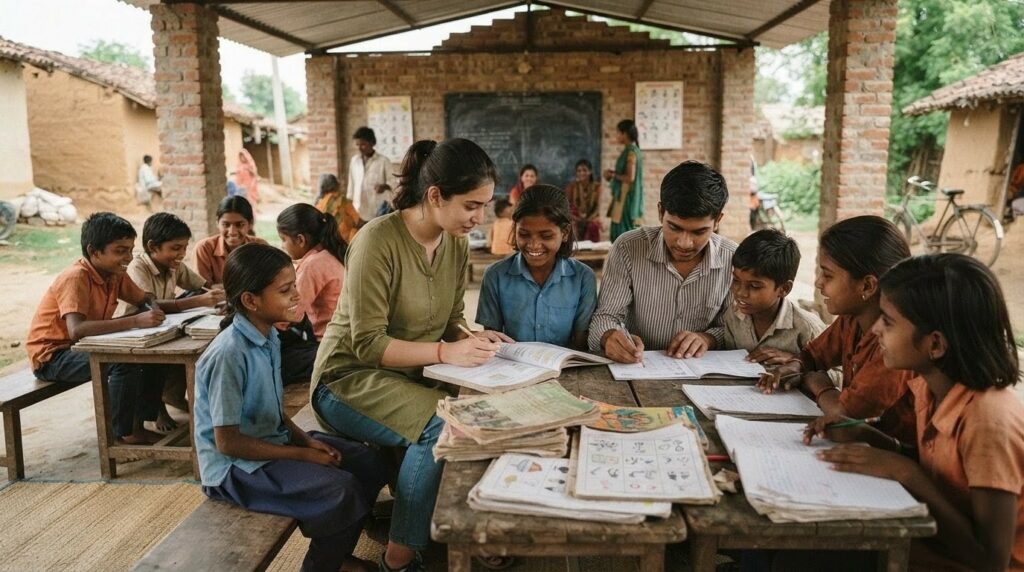
What Should an Education System Young India Can Trust Look Like
Pulling everything together, a handful of characteristics stand out as non negotiable for an Indian education system that actually earns the trust of the young people inside it.
Transparent
Students should know what decisions are being made, why they are being made, and when they can reasonably expect answers.
Accountable
When something goes wrong, institutions should take responsibility rather than deflect it, and that responsibility should be visible, not just promised.
Accessible
Quality education should not depend so heavily on where a student lives, how much their family earns, or which community they belong to.
Flexible
Students need multiple credible pathways into higher education, vocational skills and employment, rather than one narrow track that punishes anyone who falls behind.
Skill oriented
Classroom learning should connect clearly to real world application, not remain abstract until a student enters the workforce and has to relearn everything.
Inclusive
Students from rural regions, disadvantaged communities and varied economic backgrounds deserve genuinely meaningful opportunities, not token access.
Student centred
Policy decisions should be tested against a simple question. How does this actually affect the students living through it.
Future ready
Education should prepare young people for the technological, economic and social shifts they will face, not only the ones that already happened.
Put together, these are not abstract ideals. They describe what reform in the Indian education system would look like if student rights and student education outcomes were taken seriously rather than treated as a slogan.
From Protest to Participation: The Role of Young People
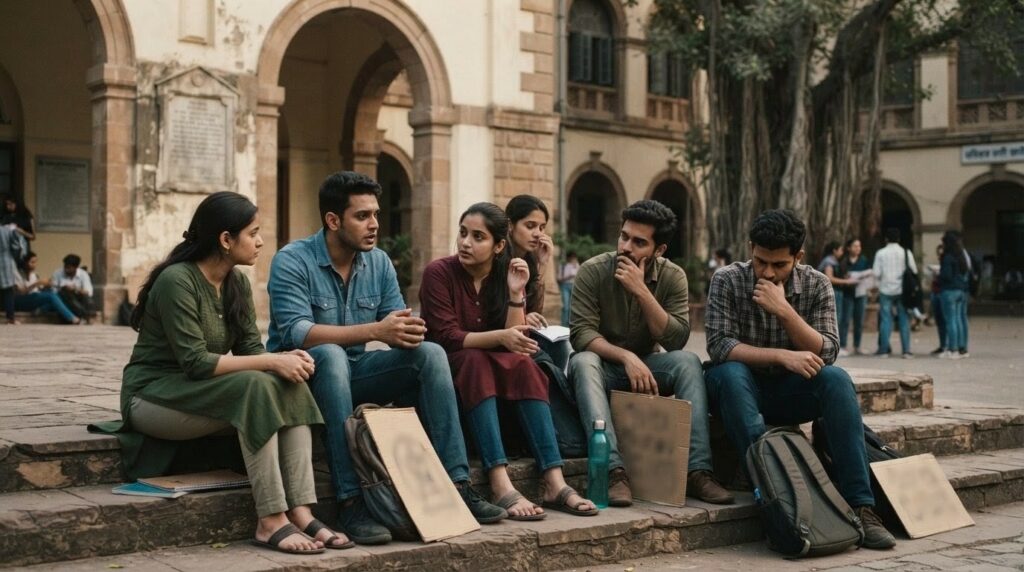
It is worth resisting the temptation to frame young people only as beneficiaries waiting for someone else to fix the Indian education system. Increasingly, they are the ones shaping it.
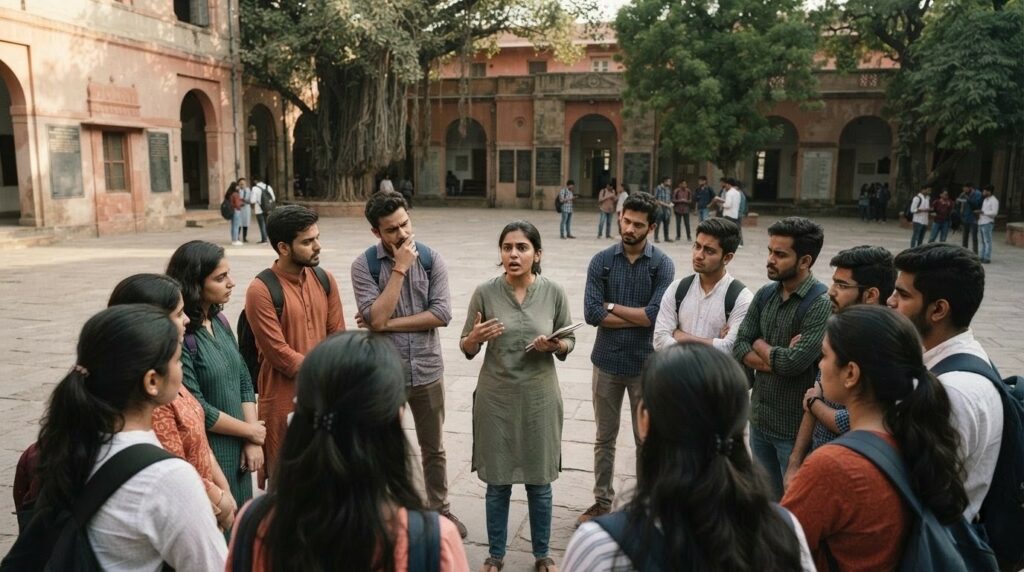
Across the country, young Indians are showing up through civic participation, student organisations, volunteering and grassroots community initiatives. Some are building startups aimed at solving real local problems. Others are driving social innovation projects, raising public awareness, or simply showing up to public discussions that used to exclude their voices entirely. The Jharkhand and Delhi protests themselves, for all the disruption they caused, were organised, sustained and led largely by young people who refused to wait quietly for change within the education system in India.
The message worth taking from this is straightforward. Young people are not simply waiting for someone to build their future for them. They are already helping shape it, often at real personal cost.
International Youth Day: Celebrating More Than Potential
Marking International Youth Day should mean more than praising the energy, creativity and ambition of young people, as important as those qualities are. It should also mean building systems in which that potential actually has room to grow.
Three questions are worth sitting with today. Are young people genuinely being heard, or only when they protest loudly enough to force attention. Are they being given real, not symbolic, opportunities. And are the institutions around them actually preparing them for the future they are about to inherit.
If young people are the future, then the Indian education system remains one of the strongest foundations we can offer that future, provided it is built on more than good intentions.
The Road Ahead: From Reaction to Reform
There is a meaningful difference between reacting to a crisis once it explodes and building an Indian education system that prevents the crisis from happening again. Right now, much of the response to student protests in India still falls into the first category.
Long term reform would need to include several things working together. Stronger, more transparent examination systems. Effective grievance redressal that actually resolves complaints rather than filing them away. Better and more consistent communication from institutions. Meaningful student participation in the decisions that affect them. Learning that connects to practical, future oriented skills. Genuinely equal opportunities across regions and income levels. And stronger, clearer links between education and actual employment outcomes.
None of this happens overnight for a system as large as the Indian education system, and it would be unrealistic to expect it to. But meaningful progress starts the moment institutions begin treating student concerns as useful signals for improvement, rather than disturbances that simply need to be managed until the news cycle moves on.
The Future Should Not Have to Protest to Be Heard
The students marching in Ranchi and the ones who forced a resignation in Delhi are not simply demanding answers about one exam or one minister. They represent a generation that is increasingly aware of its rights, its aspirations and its rightful place in shaping the country’s institutions.
Young India does not need a perfect education system. It needs a system that is willing to learn, admit its shortcomings honestly, and actually improve because of them.
A better education system is not only about producing better students on paper. It is about giving young people the confidence to become thoughtful citizens, capable professionals and active contributors to the society they are inheriting, while protecting student rights at every stage.
The real success of a protest is never measured by how loudly students were heard on a single day. It is measured by whether the system listens long enough afterward to actually change.
Frequently Asked Questions
Why are student rights important in the education system?
Student rights matter because they protect the fairness of decisions that shape a young person’s entire future. When exams, admissions and results are handled without accountability, students lose the years and resources they invested in preparing for them. Protecting student rights within the Indian education system keeps the process honest and gives students a real basis for trust, not just an assumption of fairness.
What are the basic rights of students in India?
Students in India are generally understood to have the right to a fair and transparent examination process, the right to accurate and timely information about admissions, results and policy changes, the right to raise grievances through accessible channels, and the right to be treated equally regardless of their background or economic status. These rights are not always written into a single formal charter, but they form the baseline expectation students hold of the Indian education system.
What has changed after recent student protests in India?
The Delhi protests led to the resignation of the national education minister after more than five weeks of sustained demonstrations. In Jharkhand, the state government agreed to cancel three disputed JPSC examinations, three commission members resigned, a former JPSC chairman was arrested, and the government proposed expert panels along with an Enforcement Directorate probe into alleged financial irregularities. Some of these are immediate corrective steps rather than completed reforms, so their long term impact on the Indian education system is still unfolding.
How can student protests influence education reforms?
Protests draw public and political attention to problems that might otherwise stay buried in bureaucratic delay. They can push authorities to cancel flawed exams, investigate wrongdoing, and commit publicly to reform committees, as seen in Jharkhand. Their real influence, though, depends on whether that pressure translates into structural change to the education system in India, rather than a one time response meant to calm the immediate crisis.
What should students do if they believe an examination or academic decision is unfair?
Students should first document the issue clearly, including dates, notices and any evidence of irregularity. They should raise it through the official grievance or appeal channel provided by the examining body or institution before escalating further. Where formal channels fail to respond, students can approach student unions, legal aid cells or, in serious cases, the courts. Protest is sometimes necessary, but it works best alongside a clear, evidence based complaint rather than as a replacement for one.
What does a student-friendly education system look like?
A student-friendly Indian education system is transparent about decisions, accountable when mistakes happen, accessible regardless of geography or income, and genuinely responsive to feedback before problems escalate into protest. It treats student education as preparation for life, not just for exams, and gives young people real influence over the policies that affect them.
What role should students have in education policy and reform?
Students should have a seat at the table before major decisions are finalised, not only a channel to complain after the fact. This can include structured feedback mechanisms, representation on relevant committees, and genuine consultation ahead of policy changes. A system that values student rights treats this participation as routine practice, not as a concession won only after public pressure.
Why is trust important between students and educational institutions?
Trust is what allows students to focus their energy on learning rather than on watching for unfairness. When students trust that examinations are conducted honestly and complaints are heard, they engage with the education system in India on its own terms. When trust breaks down, that same energy shifts toward suspicion and, eventually, protest. Rebuilding and protecting that trust is central to any lasting improvement in the Indian education system.
Also Read: The Pressure of Monetizing Hobbies: Are We Forgetting How to Enjoy Things?

