


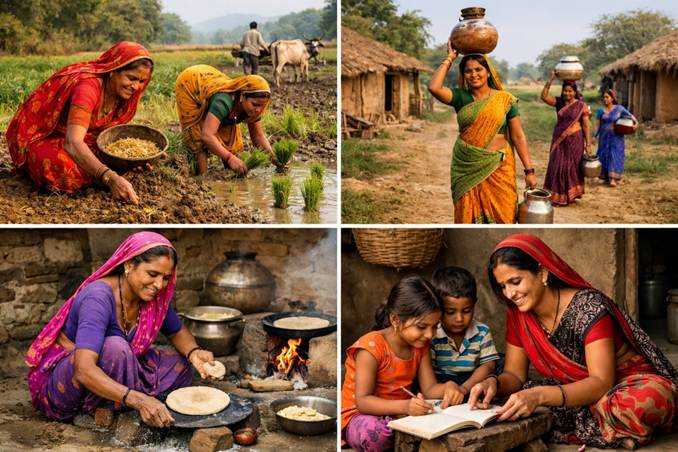
Rural women are often described as the backbone of agrarian economies. They contribute not only through agricultural labor but also by sustaining households, caring for livestock, and nurturing families. Despite this, their contributions are undervalued due to systemic inequalities. Studies show that rural women in India, Africa, and Latin America spend balancing unpaid domestic work with agricultural labor, yet their work is rarely recognized in official economic statistics. This invisibility perpetuates poverty and gender inequality.
Role of Rural Women
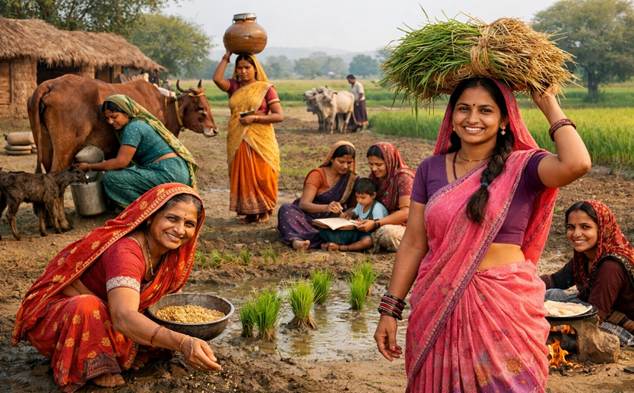
Women in rural areas play multiple roles in society. They help in farming, take care of livestock, manage household chores, and raise children. In many villages, women wake up early in the morning and work throughout the day without rest. Their contribution to the economy and family welfare is significant, yet it is often unrecognized.
- Agriculture: Women sow seeds, weed fields, harvest crops, and manage post-harvest activities. In India, nearly 33% of cultivators and 47% of agricultural laborers are women.
- Livestock care: Women manage dairy, poultry, and goats, which are crucial for household nutrition and income.
- Household management: Cooking, cleaning, fetching water, and collecting firewood are daily responsibilities.
- Childcare and education: Women ensure children’s health and schooling, often sacrificing their own opportunities.
- Their multitasking role highlights the intersection of productive (income-generating) and reproductive (caregiving) labor, both essential for community survival.
Also read :NGOs in Rural Development: Roles, Contributions, and Challenges
Problems Faced by Rural Women
Lack of Education: Illiteracy remains high among rural women due to poverty, patriarchal norms, and inadequate schools. UNESCO reports that two-thirds of the world’s illiterate adults are women, with rural areas being worst affected. Education is directly linked to empowerment, yet dropout rates remain high due to child marriage and household responsibilities. Illiteracy limits their knowledge, confidence, and employment opportunities. Illiteracy limits their knowledge, confidence, and employment opportunities.
Poverty and Unemployment: Rural women often work as seasonal laborers with low wages. They lack access to land ownership, credit, and modern farming tools. This economic dependency reinforces gender inequality. Rural women mostly depend on agriculture and daily labor for survival. They often receive lower wages than men and have limited access to stable jobs.
Poor Healthcare: Maternal mortality rates are higher in rural areas due to lack of hospitals, trained midwives, and awareness. Malnutrition and anemia are widespread, affecting women’s productivity and well-being.
Gender Discrimination: In many rural societies, women are considered inferior to men. Patriarchal traditions restrict women’s mobility, decision-making, and property rights. Inheritance laws often favor men, leaving women economically vulnerable. They are denied equal rights, decision-making power, and freedom in personal and social matters.
Early Marriage and Domestic Violence: Child marriage and domestic violence remain serious issues in some rural areas. These practices negatively affect women’s physical and mental well-being. leading to early pregnancies and health risks. Domestic violence, often normalized, undermines women’s dignity and mental health.
Government Efforts and Social Awareness:
Governments and social organizations are taking steps to improve the condition of rural women. Programs related to women’s education, self-help groups, healthcare, and skill development are helping women become more independent and empowered. Campaigns promoting gender equality and women’s rights are also creating awareness in villages.
1. Self-Help Groups (SHGs)
Self-Help Groups are small, voluntary associations of people (often women) from similar socio-economic backgrounds who come together to solve their common problems. It provide a platform for members to save small amounts of money, which then becomes a pool for internal lending. This offers women access to credit without the need for traditional banking collateral, Beyond just credit, these groups act as platforms for capacity building, providing a network where women can share skills, discuss business ideas, and collectively market their products
2. Healthcare Programs :
Targeted government healthcare interventions are crucial for reducing maternal mortality and improving overall health outcomes. Janani Suraksha Yojana (JSY) It provides cash assistance to pregnant women to encourage them to choose institutional deliveries (giving birth in a hospital rather than at home). By ensuring professional medical oversight during childbirth, these programs drastically reduce the risks associated with pregnancy and delivery, ensuring both the mother and the newborn have a better chance at survival and long-term health.
3. Skill Development
Vocational training is the bridge between education and financial autonomy. By teaching women specific skills—such as tailoring, handicraft production, digital literacy, or modern agricultural techniques—these programs allow women to move from unpaid domestic labor to income-generating activities. Skill development ensures that empowerment is not just a one-time benefit but a sustainable pathway to financial self-reliance.
4. Awareness Campaigns
While structural programs (like healthcare or microcredit) provide the means to change, awareness campaigns provide the motivation and shift in mindset required for lasting change.
Beti Bachao Beti Padhao Launched in 2015. It aims to improve the child sex ratio and promote girls’ education. And raises awareness about the value of girls and the importance of educating them.
Sukanya Samriddhi Yojana (SSY):It is a government-backed small savings scheme under the Beti Bachao, Beti Padhao campaign 2015 by Ministry of Women and Child Development & Ministry of Finance Designed for the girl child, it encourages parents to build a dedicated fund for her future education and marriage expenses through tax-advantaged investment.
Pradhan Mantri Ujjwala Yojana (PMUY) is a flagship welfare scheme launched in May 2016 by the Ministry of Petroleum and Natural Gas (MoPNG) to provide deposit-free Liquid Petroleum Gas (LPG) connections to adult women from poor households. Designed to replace health-damaging traditional cooking fuels like firewood and coal, it acts as a critical driver for women’s empowerment, indoor air pollution control, and public health.
The Nari Shakti Puraskar is India’s highest civilian honour for women, awarded annually to recognize exceptional contributions toward women’s empowerment. Conferred by the President of India on International Women’s Day (8th March) at Rashtrapati Bhavan, it is a crucial topic for competitive exams like UPSC, State PCS, and banking under the “Social Justice,” “Women Empowerment,” and “Awards and Honours” segments.
Importance of Women Empowerment:
Empowering rural women is essential for the progress of society. Educated and independent women can improve family health, support children’s education, and contribute to economic development. When women are given equal opportunities, the entire community benefits. Empowering rural women has a multiplier effect:
1. The Multiplier Effect: The concept of a “multiplier effect” in this context means that the benefits of empowering women extend far beyond the individual woman. When a woman is empowered through education, financial independence, or equal rights, she typically reinvests those resources back into her family and community.
2. Family Health: When mothers are educated, family health outcomes improve significantly. This is because educated women: Better understand nutrition: They are more likely to make informed decisions about food, reducing malnutrition. Prioritize hygiene and sanitation: They are better equipped to prevent the spread of diseases. Access healthcare more effectively: They are more likely to understand the importance of vaccinations, prenatal care, and seeking medical attention for family members when needed.
3. Children’s Education: There is a strong correlation between a mother’s literacy and her children’s educational success. Empowered mothers Value education and understand its long-term benefits and are more likely to ensure their children attend school. Provide academic support Even if they have limited formal schooling, mothers who are aware and engaged can better support their children’s learning at home.
4. Economic Growth: When women participate in the workforce, economic growth accelerates. This is due to Increased Productivity and Utilizing the full talent pool of a nation rather than just half of it increases overall productivity and innovation. Women tend to spend a higher proportion of their earnings on their families and communities, which drives local demand and stimulates the economy. When women earn their own income, they gain agency over financial decisions, which helps stabilize household finances.
5. Social Equity: Social equity is achieved when women gain equal rights. This involves Challenging Gender Norms: Empowerment fosters a society where women’s voices are heard in community decision-making and political processes. Legal Protections, It encourages the enforcement of laws that protect women from exploitation, violence, and discrimination. A society is truly developed only when all its members, regardless of gender, have equal access to opportunities, resources, and justice.
Conclusion:
The condition of rural women has improved over time, but many challenges still remain. Society must work together to provide education, healthcare, safety, and equal rights to rural women. Respecting and empowering women is necessary for building a fair, strong, and progressive nation. It reflects broader issues of social justice, gender equality, and economic development. While progress has been made, challenges persist. Sustainable solutions require education, healthcare, legal reforms, and cultural change. Empowering rural women is not just a moral imperative it is essential for building a fair and progressive nation.
Also read: The Problem of Malnutrition in India – Certain Facets and a Few Solutions
Also read: Government’s Poverty Alleviation Schemes For Rural Development

