


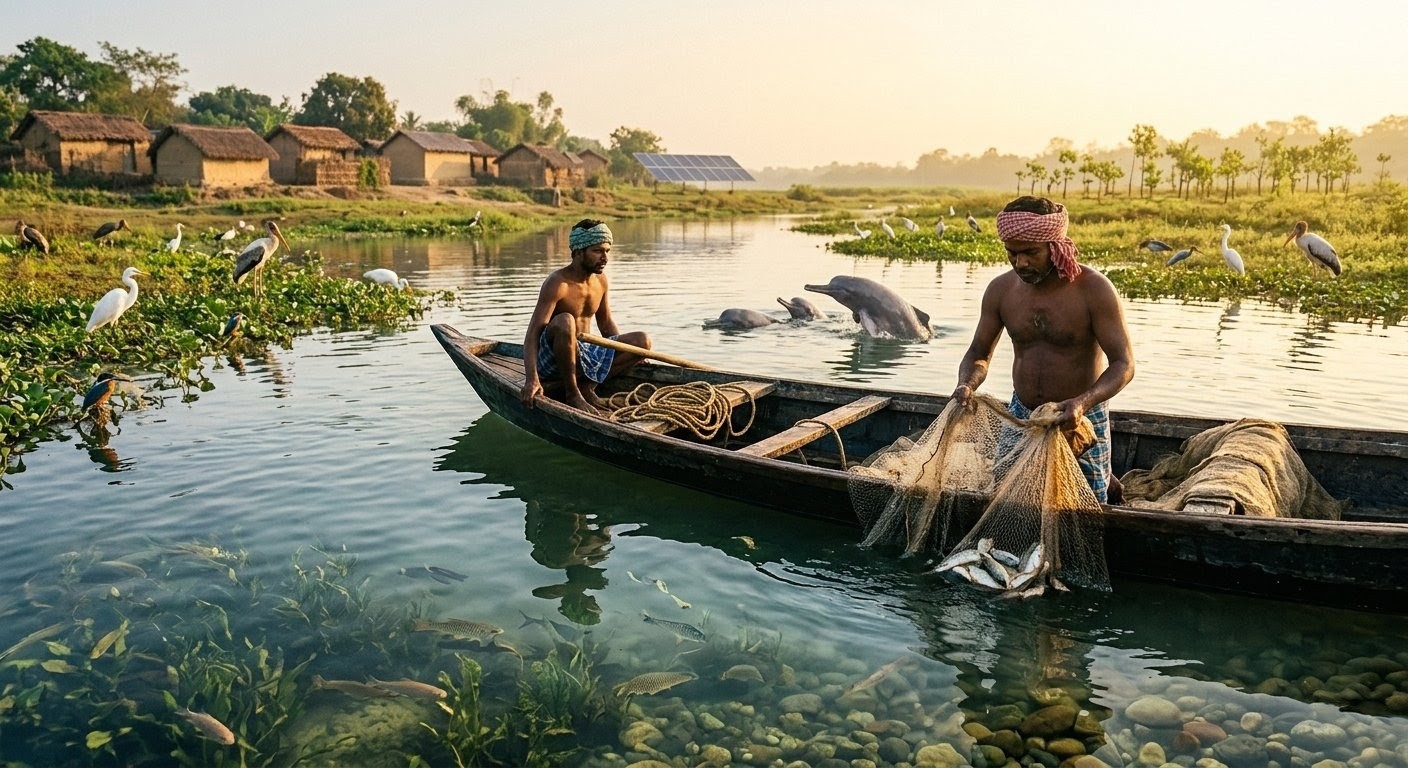
Riverine Ecosystems and Livelihoods are deeply interconnected across India’s riverscapes. Freshwater species such as Ganges river dolphins, gharials, freshwater turtles, otters, and waterbirds face serious threats, including accidental entanglement in fishing nets, targeted hunting, and competition over fishery resources. At the same time, capture fisheries provide a vital source of livelihood and nutritional security to many socio-economically marginalized communities in the Gangetic plains.
Fishers depend on adequate and clean river water regulated by dams and barrages. As a result, they suffer from river flow alterations just as biodiversity does. This interdependence between freshwater wildlife and fisheries makes Riverine Ecosystems and Livelihoods a crucial area for conservation, policy advocacy, and sustainable management.
In the Gangetic plains and Central India, fishing activities often overlap with habitats of endangered freshwater species. Understanding how conservation and fisheries can coexist is essential to securing both biodiversity and human well-being.
Table of Contents
Understanding Riverine Ecosystems and Fisheries
The relationship between rivers, people, and wildlife is shaped by complex food webs. Fish serve as food for dolphins, crocodiles, turtles, otters, birds, and numerous other species. Humans depend on fish for food and income, while some animals scavenge on human remains along riverbanks.
Fishers can often be seen working near cremation ghats. Observing these interactions reveals how Riverine Ecosystems and Livelihoods are connected through cycles of consumption, decomposition, and renewal.
The health of fisheries is closely linked to the health of rivers. When river flows are altered by dams, barrages, and water diversion projects, both aquatic wildlife and fishing communities experience the consequences.
Life, Death, and the River
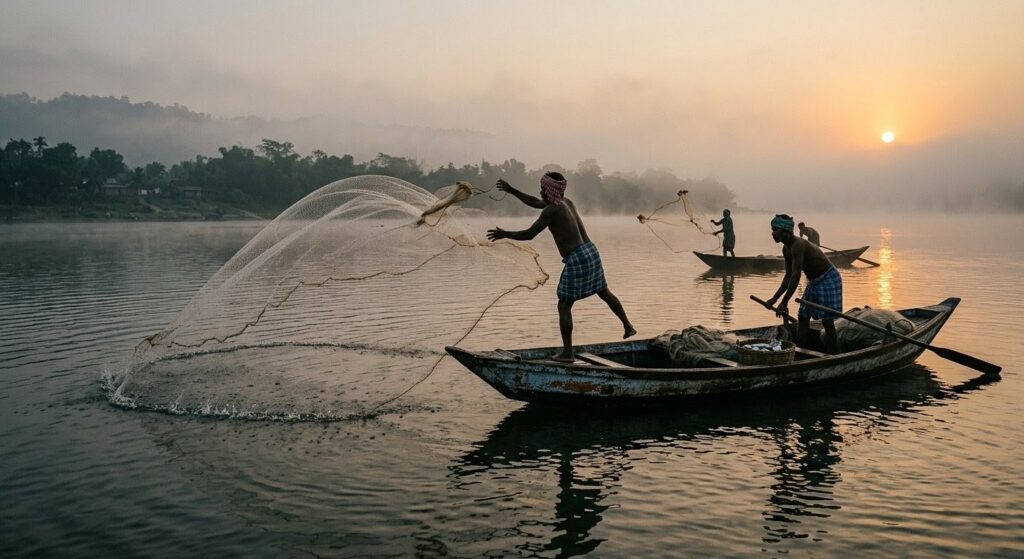
The river represents a continuous cycle of life and death. Watching fishers cast their nets, observing dolphin calves and gharial hatchlings, and witnessing shifting sandbars and changing river channels offers a deeper understanding of the river’s dynamic nature.
The river is constantly reshaping itself through erosion and deposition. It absorbs, transforms, and redistributes matter and energy. In this sense, the river acts as a silent force that sustains life while simultaneously breaking it down and renewing it.
Such observations highlight the profound ecological processes that underpin Riverine Ecosystems and Livelihoods.
Human Impacts on River Ecosystems
Conservation challenges in river systems differ from those in forests. Fishing, like hunting or harvesting, is an extractive activity and inevitably has some impact on species sharing the same habitat.
However, the extent of this impact varies. Some species, such as gharials, are highly sensitive to human presence, while others, including dolphins and otters, are more adaptable. What may appear to be disturbance is not always harmful, particularly in regions where fishing communities and river animals have coexisted for centuries.
Fish stocks in Indian rivers have declined significantly, but major drivers include environmental degradation, pollution, dams, barrages, and altered river flows rather than fishing alone. Understanding these pressures is essential for protecting Riverine Ecosystems and Livelihoods.
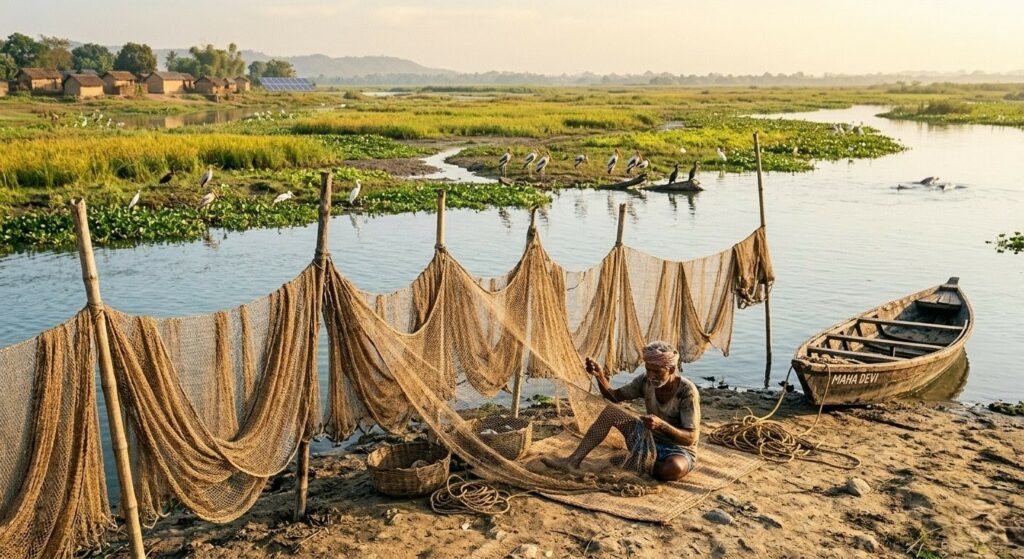
Fishing and Freshwater Wildlife: Conflict or Coexistence?
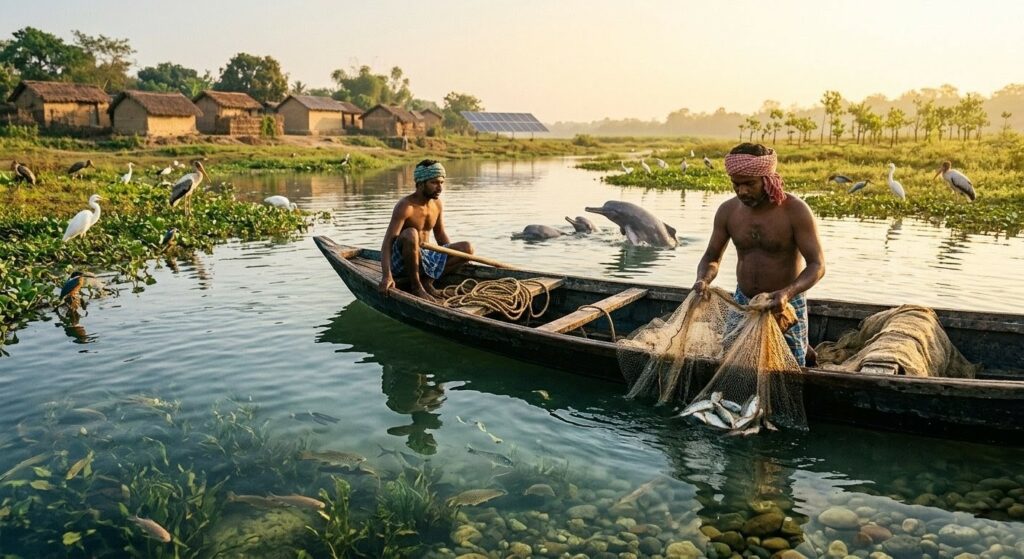
Fishing activities can lead to unintended consequences, including accidental mortality of wildlife in fishing nets and occasional direct hunting. Yet the relationship between fishers and wildlife is more complex than a simple conflict narrative.
There is often an overemphasis on competition between fishers and river animals. Fishing technologies used in Indian rivers have not changed dramatically enough to be solely responsible for fish stock collapse. While fishing is not entirely benign, its impact is frequently smaller than conservationists assume.
Many important populations of endangered freshwater species continue to survive in areas where fishing is common. In regions where species populations are critically low, however, fishing practices likely to cause mortality must be carefully regulated.
The challenge is to ensure that Riverine Ecosystems and Livelihoods remain compatible rather than mutually exclusive.
Why Freshwater Species Were Neglected
Freshwater species received limited conservation attention for many years. The Ganges river dolphin was often regarded simply as a large aquatic animal rather than a distinct and important species.
Similarly, gharials received little attention until the launch of Project Crocodile in the early 1970s. By that time, hunting, fishing-related mortality, and habitat loss had already eliminated them from much of their historical range.
A major reason for the neglect of freshwater conservation was the widespread belief that rivers existed primarily for human use. Dams, canals, and irrigation projects were viewed as essential for economic development, while the ecological consequences for riverine species were largely ignored.
This neglect affected not only wildlife but also the long-term sustainability of Riverine Ecosystems and Livelihoods.
Also Read: Understanding the Struggles of Fisherfolk Communities in Odisha
Challenges Faced by Fishing Communities
Fishing communities across the Gangetic plains often live under conditions of severe socio-economic hardship. Many fishers are landless and lack stable incomes, access to quality education, healthcare, insurance, and other essential services.
Despite performing high-risk work such as river ferrying, diving to recover bodies, and assisting during floods, they remain among the most marginalized groups in society.
Declining fish resources, driven by pollution, water diversion, and flow regulation, have further worsened their situation. As a result, many fishers are forced to leave their traditional occupations and migrate in search of work.
The future of Riverine Ecosystems and Livelihoods cannot be secured without addressing these socio-economic realities.
Dolphin Bycatch and Fishing Net Conflicts
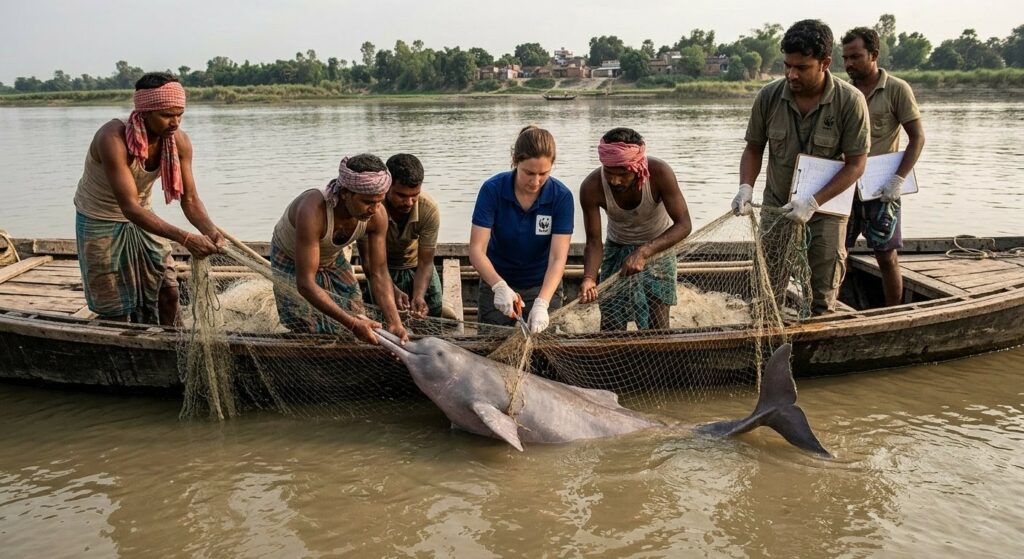
One of the most significant conservation challenges involves dolphin mortality caused by accidental entanglement in fishing gillnets.
Most nets are left in the water overnight, and dolphins that become trapped often die before fishers return. In some cases, carcasses are hidden or disposed of to avoid legal consequences. Dolphin flesh and oil may also be used as fishing bait in certain areas.
Distinguishing accidental bycatch from intentional killing is often difficult. Many dolphin deaths occur in fishing nets that are legally permitted under existing fishery regulations.
Blanket restrictions on fishing frequently create conflict between fishers and conservation authorities. More effective solutions require systems that encourage reporting of accidental bycatch and promote trust between stakeholders.
Economic Losses from Wildlife Interactions
Fishers themselves often bear economic costs from interactions with wildlife.
Otters and other animals can damage fishing nets while attempting to steal fish. Thin nylon monofilament nets are especially vulnerable to tearing, resulting in financial losses that may amount to several thousand rupees annually for individual fishers.
These losses can be substantial for households already facing economic insecurity. Recognizing such challenges is important when developing policies related to Riverine Ecosystems and Livelihoods.
Fishers as Conservation Partners
Fishing communities are not a uniform group. Cultural practices, beliefs, and historical relationships with wildlife vary considerably across regions.
Some communities avoid harming river animals, while others may hunt certain species for food or use animal products such as dolphin oil or turtle meat. Consequently, attitudes toward conservation differ from place to place.
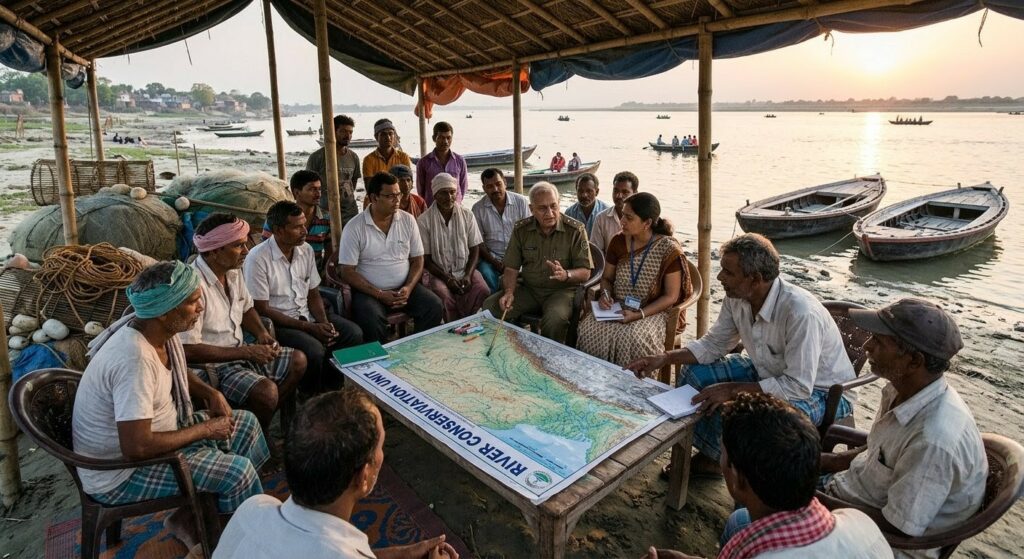
Despite these differences, fishers have the potential to become valuable conservation allies. Outreach and awareness programmes are important, but meaningful engagement requires more than temporary campaigns and incentives.
Building trust demands a deeper understanding of fisher livelihoods and the challenges they face. Successful conservation efforts must create inclusive and democratic spaces where fishers can actively participate in decision-making.
Policy Gaps in River Conservation
Research on Riverine Ecosystems and Livelihoods highlights important policy gaps in the management of fisheries and freshwater biodiversity.
The Indian Wild Life (Protection) Act, 1972 prohibits the hunting and killing of endangered species. Fishery regulations, however, are governed by individual states, leading to complex overlaps between conservation goals and fishing rights.
Traditional and customary fishing practices often lack formal legal recognition, even when they have existed for generations. Protected Areas further complicate the issue, particularly in river systems where conservation priorities and livelihood needs intersect.
Developing policies that acknowledge both ecological and social realities remains a significant challenge.
Towards Sustainable Fisheries Management
There is a growing need to bridge the gap between fisheries management and wildlife conservation.
Capacity building among frontline forest staff and conservation stakeholders is essential. Fishing is a diverse set of activities, and not all forms of fishing pose equal risks to wildlife.
Scientific evidence should guide regulations, ensuring that conservation measures are proportional to actual ecological impacts. Adaptive management approaches can help balance the needs of fishers with the protection of endangered species.
Such efforts are central to strengthening Riverine Ecosystems and Livelihoods across India’s river systems.
Balanced Harvesting: A New Approach
Recent research has challenged conventional assumptions about fisheries management.
The concept of balanced harvesting proposes that fishing intensity should be proportional to the natural abundance of fish across different age groups, including juveniles, sub-adults, and adults. Rather than focusing exclusively on mature fish, this approach seeks to maintain ecological balance while supporting sustainable harvests.
Balanced harvesting is not a universal solution, but it offers an alternative framework for managing multi-species tropical fisheries. Implementing such approaches would require substantial reforms to existing fishery laws and management systems.
The Way Forward
The policy neglect of riverine capture fisheries must end. Strengthening community-level institutions for fisheries management should be a priority.
River fisheries function as shared resources, making cooperation among fishing groups essential. Better communication, improved spatial planning, and regulations tailored to specific fishing practices can help reduce conflicts and promote sustainability.
The state’s role must shift from revenue generation toward livelihood security and welfare. Sustainability goals should remain flexible and evolve alongside ecological, social, and economic changes.
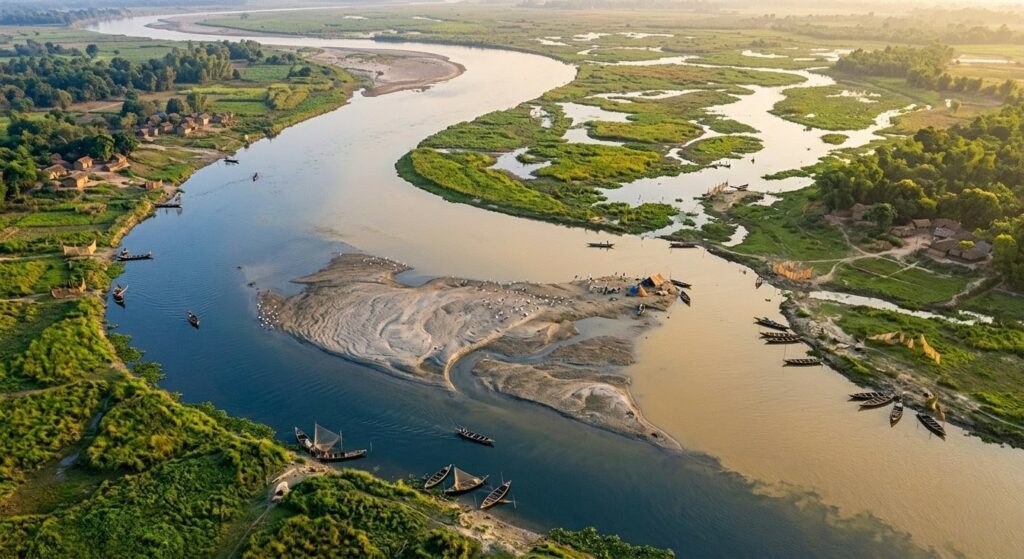
The future of Riverine Ecosystems and Livelihoods depends on recognizing the inseparable relationship between freshwater biodiversity and fishing communities.
Sustainable fisheries and wildlife conservation should not be treated as competing objectives. Instead, they must be pursued together through adaptive management, inclusive governance, scientific research, and community participation.
Protecting India’s rivers ultimately means protecting both the people who depend on them and the species that call them home.
Also Read: Effects of Deforestation on Humans

