


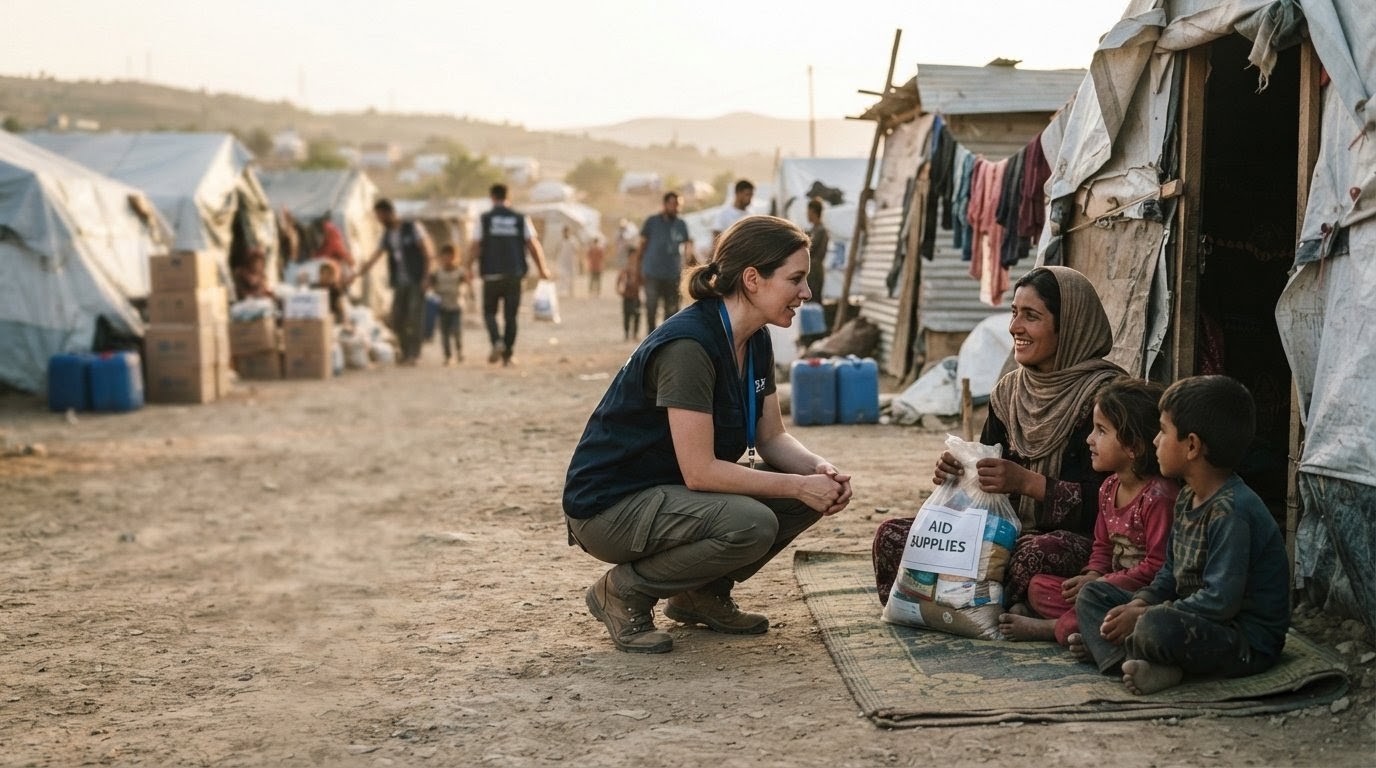
When conflict, disasters, displacement and emergencies leave people at their most vulnerable, humanitarian workers are usually among the first to arrive and the last to leave. They walk into places others are trying to leave, carrying food, medicine, clean water and, just as importantly, the message that someone still cares. World Humanitarian Day 2026 exists to recognise that work, and this year it lands at a moment when humanitarian workers face more danger than almost any point on record.
This day is not just a date on the calendar. It is a reminder of what humanitarian aid means in practice, why aid workers put themselves at risk every day, and why protecting them has become an urgent global conversation rather than a symbolic one.
Table of Contents
What Is World Humanitarian Day?
World Humanitarian Day is an international observance held every year on August 19. The United Nations describes it as a day to honour humanitarian workers who have lost their lives or been injured in the course of their duties, and to stand in solidarity with people affected by crises around the world.
The day was created to increase public awareness of emergency assistance and the importance of international cooperation, while also paying tribute to the aid personnel who carry that work out on the ground, often in extremely dangerous conditions.
Unlike many awareness days built purely around celebration, World Humanitarian Day carries a dual purpose. It celebrates the courage of those who choose to help, while confronting the uncomfortable reality that this work keeps growing more dangerous each year.
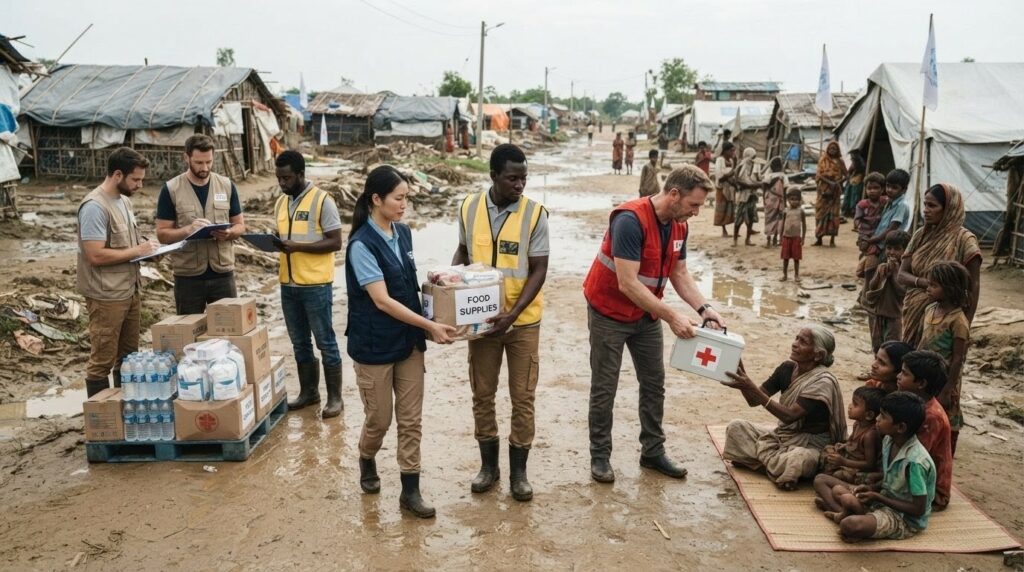
World Humanitarian Day 2026 Theme
The 2026 campaign centres on the message that civilians and aid workers caught in conflict are not a target. Rather than framing the day purely around appreciation, this year’s theme pushes for something more concrete: accountability. The call is direct and specific, urging the world to act early before warning signs turn into casualty lists, to stop the violence and obstruction that block relief access, to investigate every attack, to prosecute those responsible, and to support the survivors and families left behind.
This shift matters. It moves the conversation away from simply thanking aid workers and toward asking what needs to change so fewer of them are killed or injured while doing their jobs.
History of World Humanitarian Day
The origins of this day trace back to a specific tragedy. On August 19, 2003, the Canal Hotel in Baghdad, which served as the United Nations headquarters in Iraq, was struck by a bomb. Twenty-two people were killed, including Sergio Vieira de Mello, the UN Special Representative to Iraq. Many more were injured.
Five years later, in 2008, the UN General Assembly formally designated August 19 as World Humanitarian Day, as part of a resolution on strengthening the coordination of emergency assistance. Since then, the day has grown into the flagship annual campaign of the UN Office for the Coordination of Humanitarian Affairs, bringing together governments, aid organisations and ordinary citizens each year around a shared theme.
Every year since its designation, the observance has carried a different message, from calls to protect civilians in conflict to campaigns addressing the impact of climate emergencies on vulnerable populations. What has stayed constant is the underlying reminder that the Canal Hotel bombing was meant to leave: that people who dedicate themselves to relieving suffering are, far too often, targeted rather than protected.
Why Is World Humanitarian Day Important?
Global crises are not slowing down. Conflict continues to displace families across multiple regions, disasters and climate-related emergencies are striking more frequently, and millions of people still lack reliable access to food, clean water, shelter and basic healthcare. Funding for emergency response has also come under strain in recent years, leaving many organisations stretched thin at exactly the moment demand for their services keeps rising.
World Humanitarian Day matters because it puts several urgent issues in front of the public at once, connecting the everyday realities of crisis with the policy decisions that shape how the world responds to them:
Protection of civilians
Ordinary people caught in conflict zones often bear the heaviest cost, losing homes, livelihoods and loved ones through no fault of their own.
The risks faced by humanitarian workers
Humanitarian workers frequently operate in areas where basic safety cannot be guaranteed, and violence against them has been rising for several consecutive years.
The role of international humanitarian law
Laws exist to protect civilians and aid workers during conflict, yet violations continue, which is why accountability has become such a central theme in recent campaigns.
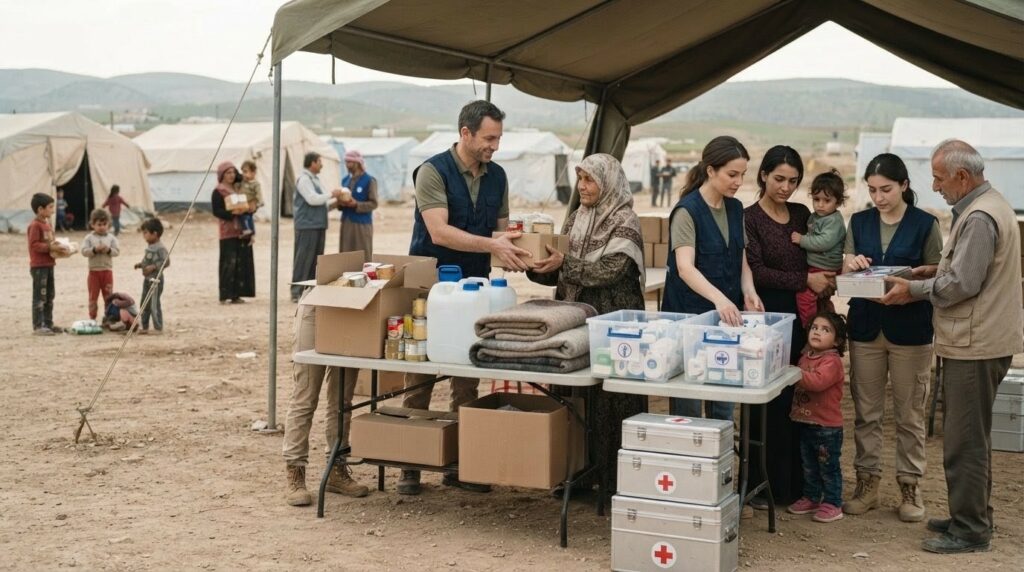
Who Are Humanitarian Workers?
There is a common misconception that this work is something carried out mainly by United Nations staff or large international organisations. In reality, the aid workforce is far broader and far more local than most people realise.
Humanitarian workers include doctors, nurses and paramedics responding to emergencies, logisticians moving supplies through difficult terrain, community volunteers distributing food and water, psychologists offering trauma support, engineers rebuilding water systems, and staff at grassroots organisations who understand their communities better than anyone flying in from outside.
Most humanitarian workers are, in fact, national staff serving their own communities rather than international personnel. They are often the ones who stay behind long after global attention has moved elsewhere.
What a typical day looks like
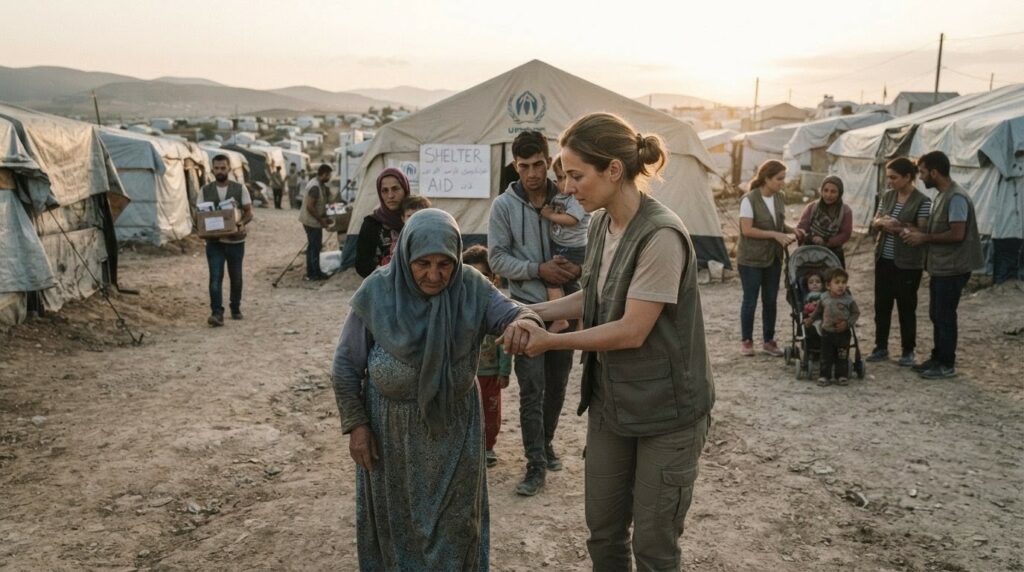
There is no single version of this work. A relief worker in a flood-hit village might spend a day coordinating boat rescues, while a colleague in a conflict zone might negotiate safe passage for a medical convoy or run a mobile clinic out of a tent. What connects them is a willingness to show up where systems have broken down, and to keep showing up long after the emergency has faded from headlines.
The Growing Risks Faced by Humanitarian Workers
Recent figures make it clear why protection has become such an urgent priority. According to the UN Office for the Coordination of Humanitarian Affairs, 350 humanitarian workers were killed in 2025, marking the second-highest annual toll ever recorded, even though the number represented a slight decline from the previous year. Overall, the Aid Worker Security Database recorded 907 aid workers killed, wounded or kidnapped through the year, a level of violence that has not eased.
Gaza remained the deadliest location for humanitarian workers for the third consecutive year, accounting for well over half of the deaths recorded worldwide, while Sudan ranked second. Attacks in the Democratic Republic of Congo nearly doubled compared with the year before. Kidnappings of aid workers by non-state actors and criminal groups also rose sharply, and hundreds more were detained or arrested by state authorities.
Taken together, more than one thousand humanitarian workers have been killed over just three years, a figure that relief leaders describe as utterly unacceptable. The growing use of low-cost armed drones has added another layer of danger, increasing risks to both civilians and humanitarian workers operating in populated areas.
Beyond the fatalities, the data points to a wider pattern of impunity. Investigations into attacks on relief personnel are frequently slow or incomplete, and prosecutions remain rare even when responsibility is clear. This is precisely why the 2026 theme places so much weight on accountability rather than remembrance alone, since honouring those who have died carries limited weight if the conditions that put them at risk are left unaddressed.
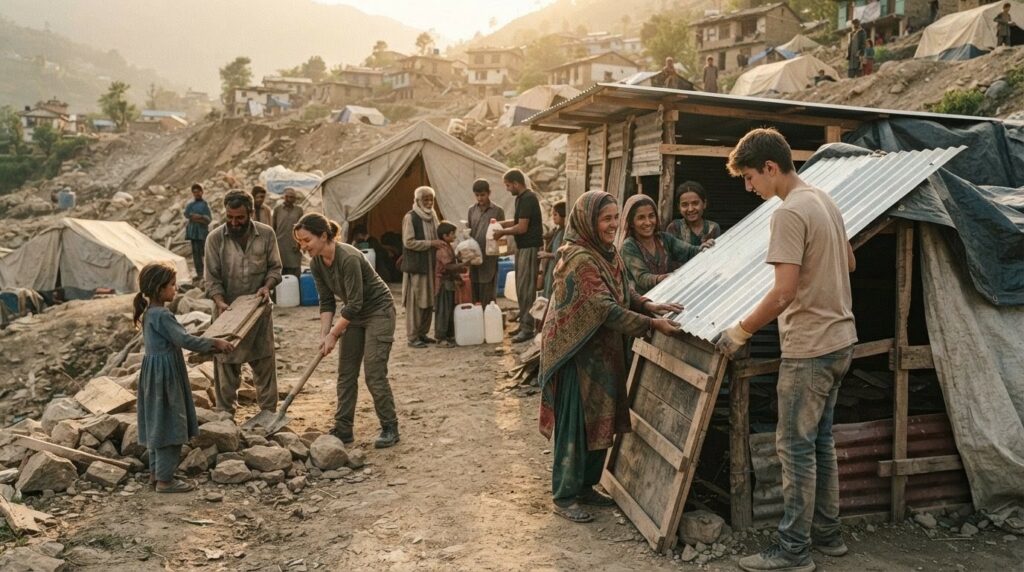
Humanitarian Aid in Times of Crisis
Humanitarian aid covers far more than emergency food supplies, although that remains a core part of the work. It includes emergency healthcare and trauma treatment, clean water and sanitation systems, temporary shelter, protection services for displaced families, psychosocial support, and education programmes that allow children in crisis zones to keep learning.
This kind of assistance is rarely a one-time delivery. It often stretches across months or years, especially in protracted crises where displacement has become a way of life rather than a temporary disruption.
There is also a distinction worth understanding between emergency response and longer-term recovery support. The first phase focuses on keeping people alive: food, water, shelter and medical care delivered as quickly as possible. The second phase is about rebuilding, restoring livelihoods, repairing schools and health facilities, and helping displaced families find some version of stability again. Both phases depend on steady funding and safe access, neither of which can be taken for granted in today’s climate of shrinking budgets and rising violence against relief workers.
Why Local Communities Matter in Humanitarian Response
One of the clearest lessons from recent relief work is that local responders often understand the needs, language and cultural realities of affected communities better than outside organisations ever could. They are already trusted within their communities, which allows them to reach people faster and respond in ways that actually fit local circumstances.
This is why the response increasingly emphasises supporting local and frontline organisations directly, rather than routing every decision through distant headquarters. Strengthening local capacity is not just a moral choice. It tends to make the entire response faster and more effective.
There is a practical reason for this shift too. International teams can take days to reach a disaster zone, while local volunteers are often already there, working with whatever resources they have on hand. Funding that first line of response, rather than treating it as a stopgap, has become a meaningful conversation within the wider humanitarian sector.
Also Read: The Hidden Signs of High-Functioning Anxiety Most People Ignore
How Can We Support Humanitarian Causes?
Supporting this kind of work does not require flying to a crisis zone. Most people can contribute meaningfully from wherever they are.
Ways to help:
- Support credible, established humanitarian organisations rather than unverified appeals
- Volunteer with local groups working on disaster response or refugee support
- Donate responsibly, and check how an organisation actually uses its funds
- Share only verified information during a crisis, since misinformation can cause real harm
- Advocate for the protection of civilians and humanitarian workers through public awareness
- Stay informed about these issues throughout the year, not only around this one day
The Role of Technology in Humanitarian Response
Technology has changed how humanitarian organisations operate, even in the most remote or dangerous settings. Satellite mapping helps relief teams identify flooded areas or damaged roads within hours rather than days, while mobile data collection allows humanitarian workers to register affected families and track aid distribution in real time. Early warning systems, many of them developed specifically for humanitarian use, now give communities more lead time before cyclones, floods or droughts strike.
None of this technology replaces the judgement and courage of humanitarian workers on the ground, but it does make their work faster and, in some cases, safer. Drones now deliver medical supplies to areas vehicles cannot reach, and secure communication tools help humanitarian teams coordinate through unstable regions without exposing their location to armed groups. As the humanitarian sector faces funding pressure and rising violence, these tools are becoming a basic necessity rather than an added advantage.
World Humanitarian Day and India
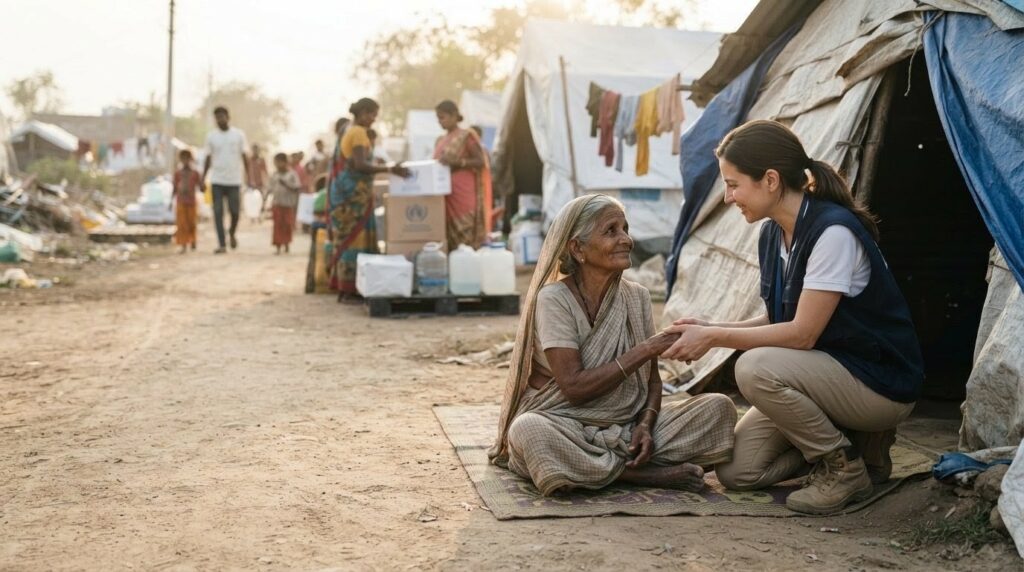
For readers in India, this day carries a familiar resonance. The country regularly faces floods, cyclones, earthquakes and other natural disasters, and each of these events tends to bring out an enormous grassroots response. Community volunteers, local NGOs, disaster response teams and everyday citizens frequently step in long before larger organisations can mobilise.
Coastal states along the eastern seaboard, including Odisha, West Bengal and Andhra Pradesh, face cyclones almost every year, and the improvements in early warning systems and evacuation planning across this region have saved countless lives over the past two decades. Much of that progress has come from close coordination between state disaster management authorities and local volunteers who understand which villages are most exposed and how to move people quickly when a storm is approaching. The same pattern holds true during floods in Assam and Bihar, where community boats and neighbourhood networks often reach stranded families well before official relief convoys can get through.
This local, community-driven response mirrors exactly what World Humanitarian Day 2026 is highlighting on a global scale: the people closest to a crisis are often the ones best placed to respond to it, and their efforts deserve far more recognition than they usually receive.
Conclusion: Humanity Needs More Than Sympathy
World Humanitarian Day 2026 is not asking for a moment of sympathy and nothing more. It is asking for action. Behind every statistic about humanitarian worker casualties is a person who chose to run toward a crisis rather than away from it, often at enormous personal risk, and frequently while serving their own community.
Marking this day honestly means going beyond a single social media post. It means supporting the organisations and individuals doing this work, pushing for accountability when humanitarian workers are attacked, and remembering that humanitarian aid is not a seasonal cause. It is a year-round commitment to the idea that people in crisis deserve protection, dignity and a chance to rebuild, and that those who help them deserve to come home safely.
World Humanitarian Day 2026 will pass, as it does every year, but the crises it responds to will not. The people delivering food in a flooded village, running a mobile clinic near a conflict line, or coordinating shelter for a displaced family will still be there the next morning, doing the same work with the same quiet determination. Recognising that, honestly and consistently, is what turns a single day of acknowledgement into something closer to lasting support for humanitarian causes everywhere.
Frequently Asked Questions
What is World Humanitarian Day?
It is an international observance held every year to honour humanitarian workers and to raise awareness of the needs of people affected by crises worldwide.
Why is World Humanitarian Day celebrated on August 19?
The date marks the anniversary of the 2003 bombing of the UN headquarters at the Canal Hotel in Baghdad, which killed 22 people.
What is the theme of World Humanitarian Day 2026?
The 2026 campaign calls for civilians and humanitarian workers caught in conflict to no longer be treated as targets, with a demand for early action, accountability and support for survivors and families.
What happened on August 19, 2003?
A bomb attack on the UN headquarters in Baghdad killed 22 people, including Special Representative Sergio Vieira de Mello, and injured many others.
Who are humanitarian workers?
They include doctors, nurses, logisticians, volunteers, engineers and staff at local and international organisations who respond to crises, most of whom are national staff serving their own communities.
Why is humanitarian aid important?
It provides food, clean water, shelter, healthcare and protection to people affected by conflict, disaster and displacement, often keeping communities afloat during their most difficult moments.
How can I support humanitarian causes?
By donating to credible organisations, volunteering locally, sharing verified information and advocating for the protection of civilians and humanitarian workers.
What is the role of humanitarian workers during disasters?
They deliver emergency relief, coordinate rescue efforts, provide medical care and help communities begin the long process of recovery.
How does humanitarian aid help people affected by conflict?
It provides essential survival needs while also offering protection services and psychosocial support to help people cope with displacement and loss.
Also Read: World Music Day: Celebrating the Universal Language of Music

