


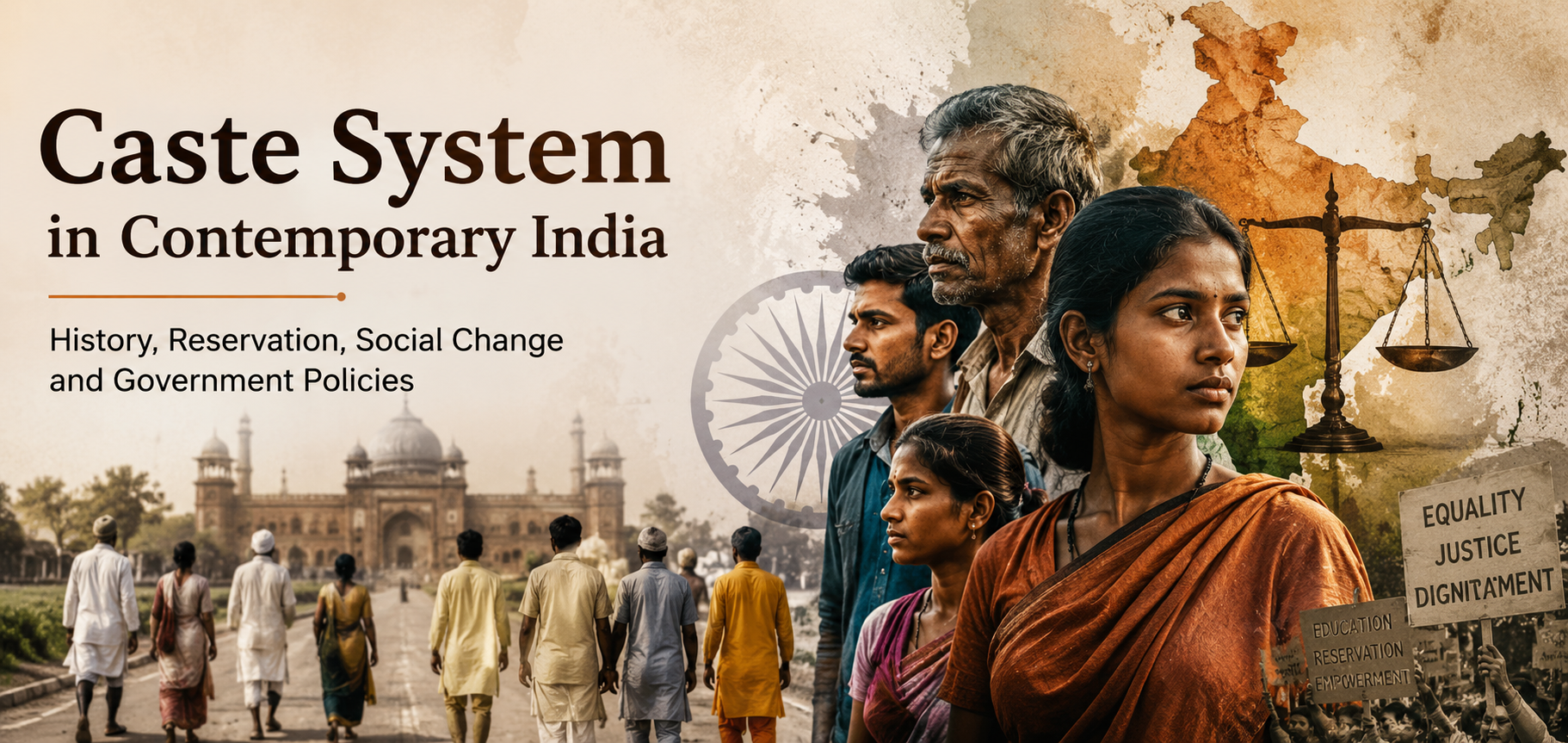
Caste Politics in Contemporary Indian Politics
Societal stratification, and the inequality that comes with it, still exists in India, and has been thoroughly criticised. Government policies aim at reducing this inequality by reservation – a quota system benefitting backward classes. The Indian government officially recognises historically discriminated communities of India such as the untouchables under the designation of Scheduled Castes, and certain economically backward castes as Other Backward Class.
Some, such as sociologist Arvind Shah, have argued that reservation paradoxically creates an incentive to perpetuate social stratification. Others, however, maintain that reservation on the basis of caste is necessary in order to prevent the monopolization of public sector jobs by members of the upper castes. These individuals also point out that reservation in India is not aimed primarily at eradicating poverty, but at ensuring adequate representation of all caste groups.
Marriage and Inter-Caste Relationships
A majority of marriages in India are still endogamous; intercaste and interreligious marriages are found mostly among those who are “economically, educationally, culturally advanced and urban oriented”. A study in 2005 found that inter-caste marriages had nearly doubled between 1981 and 2005, reaching a level of 6.1%.
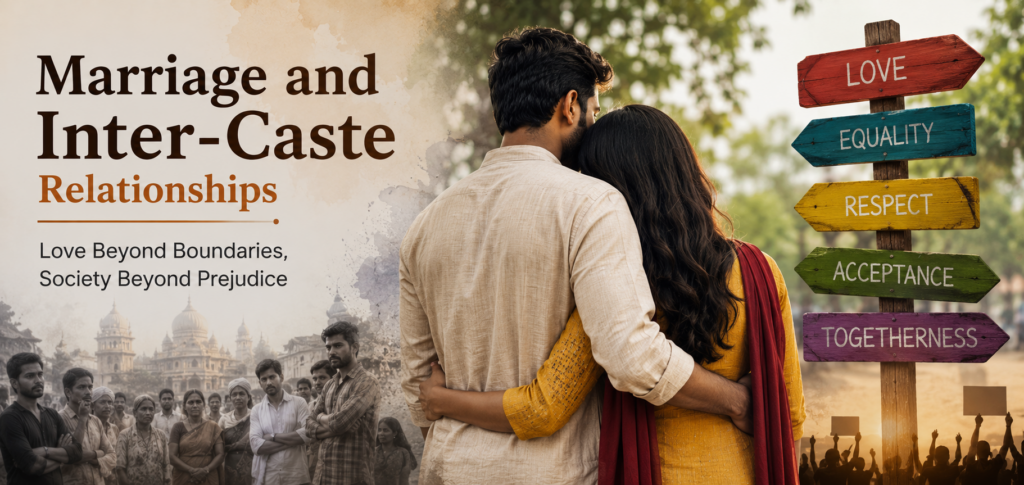
Opposition to intercaste marriage remains widespread, with Pew polling indicating that over 3 in 5 Indians agree that it is “very important” to stop both men and women from marrying outside of their castes. The polling indicated, furthermore, that Christians and Buddhists were relatively more accepting of intercaste marriages compared to Hindus, Muslims, and Sikhs. Honour killings related to disapproval of intercaste marriages remain frequent, with Outlook India noting, “Evidence, an NGO, revealed in November 2019 that as many as 195 known cases of honour killings were reported from Tamil Nadu alone in the past five years.”
The Government of India provides financial incentives to intercaste couples under the Dr. Ambedkar Scheme for Social Integration through Inter-Caste Marriages. Various state governments such as those of Odisha, Haryana, Punjab, Karnataka, Himachal Pradesh, Bihar, Tamil Nadu, Rajasthan, and Maharashtra also have similar schemes.
Caste-related Violence
Independent India has witnessed caste-related violence. According to a 2005 UN report, approximately 31,440 cases of violent acts committed against Dalits were reported in 1996. The UN report claimed 1.33 cases of violent acts per 10,000 Dalit people. For context, the UN reported between 40 and 55 cases of violent acts per 10,000 people in developed countries in 2005. One example of such violence is the Khairlanji massacre of 2006.
The Scheduled Caste and Scheduled Tribe (Prevention of Atrocities) Act, 1989 of India aims to prevent and punish atrocities and discrimination against members of the Scheduled Castes and Scheduled Tribes. Examples of crimes punishable under the Act include “forcing victims to eat or drink obnoxious substances; dumping excreta, sewage, carcasses into their homes or compounds; land grabbing; humiliation; sexual abuse”.
The National Crime Records Bureau includes statistics of crimes reported under the law as part of its annual reports. There has been a growth in total number of crimes reported under the Act in recent years but conviction rates have been low. Crimes against members of Scheduled Caste communities grew by 7.3% and against Scheduled Tribes by 26.5% in 2019.
Indian Diaspora
Caste persists within the Indian diaspora. In the United States, Dalit people report experiencing discrimination and violence. In 2020 the California Department of Fair Employment and Housing initiated a lawsuit against Cisco and two of its employees for alleged discrimination against an Indian engineer because he was from a lower caste than them. According to a 2018 survey by civil rights group Equality Labs cited in the lawsuit, 67% of Dalits in the US “reported being treated unfairly at their workplace because of their caste”. In 2023, Seattle became the first US city to ban caste discrimination.
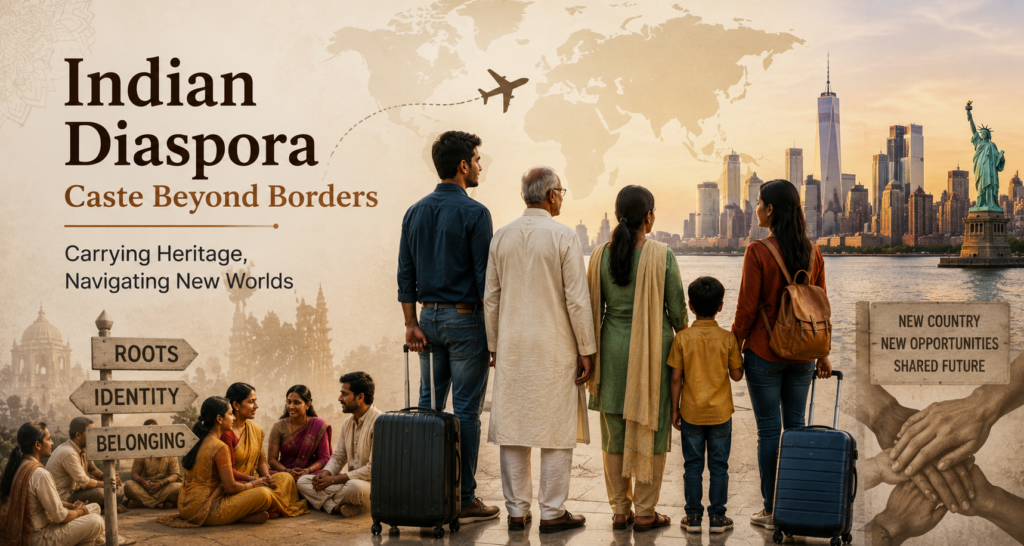
The Government of the United Kingdom ran a public consultation on ways to ensure legal protection against caste discrimination from March 2017 to September 2017. Based on the consultation the government decided that “the best way to provide the necessary protection against unlawful discrimination because of caste is by relying on emerging case law as developed by courts and tribunals”.
Also Read: Living on the Margins – India’s Most Marginalized and Excluded Communities
Affirmative Action and Reservation Policies
Article 15 of the Constitution of India prohibits discrimination based on caste and Article 17 declared the practice of untouchability to be illegal. In 1955, India enacted the Untouchability (Offences) Act (renamed in 1976, as the Protection of Civil Rights Act). It extended the reach of law, from intent to mandatory enforcement. The Scheduled Castes and Scheduled Tribes (Prevention of Atrocities) Act was passed in India in 1989.
- The National Commission for Scheduled Castes and Scheduled Tribes was established to investigate, monitor, advise, and evaluate the socio-economic progress of the Scheduled Castes and Scheduled Tribes.
- A reservation system for people classified as Scheduled Castes and Scheduled Tribes has existed for over 50 years. The presence of privately owned free market corporations in India is limited and public sector jobs have dominated the percentage of jobs in its economy. A 2000 report estimated that most jobs in India were in companies owned by the government or agencies of the government. The reservation system implemented by India over 50 years, has been partly successful, because of all jobs, nationwide, in 1995, 17.2 percent of the jobs were held by those in the lowest castes.
- The Indian government classifies government jobs in four groups. The Group A jobs are senior most, high paying positions in the government, while Group D are junior most, lowest paying positions. In Group D jobs, the percentage of positions held by lowest caste classified people is 30% greater than their demographic percentage. In all jobs classified as Group C positions, the percentage of jobs held by lowest caste people is about the same as their demographic population distribution. In Group A and B jobs, the percentage of positions held by lowest caste classified people is 30% lower than their demographic percentage.
- The presence of lowest caste people in highest paying, senior-most position jobs in India has increased by ten-fold, from 1.18 percent of all jobs in 1959 to 10.12 percent of all jobs in 1995.
Recognition of Scheduled Castes, Scheduled Tribes, and OBCs
The Indian government officially recognises historically discriminated communities of India such as the untouchables under the designation of Scheduled Castes and Scheduled Tribes, and certain economically backward Shudra castes as Other Backward Class. The Scheduled Castes are sometimes referred to as Dalit in contemporary literature. In 2001, Dalits comprised 16.2 percent of India’s total population. Of the one billion Hindus in India, it is estimated that Hindu Forward caste comprises 26%, Other Backward Class comprises 43%, Hindu Scheduled Castes (Dalits) comprises 22% and Hindu Scheduled Tribes (Adivasis) comprises 9%.
In addition to taking affirmative action for people of scheduled castes and scheduled tribes, India has expanded its effort to include people from poor, backward castes in its economic and social mainstream. In 1990, the government reservation of 27% for Backward Classes on the basis of the Mandal Commission’s recommendations. Since then, India has reserved 27 percent of job opportunities in government-owned enterprises and agencies for Socially and Educationally Backward Classes (SEBCs). The 27 percent reservation is in addition to 22.5 percent set aside for India’s lowest castes for the last 50 years.
The Mandal Commission and Reservation Reforms
The Mandal Commission was established in 1979 to “identify the socially or educationally backward” and to consider the question of seat reservations and quotas for people to redress caste discrimination. In 1980, the commission’s report affirmed the affirmative action practice under Indian law, whereby additional members of lower castes – the other backward classes were given exclusive access to another 27 percent of government jobs and slots in public universities, in addition to the 23 percent already reserved for the Dalits and Tribals. When V. P. Singh’s administration tried to implement the recommendations of the Mandal Commission in 1990, massive protests were held in the country. Many alleged that the politicians were trying to cash in on caste-based reservations for purely pragmatic electoral purposes.
Other Backward Classes (OBC)
There is substantial debate over the exact number of OBCs in India; it is generally estimated to be sizable, but many believe that it is lower than the figures quoted by either the Mandal Commission or the National Sample Survey.
The reservation system has led to widespread protests, such as the 2006 Indian anti-reservation protests, with many complaining of reverse discrimination against the Forward Castes (the castes that do not qualify for the reservation).
In May 2011, the government approved a poverty, religion and caste census to identify poverty in different social backgrounds. The census would also help the government to re-examine and possibly undo some of the policies which were formed in haste such as the Mandal Commission in order to bring more objectivity to the policies with respect to contemporary realities.
Critics of the reservation system believe that there is actually no social stigma at all associated with belonging to a backward caste and that because of the huge constitutional incentives in the form of educational and job reservations, a large number of people will falsely identify with a backward caste to receive the benefits. This would not only result in a marked inflation of the backward castes’ numbers, but also lead to enormous administrative and judicial resources being devoted to social unrest and litigation when such dubious caste declarations are challenged.
In 20th century India, the upper-class (Ashraf) Muslims dominated the government jobs and parliamentary representation. As a result, there have been campaigns to include the Muslim untouchable and lower castes among the groups eligible for affirmative action in India under SC and STs provision act and have been given additional reservation based on the Sachar Committee report.
Effects of Government Aid
In a 2008 study, Desai et al. focussed on education attainments of children and young adults aged 6–29, from lowest caste and tribal populations of India. They completed a national survey of over 100,000 households for each of the four survey years between 1983 and 2000. They found a significant increase in lower caste children in their odds of completing primary school. The number of Dalit children who completed either middle-, high- or college-level education increased three times faster than the national average, and the total number were statistically same for both lower and upper castes.
However, the same study found that in 2000, the percentage of Dalit males never enrolled in a school was still more than twice the percentage of upper caste males never enrolled in schools. Moreover, only 1.67% of Dalit females were college graduates compared to 9.09% of upper caste females. The number of Dalit girls in India who attended school doubled in the same period, but was still lower than the national average. Other poor caste groups as well as ethnic groups such as Muslims in India have also made improvements over the 16-year period, but their improvement lagged behind that of Dalits and Adivasis. The net percentage school attainment for Dalits and Muslims were statistically the same in 1999.
A 2007 nationwide survey of India by the World Bank found that over 80 percent of children of historically discriminated castes were attending schools. The fastest increase in school attendance by Dalit community children occurred during the recent periods of India’s economic growth.
A study by Darshan Singh presents data on health and other indicators of socio-economic change in India’s historically discriminated castes. He claims:
- In 2001, the literacy rates in India’s lowest castes was 55 percent, compared to a national average of 63 percent.
- The childhood vaccination levels in India’s lowest castes was 40 percent in 2001, compared to a national average of 44 percent.
- Access to drinking water within household or near the household in India’s lowest castes was 80 percent in 2001, compared to a national average of 83 percent.
- The poverty level in India’s lowest castes dropped from 49 percent to 39 percent between 1995 and 2005, compared to a national average change from 35 to 27 percent.
The life expectancy of various caste groups in modern India has been raised; but the International Institute for Population Sciences report suggests that poverty, not caste, is the bigger differentiation in life expectancy in modern India.
Influence on Other Religions
While identified with Hinduism, caste systems are found in other religions on the Indian subcontinent, including other religions such as Buddhists, Christians and Muslims.
Muslims
Caste system has been observed among Muslims in India. They practice endogamy, hypergamy, hereditary occupations, avoid social mixing and have been stratified. There is some controversy if these characteristics make them social groups or castes of Islam. Some scholars assert that the Muslim castes are not as acute in their discrimination as those of the Hindus, while critics assert that the discrimination in South Asian Muslim society is worse.
From the earliest days of Islam’s arrival in South Asia, Arab, Persian and Afghan Muslims have been recognised as an upper caste. Some upper caste Hindus who converted to Islam became part of the governing groups, who along with these foreign groups came to be known as Ashrafs (or nobles). Below them are the middle caste Muslims called Ajlafs, and the lowest status Muslims of the Arzals. Anti-caste activists like Ambedkar called the Arzal caste among Muslims as the equivalent of Hindu untouchables, as did the British ethnographer Herbert Hope Risley.
In Bengal, some Muslims refer to the social stratification within their society as qaum (or Quoms), a term that is found among Muslims elsewhere in India, as well as in Pakistan and Afghanistan. Qaums have patrilineal heredity, with ranked occupations and endogamy. Membership in a qaum is inherited by birth. Barth identifies the origin of the stratification from the historical segregation between pak (pure) and paleed (impure) – defined by the family’s social or religious status, occupation and involvement in sexual crimes. There is history of skin color defining Pak/Paleed, but that does not have historical roots, and was adopted by outsiders through analogy with the Hindu Caste system.
Endogamy is very common in the form of arranged consanguineous marriages among Muslims in India and Pakistan. Malik states that the lack of religious sanction makes qaum a “quasi-caste”, and something that is found in Islam outside South Asia as well.
Sikh
The Sikh literature mentions Varna as Varan, and Jati as Zat or Zat-biradari. Eleanor Nesbitt, a professor of Religion and author of books on Sikhism, states that the Varan is described as a class system, while Zat has some caste system features in Sikh literature. In theory, Sikh literature does not recognise caste hierarchy or differences, but, in practice, states Nesbitt, widespread endogamy practices among Sikhs have been prevalent in modern times, and poorer Sikhs of disadvantaged castes continue to gather in their own places of worship.
Most Sikh families, writes Nesbitt, continue to check the caste of any prospective marriage partner for their children. She notes that all Gurus of Sikhs married within their Zat, and they did not condemn or break with the convention of endogamous marriages for their own children or Sikhs in general.
Although the Sikh Gurus criticised the hierarchy of the caste system, one does exist in Sikh community. According to Sunrinder S, Jodhka, Sikhs belonging to the landowning dominant castes have not shed all their prejudices against the Dalits. While Dalits would be allowed entry into the village gurudwaras they would not be permitted to cook or serve langar (the communal meal). Therefore, wherever they could mobilise resources, the Dalits of Punjab have tried to construct their own gurudwaras and other local level institutions in order to attain a certain degree of cultural autonomy.
In 1953, the Government of India acceded to the demands of the Sikh leader, Tara Singh, to include Sikh castes of the converted untouchables in the list of scheduled castes. In the Shiromani Gurdwara Parbandhak Committee, 20 of the 140 seats are reserved for low-caste Sikhs.

Jains
Caste system in Jainism has existed for centuries, primarily in terms of endogamy, although, per Paul Dundas, in modern times the system does not play a significant role. This is contradicted by Carrithers and Humphreys who describe the major Jain castes in Rajasthan with their social rank.
Christians
Social stratification is found among the Christians in India based on caste as well as by their denomination and location. The caste distinction is based on their caste at the time that they or their ancestors converted to Christianity. Since the 16th century, they typically do not intermarry, and sit separately during prayers in Church.
The earliest conception of caste among Indian Christians comes from Kerala, called Saint Thomas Christians (or “Syrian Christians”). Duncan Forrester observes that “Nowhere else in India is there a large and ancient Christian community which has in time immemorial been accorded a high status in the caste hierarchy. Syrian Christian community operates very much as a caste and is properly regarded as a caste or at least a very caste-like group.”
Amidst the Hindu society, the Saint Thomas Christians of Kerala had inserted themselves within the Indian caste society by the observance of caste rules and were regarded by the Hindus as a caste occupying a high place within their caste hierarchy. Their traditional belief that their ancestors were high-caste Hindus such as Nambudiris and Nairs, who were evangelised by St. Thomas, has also supported their upper-caste status.
With the arrival of European missionaries and their evangelistic mission among the lower castes in Kerala, two new groups of Christians, the Latin Catholics of Malabar and Protestant Dalit Christians, were formed but they continued to be considered as lower castes by higher ranked communities, including the Saint Thomas Christians.
Table 1. Distribution of Population by Religion and Caste Categories
| Religion/Caste | SCs | STs | OBCs | Forward Caste/Others |
|---|---|---|---|---|
| Hinduism | 22.2% | 9% | 42.8% | 26% |
| Islam | 0.8% | 0.5% | 39.2% | 59.5% |
| Christianity | 9.0% | 32.8% | 24.8% | 33.3% |
| Sikhism | 30.7% | 0.9% | 22.4% | 46.1% |
| Jainism | 0.0% | 2.6% | 3.0% | 94.3% |
| Buddhism | 89.5% | 7.4% | 0.4% | 2.7% |
| Zoroastrianism | 0.0% | 15.9% | 13.7% | 70.4% |
| Others | 2.6% | 82.5% | 6.25 | 8.7% |
| Total | 19.7% | 8.5% | 41.1% | 30.8% |
The caste system continues to shape many aspects of Indian society, despite constitutional safeguards and decades of social reform. Government initiatives such as reservation policies, affirmative action, and legal protections have played a significant role in improving representation and opportunities for historically disadvantaged communities. At the same time, issues such as caste-based discrimination, violence, and social inequality remain important challenges.
Contemporary India reflects both progress and ongoing debate, with discussions around reservation, social justice, education, and economic opportunities continuing to evolve. Understanding the caste system requires examining its historical roots alongside its present-day social, political, and economic impact, making it an essential subject in the study of Indian society.
Also Read: Child Marriage in India: Impact, Laws, and Hope for Change

