


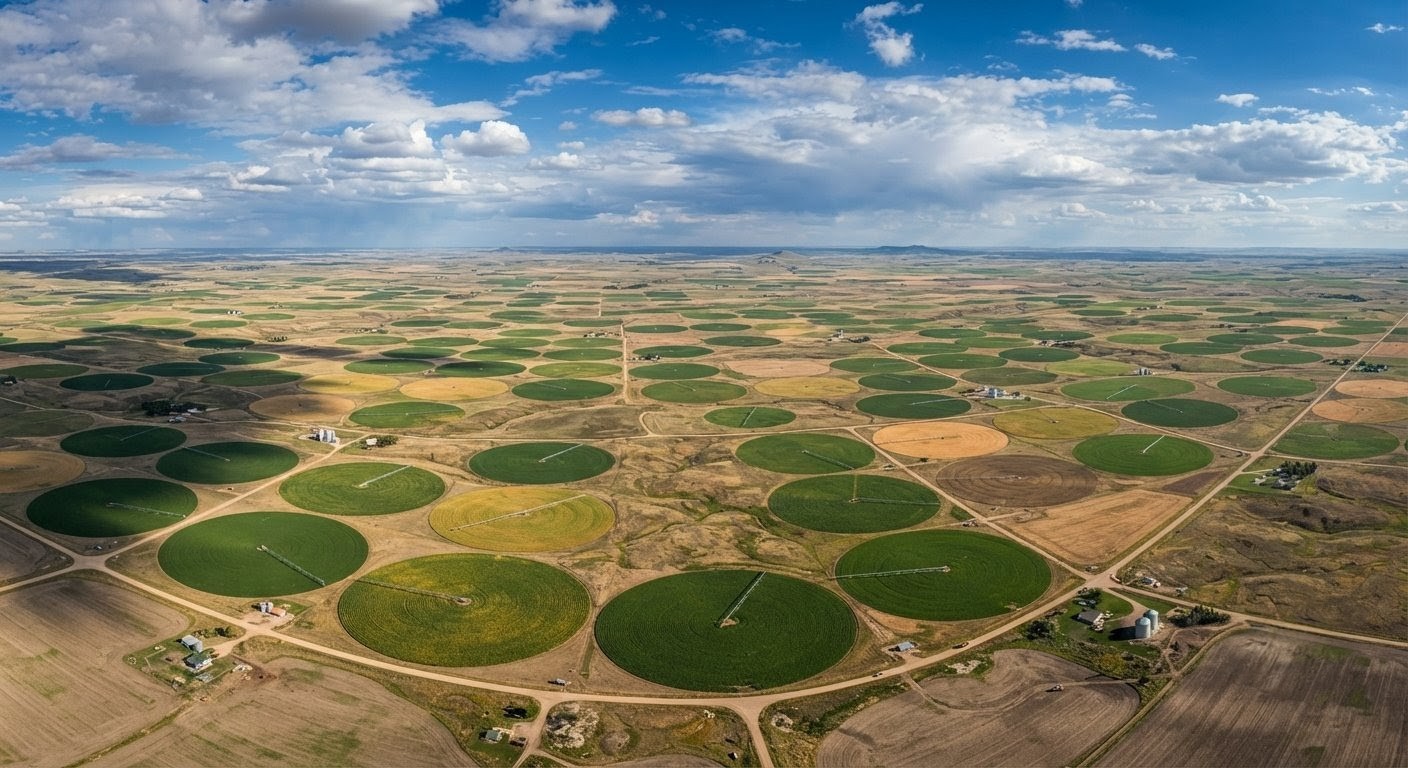
The Ogallala Aquifer supplies water to nearly one-third of America’s irrigated farmland. But decades of over-pumping have raised an urgent question. Could it run dry within our lifetime? In parts of Texas, Kansas, and Oklahoma, that future is already beginning to unfold.
The Ogallala Aquifer, this vast underground reservoir, stretches beneath eight states, from South Dakota to Texas. It turned dry grassland into some of the most productive farm country in the world. For decades now, farmers have pulled water from it faster than nature can put it back.
The gap between what goes in and what comes out keeps growing. The Ogallala Aquifer water crisis is no longer a future concern. In several parts of the Great Plains, it is already affecting farming communities and local economies.
Table of Contents
A Geological Marvel Beneath the Great Plains
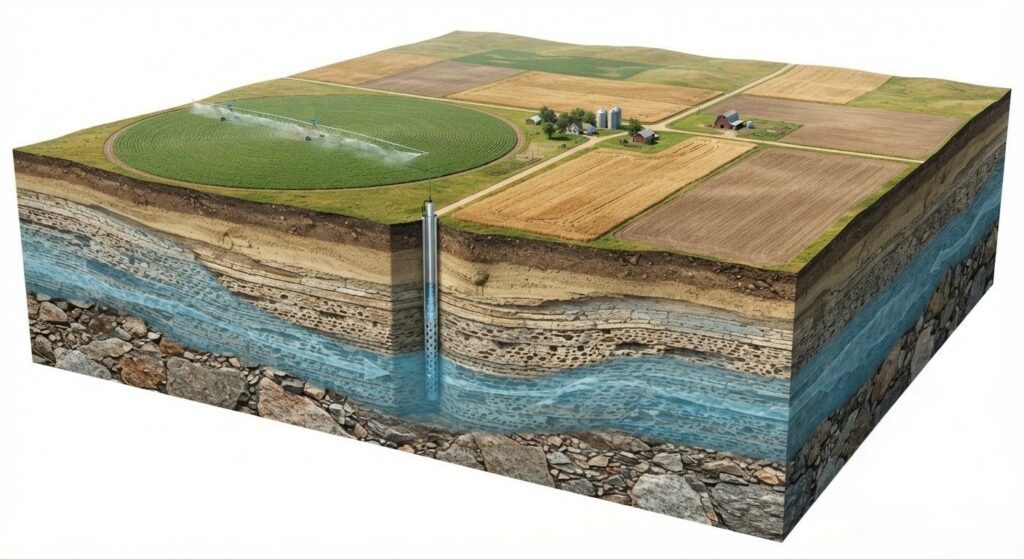
The Ogallala Aquifer began forming around 10 million years ago. As the Rocky Mountains eroded, rivers carried sand, gravel, clay, and silt eastward and dropped them across the plains. Over time, this created a porous underground layer that could hold enormous amounts of water.
It spans roughly 174,000 square miles under South Dakota, Nebraska, Wyoming, Colorado, Kansas, Oklahoma, New Mexico, and Texas. At its historical peak, the aquifer held about 3.3 billion acre-feet of water, close to a quadrillion gallons. That makes it one of the largest freshwater aquifers on the planet.
Nature took millions of years to build it. It has taken less than a hundred to put it under serious strain.
How Irrigation Transformed the Great Plains
Before the 1930s, most farming in the region depended on rainfall, not irrigation. The Dust Bowl changed that. It exposed how vulnerable the land was to drought and pushed farmers to look underground for water.
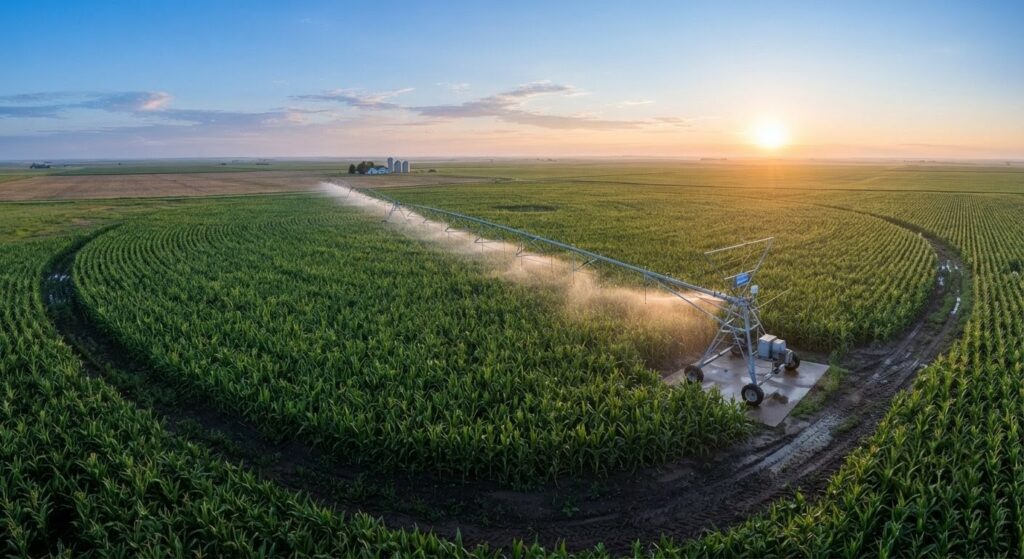
After World War II, better pumps, rural electrification, and improved drilling made large-scale irrigation possible for the first time. Between 1950 and 1980, irrigated farmland jumped from 2.1 million acres to 13.7 million acres.
That shift turned the Great Plains into America’s breadbasket. The region now produces close to a fifth of the nation’s wheat, corn, cotton, and cattle. Towns grew around this water. Entire communities built their future on the assumption that the aquifer would keep giving.
Where Depletion Stands Today
Ogallala Aquifer depletion has reached a point where the numbers tell a sobering story. Average water levels across the aquifer have dropped more than 15 feet since farming began there, according to the U.S. Geological Survey. In parts of Kansas, Oklahoma, and Texas, the decline is far worse, over 150 feet in some spots. Certain heavily irrigated areas are losing up to 6 feet of water a year.
Since large-scale pumping began, farmers have pulled out roughly 350 million acre-feet, close to 114 trillion gallons. That’s about 8 to 10 percent of the aquifer’s original volume.
That percentage sounds manageable on its own. It isn’t, because the water left behind is not spread evenly. Nebraska holds onto around 65% of the aquifer’s total volume, thanks to better rainfall and recharge conditions. Texas and Kansas are not so fortunate. Several areas there have already reached the point where pumping for irrigation no longer makes economic sense.
Why the Aquifer Can’t Keep Up
The core problem behind Ogallala Aquifer depletion is simple to explain but difficult to solve. Water goes out much faster than it comes back in.
Natural recharge, the slow process of rain seeping through soil into the aquifer, moves at a crawl across most of the region. In the central and southern portions, it adds only 0.5 to 1 inch of water a year. Thick, clay-heavy soil doesn’t help either, since it blocks water from soaking through.
Meanwhile, current pumping rates outpace recharge by 10 to 25 times in many areas. Hydrologists have a term for what this creates: an “effectively non-renewable” resource. Technically, the aquifer can refill itself. Practically, water pumped out today would take thousands of years to come back.
Nebraska and parts of South Dakota fare a bit better, with 1 to 3 inches of recharge annually. Even that isn’t close to matching what modern farming demands.
How Long Does the Aquifer Have Left?
Timelines vary by region and depend heavily on what happens next. Research from Kansas State University and the USGS suggests that if pumping continues at current rates, around 70% of the aquifer could be depleted by 2070.
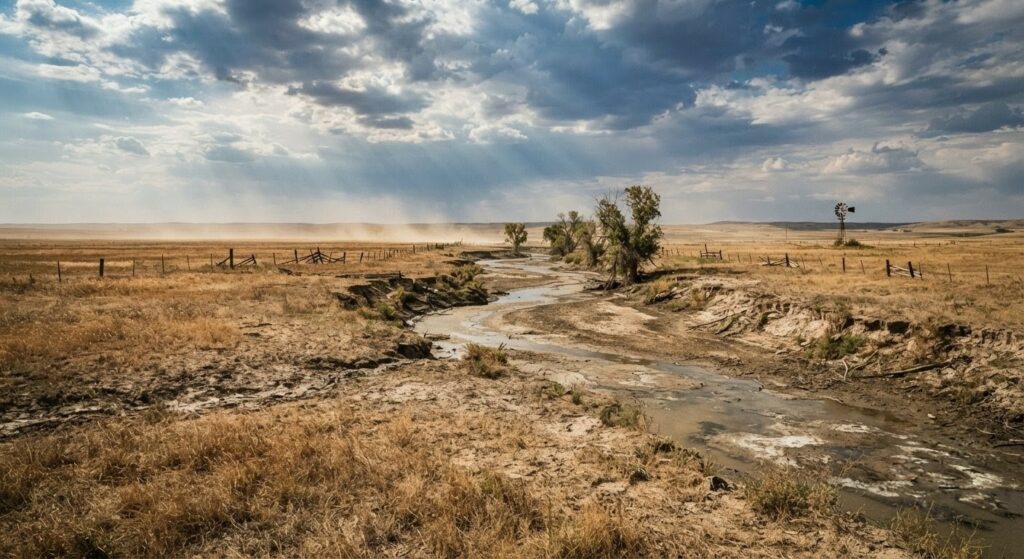
The southern stretches are in the most immediate danger. Parts of the Texas Panhandle and western Kansas may reach the point of effective depletion, meaning not enough water remains for large-scale irrigation, within the next 15 to 20 years.
Central Kansas has a bit more breathing room, with an estimated 25 to 50 years of irrigated farming left. Nebraska sits in a stronger position. Its portion of the aquifer could sustain current use for over a century, though pockets of heavy irrigation will still see local depletion.
These aren’t fixed outcomes. Farming practices, policy decisions, new technology, and shifting climate patterns can all move these timelines. But without real intervention, large parts of the aquifer will stop supporting irrigation within our lifetime. For some regions, that shift is less than a decade away.
What Depletion Would Cost the Region
The aquifer supports an agricultural economy worth about $35 billion a year. That’s not an abstract number. A 2013 study by Texas A&M AgriLife Extension Service found that a full return to rain-fed farming would cut agricultural output by roughly 56%. That translates to about $20 billion in annual losses and more than 130,000 jobs at risk.
Continued groundwater depletion will reshape not only agriculture but also the economies of hundreds of rural communities that depend on reliable water supplies.
Farmers would need to shift away from thirsty crops like corn and cotton toward hardier options like winter wheat and sorghum. Livestock production would take a hit too, since feed grain would become scarcer.
The ripple effects would reach far beyond the farm gate. Rural communities already dealing with population decline could see that trend accelerate. Property values would likely fall as farmland becomes less productive, which chips away at local tax revenue and the public services it funds.
This transition also won’t hit every place equally. Some regions will feel it within years. Others have decades of cushion.
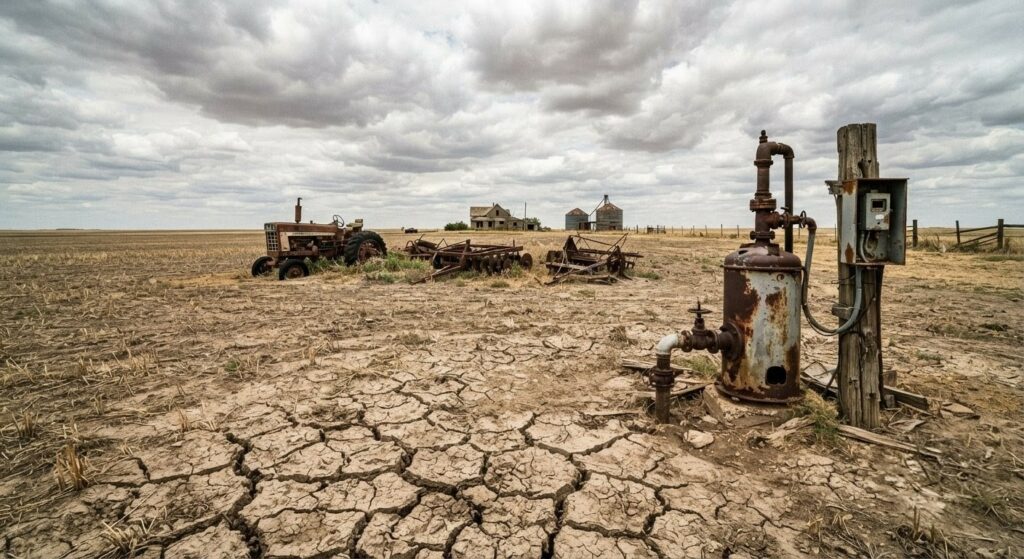
Climate Change Makes It Worse
Climate change adds another layer of pressure. Projections for the Great Plains point to rising temperatures and more unpredictable rainfall, with harsher droughts broken up by fewer but heavier storms.
Climate change is expected to intensify the Ogallala Aquifer water crisis by increasing irrigation demand while making natural groundwater recharge less reliable.
Higher temperatures speed up evaporation, which could push irrigation needs up by 10 to 15% by mid-century, based on research from the National Climate Assessment. And when rain does fall in intense bursts, more of it runs off the surface instead of soaking into the ground. That means even years with above-average rainfall might not translate into meaningful recharge.
Some models predict slightly more rainfall for the northern aquifer and less for the south, which would widen the gap between Nebraska’s relatively stable supply and the shortages further south. Rising heat, faster evaporation, and erratic rain create a kind of double bind. Demand for water goes up while the aquifer’s ability to refill goes down.
What’s Being Done About It
Slowing Ogallala Aquifer depletion requires more than a single solution.
Smarter irrigation
Low-pressure sprinklers, subsurface drip systems, and soil moisture sensors can cut water use by 15 to 30% without hurting crop yields.
Different crops
Switching to drought-resistant varieties and rotating in less thirsty crops has saved 20 to 40% in experimental fields.
Pumping limits
Kansas has tested this through its Local Enhanced Management Areas, or LEMAs. Coordinated cuts of 20 to 30% in water use have slowed the aquifer’s decline while keeping farms profitable.
Better soil health
No-till farming and cover crops improve how well soil holds onto both rainwater and irrigation water.
Together, these approaches have already slowed depletion in the regions that adopted them. The challenge now is getting more farmers on board, especially given the upfront costs and short-term financial risk involved.
Also Read: Saving Indigenous Seeds: How Tribal Communities Are Sustaining Livelihoods and Biodiversity
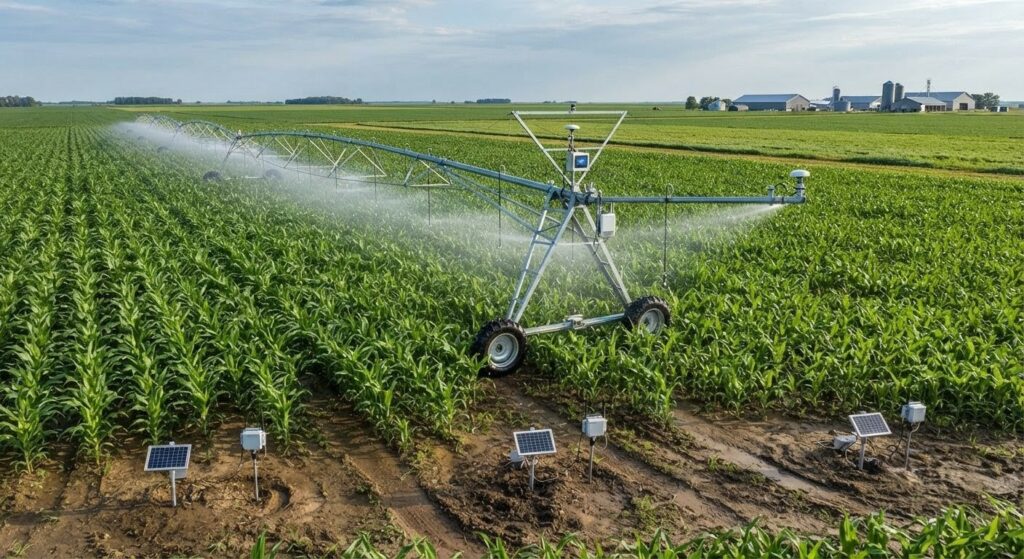
Where Technology Might Help
New technology is becoming an important tool in reducing groundwater depletion while helping farmers maintain crop yields. Precision agriculture, using GPS, satellite data, and soil sensors, lets farmers water only where and when it’s actually needed. That alone could cut irrigation use by up to 25%.
Plant breeders are also developing drought-tolerant crop varieties. Some experimental strains have maintained normal yields using 30 to 40% less water.
Other efforts focus on getting more water back into the ground. Playa lake management, infiltration galleries, and recharge wells are being tested to capture more rain and runoff, though scaling these up remains difficult. Municipal and industrial water recycling can also ease pressure on freshwater supplies.
Further out, ideas like atmospheric water harvesting and solar-powered desalination of brackish groundwater are being explored. None of these alone will solve the depletion problem, but combined, they could meaningfully extend how long the aquifer stays productive.
The Governance Problem
Long-term solutions to the Ogallala Aquifer water crisis will require cooperation across all eight states.
Most follow some version of “rule of capture” or “prior appropriation,” which generally means whoever starts pumping first keeps the right to continue. That legal patchwork makes coordinated, region-wide conservation genuinely difficult to pull off.
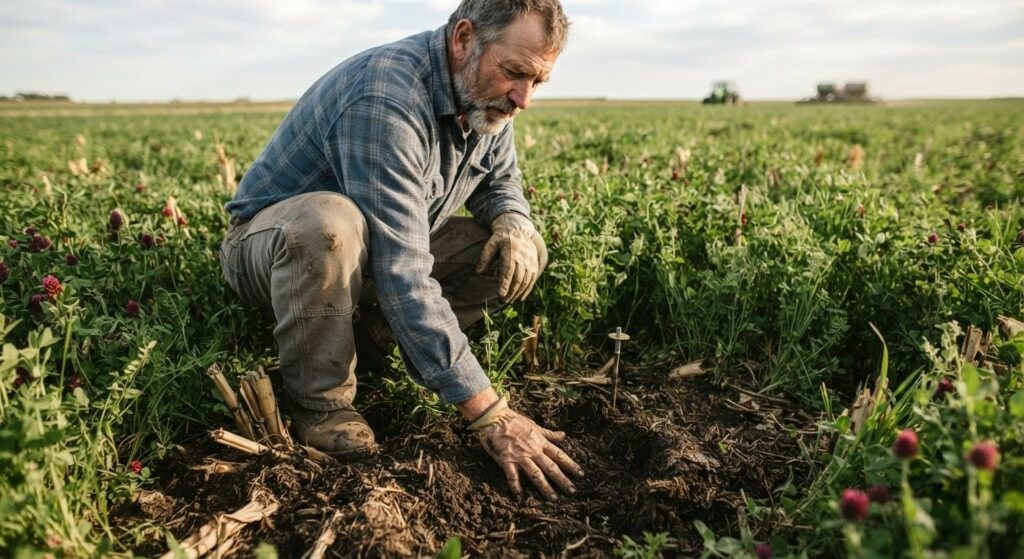
The Human Side of the Crisis
For many families, Ogallala Aquifer depletion is not just an environmental issue. It is a question of preserving livelihoods and communities.
Rural sociologists have found that when people feel their livelihood is under threat, they often resist conservation policy, even when they agree the problem is real. Farmers regularly weigh their immediate financial needs against a desire to leave something behind for the next generation.
Indigenous communities with long-standing ties to the region bring a different lens to water management, one that emphasizes long-term stewardship over short-term extraction. And across the board, community-driven conservation efforts, ones built on trust and local knowledge, tend to outperform top-down regulation.
What’s Working: Real Examples
A few regions offer a useful blueprint.In western Kansas, the Sheridan County 6 Local Enhanced Management Area set out to cut water use by 20% over five years. They exceeded that goal while keeping farms profitable through better efficiency and more diverse crops.
Texas’s North Plains Groundwater Conservation District ran a demonstration project that helped farmers reduce water use by 26%, without losing productivity, through a mix of technology and smarter crop choices.
In eastern Colorado, the Republican River Water Conservation District uses water fees to both fund conservation and encourage efficient use. And in Nebraska, the Water Balance Alliance has shown how farmer-led programs can drive adoption of soil health practices that improve water retention.
What ties these successes together? They pair technical solutions with genuine community buy-in, favor locally developed strategies over outside mandates, and give farmers a realistic economic path through the transition.
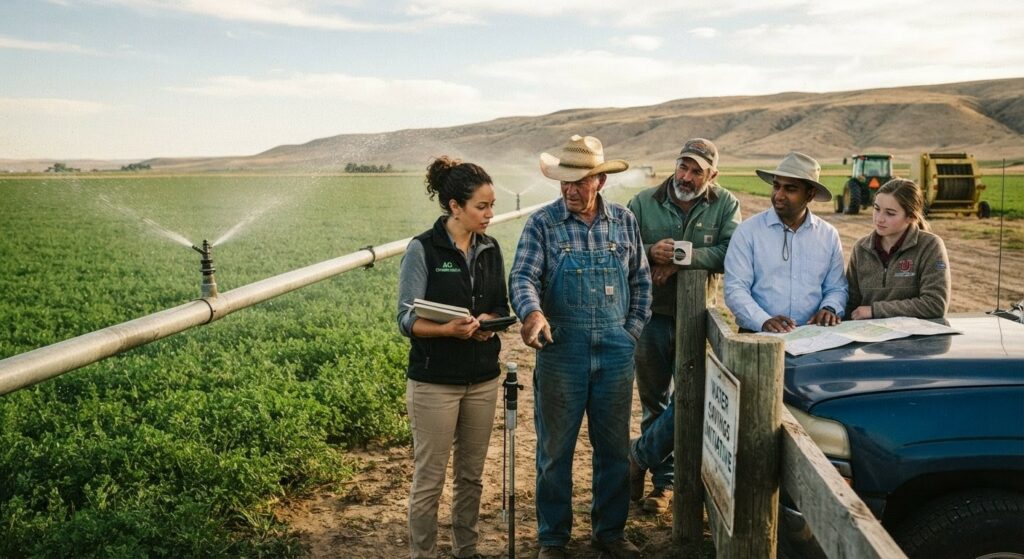
What Comes Next for Great Plains Agriculture
The future here likely won’t be a clean story of collapse or continuation. It’s shaping up to be something more gradual, a slow shift toward farming systems built around water limits rather than water abundance.
Expect to see more diverse crop rotations, greater reliance on drought-resistant varieties, and irrigation used more strategically, targeted at critical growth stages instead of applied across entire fields. Livestock and cropping systems may become more integrated too, since grazing generally needs less water than growing irrigated feed.
Economic diversification will matter more than ever. Renewable energy, food processing, and tourism could all play a bigger role in keeping rural communities afloat as water-dependent farming shrinks. These changes won’t happen at the same pace everywhere. Some areas will adapt on their own timeline, others will be forced into it. Communities that start planning now will likely have an easier time than those that wait.
The Ogallala Aquifer is at a genuine turning point. Preventing further groundwater depletion will require coordinated action from farmers, scientists, policymakers, and local communities. The evidence is hard to argue with. Without real changes to how it’s managed, large parts of it will become unusable for irrigation within our lifetime, and southern regions are looking at decades, not centuries.
That said, nothing here is set in stone. Better farming practices, smarter technology, stronger policy, and real community involvement can all extend the aquifer’s working life and ease the transition ahead.
This isn’t just a technical problem to be solved with better pumps or new crop varieties. It’s a question of how we choose to manage a resource that took millions of years to form and less than a hundred to strain. What happens to the Ogallala Aquifer and the broader challenge of Ogallala Aquifer depletion will shape the environmental, economic, and social future of the American heartland for generations.
Quick Facts
- 174,000 square miles across 8 U.S. states
- $35 billion agricultural economy depends on it
- 70% depletion projected by 2070 if pumping continues unchanged
- Some regions could hit critical shortages within 15 to 20 years
Frequently Asked Questions
Can the Ogallala Aquifer refill?
Yes, but extremely slowly. Natural recharge in the central and southern regions adds only 0.5 to 1 inch of water per year. At that pace, water pumped out today would take thousands of years to naturally replace, which is why experts call it an effectively non-renewable resource.
Why is the Ogallala Aquifer drying up?
Decades of irrigation-driven pumping have pulled water out far faster than rainfall can replace it. Current withdrawal rates outpace natural recharge by 10 to 25 times in many areas, and thick clay soils in parts of the region make it even harder for rainwater to soak through.
Which states depend on the Ogallala Aquifer?
The aquifer stretches beneath eight states, South Dakota, Nebraska, Wyoming, Colorado, Kansas, Oklahoma, New Mexico, and Texas. Nebraska holds the largest remaining share of the water, while parts of Texas, Kansas, and Oklahoma face the most severe shortages.
How long will the Ogallala Aquifer last?
It depends on the region. Parts of the Texas Panhandle and western Kansas could see effective depletion within 15 to 20 years. Central Kansas has an estimated 25 to 50 years left. Nebraska’s supply could last over a century, with some local exceptions.
Can conservation save the Ogallala?
Conservation can’t undo decades of depletion, but it can significantly slow it down. Programs like Kansas’s Local Enhanced Management Areas have cut water use by 20 to 30% while keeping farms profitable, and combined with better technology and crop choices, these efforts can meaningfully extend the aquifer’s usable life.
Also Read: Riverine Ecosystems and Livelihoods: Balancing Fisheries and Freshwater Conservation in India

