


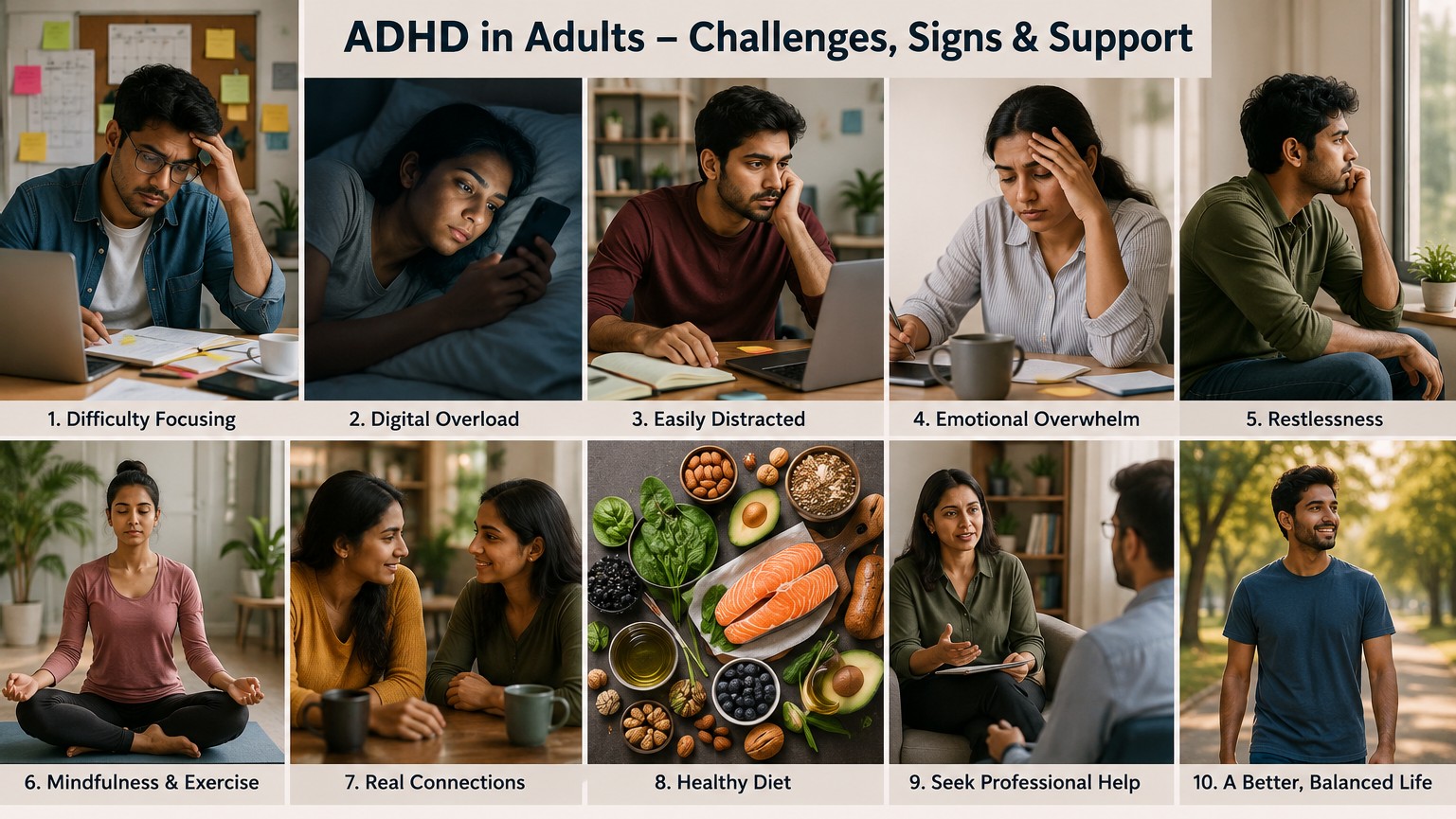
Adult ADHD is showing up in clinics across India far more often than it used to, and most people don’t realize it has a name. If you’ve been struggling to focus, feeling restless most days, or finding your emotions harder to manage than they used to be, you’re not imagining things. A growing number of adults are being diagnosed with Attention Deficit Hyperactivity Disorder, and the numbers are hard to ignore.
The National Economic Survey recently flagged digital addiction and the mental health crisis as emerging public health concerns in India. In clinical practice, my colleagues and I are seeing more cases of anxiety, depression, sleep disturbances, and difficulty concentrating. Alongside these, adult ADHD diagnoses are climbing too.
What’s alarming is that ADHD is no longer something we associate only with childhood. Nearly 65% of India’s population is under 35. Some studies conducted in specific populations have reported adult ADHD prevalence as high as 14 to 25%, although estimates vary widely. Despite this, the condition remains significantly under-recognized in everyday clinical practice.
Table of Contents

What Is Adult ADHD?
Adult ADHD is a pattern of inattention, restlessness, and impulsivity that continues or first becomes noticeable in adulthood. It doesn’t always look like the hyperactivity we associate with children. In adults, it often shows up as trouble focusing during conversations, difficulty finishing routine tasks, and emotional reactions that feel bigger than the situation calls for.
Because these symptoms build slowly, many adults live with them for years before anyone connects the dots.
Why Is Adult ADHD Increasing in India?
Digital habits are playing a real role here. The eye and the brain work together, much like a camera and its processor. When screen exposure continues for long hours, the eyes become strained, and that strain feeds directly into the brain, keeping it in a constant state of stimulation.
Emerging research suggests that prolonged, excessive screen use is associated with changes in attention, sleep patterns, and certain brain functions. The evidence connecting screen time to structural brain changes is still developing, and it would be inaccurate to say screens directly cause early brain degeneration. What we can say with more confidence is that heavy, sustained screen use appears linked to the kind of overstimulation that affects the cerebral cortex, the part of the brain responsible for attention, memory, emotional regulation, impulse control, and decision-making.
Emotional and social factors add to the pressure. Social media encourages constant comparison. Online interactions tend to increase stress while reducing real-world connection. Many patients describe feeling mentally “switched on” at all times, even during rest. That sustained activation creates emotional overload, and when mental fatigue and emotional imbalance combine, the risk of adult ADHD symptoms rises.

Common Signs and Symptoms
Adult ADHD often hides in plain sight. It rarely looks dramatic. Instead, it shows up in small, repeated patterns that get written off as stress or personality.
Some of the most common signs include:
- Irritability or tension in close relationships
- Struggling to stay mentally present during conversations
- Emotional reactions that feel excessive or hard to control
- Gradual social withdrawal
- Routine tasks feeling unusually difficult to complete
- Constant restlessness or racing thoughts
- Eating excessively or mindlessly, sometimes mistaken for a separate eating disorder
- Disrupted sleep from ongoing screen exposure, leaving people tired even after rest
Can Excessive Screen Time Cause ADHD?
This is one of the most common questions patients ask, and the honest answer is more nuanced than a simple yes or no. Screen time on its own is unlikely to be a single, direct cause of ADHD. What the current picture suggests is an association. Heavy, prolonged screen use appears connected to attention difficulties, poor sleep, and emotional overload, all of which overlap with ADHD symptoms.
Rather than treating screens as the sole cause, it’s more accurate to see them as one contributing factor among several, especially when combined with poor sleep, high stress, and limited face to face connection.

Why Adult ADHD Is Often Missed
Adult ADHD often goes undiagnosed because it develops gradually, over a long stretch of time. Unlike children, adults rarely show obvious behavioral signs in academic or structured settings. The symptoms blend into daily life and get dismissed as stress, burnout, or “just how I am.”
In practice, many people first seek help for relationship problems or emotional volatility, without realizing the underlying issue is attention dysregulation. Because these symptoms overlap so closely with common urban lifestyle struggles, the condition often stays hidden for years.
Also Read: Top Health Benefits of Meditation
How Adult ADHD Is Diagnosed
Ayurveda describes a related state called Amanaska, where the connection between the mind and the external environment becomes impaired, leading to poor concentration and reduced interest in work. The mind is responsible for Chintya, the process of analysing and interpreting sensory input, and it’s designed to focus on one sense at a time. When habits like constant multitasking overwhelm this process, mental clarity declines.
Clinical diagnosis typically involves a detailed history of attention, emotional regulation, and behavior patterns over time, rather than a single test. This is exactly why early screening matters so much. Left unaddressed, these patterns become harder to reverse, and deeper neurological and emotional habits start to form.

Ways to Improve Focus and Mental Health
Recovery starts with restoring balance, not just managing symptoms.
Physical activity plays a critical role. Yoga, pranayama, and outdoor movement help calm the nervous system and support cognitive balance.
Diet matters just as much. Heavily processed or difficult to digest foods burden both the body and the mind, while a lighter, balanced diet supports focus and emotional stability. Nutrients such as vitamin B complex, folate, omega 3, magnesium, iron, and zinc support nerve health and strengthen cognitive resilience over time.
Human connection also plays a bigger role than most people expect. Relationships are meant to be experienced in person, not only through screens. Face to face interaction grounds the mind and helps counter the fragmentation that comes from excessive screen use.
Mental health doesn’t change overnight, and neither does ADHD. The signs often build quietly over time, making them easy to overlook until they begin affecting work, relationships, and everyday life. Recognizing those signs early and seeking professional support can make a meaningful difference.
As digital habits continue to shape modern life, protecting your mental well-being is no longer optional. It is an essential part of living well. Early awareness, timely screening, and a balanced approach to health can help prevent small challenges from becoming lifelong struggles.

Frequently Asked Questions
Can adults develop ADHD later in life?
Adults don’t usually develop ADHD out of nowhere. In most cases, the condition was present earlier in life but went unnoticed or undiagnosed. It tends to surface more clearly in adulthood when responsibilities, stress, and lifestyle factors make the symptoms harder to ignore.
What are the first signs of ADHD in adults?
Early signs often include trouble staying present in conversations, restlessness, racing thoughts, irritability in relationships, and routine tasks feeling harder to complete than they used to.
Can ADHD be treated without medication?
Yes, for many adults, lifestyle changes make a meaningful difference. Physical activity, a balanced diet, better sleep habits, and reduced screen exposure all support cognitive and emotional balance. Treatment plans should still be guided by a qualified clinician, since the right approach varies from person to person.
Also Read: Why Brand Storytelling Matters More Than Traditional Marketing in 2026

