



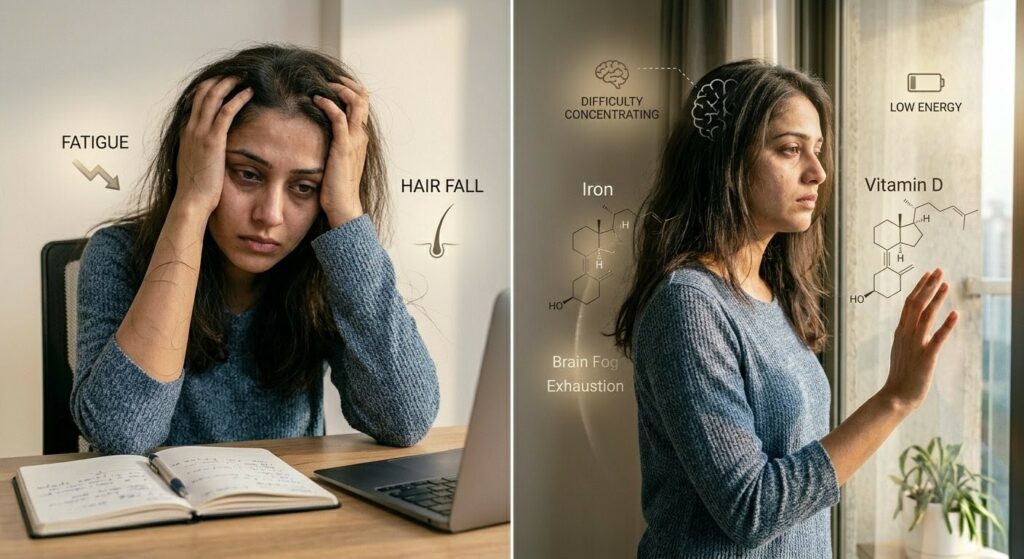
Vitamin deficiency symptoms often begin quietly. Persistent fatigue, unexplained hair fall, poor concentration, and low energy levels are frequently dismissed as stress or a busy lifestyle. However, these signs can indicate that the body is lacking essential nutrients such as Vitamin B12, Vitamin D, and iron.
These deficiencies used to be associated with very specific groups of people. Not anymore. Students pulling all nighters, professionals glued to laptops, homemakers running entire households, even people eating what looks like a perfectly healthy diet are all turning up with low numbers at the doctor’s office.
So why is this happening to so many people at once, and what can you actually do about it day to day?
Table of Contents
Why Vitamin Deficiencies Are Increasing
Life has changed a lot in a short time, and our bodies haven’t quite caught up. We skip breakfast because we’re rushing out the door. We order in because cooking feels like too much after a long day. We sit indoors for ten hours straight and barely see the sun.
None of this feels dramatic in the moment. A normal day might look like: wake up, scroll your phone, work at a desk, order dinner, go to bed after dark. But string enough of these days together and you’ve quietly cut yourself off from real food, sunlight, and movement.
That’s the real story behind why B12, Vitamin D, and iron deficiencies are showing up everywhere now, in cities and villages alike.

The Critical Role of Vitamin B12, Vitamin D, and Iron
These nutrients may not receive as much attention as proteins or carbohydrates, but they are essential for maintaining overall health.
Vitamin B12
Vitamin B12 supports the nervous system, brain function, and the production of healthy red blood cells. It also plays a vital role in energy metabolism. Low levels of Vitamin B12 can lead to fatigue, memory problems, tingling sensations in the hands and feet, and difficulty concentrating.
Vitamin D
Often called the “sunshine vitamin,” Vitamin D helps the body absorb calcium and maintain strong bones. It also supports immune function and muscle health. Deficiency can contribute to weak bones, muscle pain, frequent illness, and long-term skeletal problems.
Iron
Iron is necessary for producing hemoglobin, the protein in red blood cells that carries oxygen throughout the body. Without enough iron, the body’s tissues receive less oxygen, leading to tiredness, weakness, dizziness, and reduced physical performance.
When any of these nutrients are lacking, the effects often develop gradually. Symptoms may seem mild at first but can worsen over time if left unaddressed.

Common Signs of Nutrient Deficiencies
Many people live with deficiencies for months or even years without realizing it. Some of the most common warning signs include:
- Persistent fatigue and low energy
- Hair fall or thinning hair
- Frequent headaches
- Poor concentration and brain fog
- Weakness and muscle aches
- Mood changes or irritability
- Frequent infections
- Pale skin
- Dizziness or shortness of breath
- Slow recovery from illness
Because these symptoms can have multiple causes, proper testing is important for identifying the underlying issue.
Why Even Healthy Eaters Can Become Deficient
A common misconception is that eating home-cooked meals automatically guarantees adequate nutrition. While home-cooked food is generally healthier than highly processed alternatives, nutrient deficiencies can still occur.
For example, Vitamin B12 is found primarily in animal-based foods such as meat, fish, eggs, and dairy products. Individuals following vegetarian or vegan diets may struggle to meet their requirements without fortified foods or supplementation.
Vitamin D presents another challenge. Despite living in a sunny country like India, many people spend most of their day indoors, limiting their exposure to natural sunlight. Air pollution, sunscreen use, and clothing that covers most of the skin can also reduce Vitamin D production.
Iron deficiency can occur even when iron-rich foods are consumed regularly. Poor absorption, digestive issues, certain medical conditions, and inadequate food combinations can all affect how much iron the body actually uses.
Women are particularly vulnerable to iron deficiency due to menstrual blood loss, and anemia continues to be a major public health concern in many regions.
Also Read: India Nutrition Crisis: Why NFHS-VI Calls For A Rethink Of Health And Food Policies

Daily Habits That Help Prevent Deficiencies
The good news is that preventing deficiencies often begins with small, consistent lifestyle changes rather than drastic interventions.
Build Balanced Meals
Aim to include a variety of nutrient-rich foods every day, such as:
- Green leafy vegetables
- Seasonal fruits
- Whole grains
- Lentils and legumes
- Dairy products
- EggsNuts and seeds
- Fish and lean meats, where appropriate
A diverse diet helps ensure the body receives a broad range of vitamins and minerals.
Get Regular Sun Exposure
Spending 15 to 20 minutes outdoors in natural sunlight can support Vitamin D production. Morning sunlight is often the most practical option for many people.
Include Protein in Every Meal
Protein-rich foods help support overall health and can improve meal quality. Eggs, dairy products, lentils, beans, fish, and lean meats are excellent choices.
Improve Iron Absorption
Pair iron-rich foods with Vitamin C-rich foods to enhance absorption. For example:
- Spinach with lemon juice
- Lentils with tomatoes
- Iron-rich meals alongside oranges, guava, or amla
Simple food combinations can significantly improve the body’s ability to absorb iron.
Stay Active
Regular physical activity supports overall health and encourages better circulation, metabolism, and energy levels. Even a daily walk can make a difference.
Avoid Skipping Meals
Irregular eating patterns can reduce nutrient intake and contribute to deficiencies over time. Consistent meal timing helps maintain a steady supply of essential nutrients.

The Risks of Self-Medicating with Supplements
Many people turn to supplements as soon as they experience symptoms of fatigue or weakness. While supplements can be beneficial when prescribed appropriately, taking them without testing can be risky.
Excess iron can damage organs and increase oxidative stress. Too much Vitamin D can lead to toxicity and cause problems with calcium balance. High-dose supplements should never be taken solely based on assumptions or online advice.
The safest approach is to consult a healthcare professional and undergo the necessary blood tests before starting supplementation.
Why Early Detection Matters
Vitamin B12, Vitamin D, and iron deficiencies rarely develop overnight. They build slowly and silently, often without obvious symptoms during the early stages.
Routine health check-ups can help identify deficiencies before they begin affecting quality of life. Early intervention is usually simpler, more effective, and less costly than treating advanced deficiency-related health problems.
Paying attention to persistent symptoms, maintaining a balanced lifestyle, and seeking timely medical guidance can prevent many long-term complications.

Good health is often shaped by small choices repeated consistently over time. Regular meals, nutritious food, daily movement, sunlight exposure, and periodic health check-ups may seem simple, but they play a powerful role in preventing common nutrient deficiencies.
As Vitamin B12, Vitamin D, and iron deficiencies continue to rise, awareness becomes the first step toward prevention. Recognizing vitamin deficiency symptoms early can help prevent long-term health complications. Simple lifestyle changes, balanced nutrition, and regular health screenings remain the most effective ways to maintain healthy nutrient levels.
Sometimes, the difference between feeling constantly exhausted and feeling your best is not a major life change—it is giving your body the nutrients it has been quietly asking for all along.
Also Read: Top Health Benefits of Meditation

