


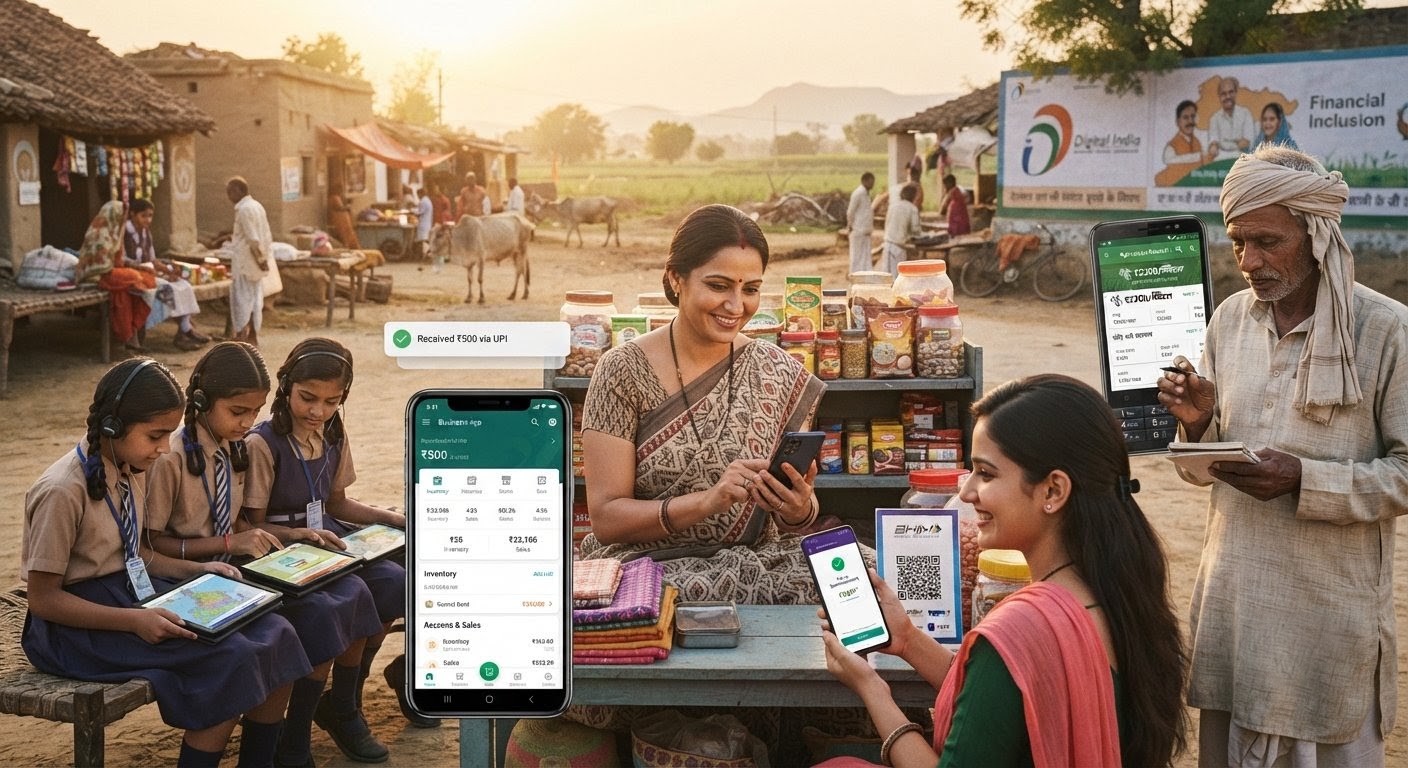
Digital literacy in rural India is no longer a distant policy goal. It has become the difference between a farmer who checks mandi prices on his phone and one who waits for a middleman to tell him what his crop is worth. India’s digital transformation has moved fast. Cities now run on UPI payments, food delivery apps, and video calls that connect families across continents. Villages have not moved at the same pace.
This gap between urban connectivity and rural digital access shapes who gets to participate in India’s growth story and who gets left watching from the sidelines. According to DataReportal’s 2026 report, India had over 1.03 billion internet users by late 2025, putting national penetration at around 70 percent. IAMAI data shows rural India now accounts for roughly half of all internet users in the country, up sharply from just 35 percent in 2015. Yet digital literacy has not kept pace with this growth in access. Several surveys indicate that while internet access has expanded rapidly, functional digital literacy still lags significantly in many rural communities. Owning a phone is not the same as knowing how to use it well.
Digital literacy is no longer a nice-to-have skill for the digitally curious. It is now a basic requirement for accessing healthcare, banking, education, and government welfare. This blog looks at why digital literacy in rural India matters so much right now, the barriers that hold it back, and the paths that could close the gap.
Table of Contents
KEY TAKEAWAYS
- Digital literacy goes beyond knowing how to use a smartphone.
- It improves access to education, healthcare, finance, and government services.
- Challenges include connectivity, affordability, language barriers, and cybersecurity.
- Government schemes and community initiatives are helping bridge the digital divide.
- AI can support digital inclusion but cannot replace digital literacy.
What Is Digital Literacy?
Digital literacy means the ability to find, understand, evaluate, and use information through digital devices. It is often mistaken for simply knowing how to operate a smartphone. That is only the surface layer.
True digital literacy includes knowing how to spot a fake news forward before sharing it in a family WhatsApp group. It includes understanding what happens when a bank asks for an OTP over the phone. It includes filling out a government form online without needing someone else to do it for you. It includes communicating clearly through email or a job application portal. A person can own the latest phone and still be digitally illiterate in every sense that matters.
For rural India, this distinction carries real weight. Many first-time internet users learn just enough to watch videos or use one or two apps, without the broader skill set that protects them or opens further opportunity.
Why Digital Literacy Matters in Rural India
Better Access to Education
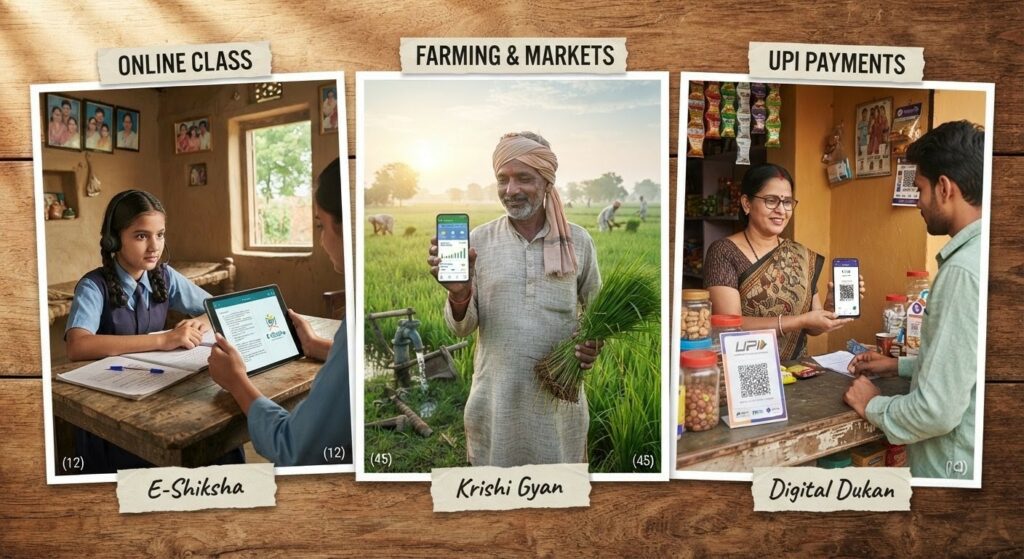
Rural students who can navigate online resources gain access to lessons, competitive exam material, and skill courses that were once available only in cities. A smartphone connected to the internet can now function as a second classroom, provided the student knows how to use it for learning rather than only entertainment.
Improved Healthcare Through Telemedicine
Telemedicine has changed what healthcare access looks like in remote areas. Government data presented in Parliament shows that mobile coverage across Indian villages had reached 98.4 percent by October 2025, up from around 91 percent in 2014, which means the infrastructure for remote consultations already reaches most of the country. A villager who understands how to book a video consultation, upload a prescription, or use a health app can reach a specialist without a day-long trip to the nearest town. Digital literacy in rural India directly affects how many people benefit from these services.
Financial Inclusion via UPI and Online Banking
UPI has reshaped how India moves money, and rural India has been part of that shift. Farmers selling produce, shopkeepers running small stores, and daily wage workers now use digital payments regularly. Understanding how to use these tools safely, from setting a UPI PIN to spotting a payment scam, is what turns access into genuine financial inclusion.
Access to Government Services
Welfare schemes, subsidies, and identity documents increasingly move through digital platforms. A citizen who can navigate these portals independently gets faster, more reliable access to entitlements than one who depends on a middleman or an overburdened local office.
Employment and Entrepreneurship Opportunities
Freelancing platforms, e-commerce marketplaces, and remote work options have opened doors for people outside major cities. Rural entrepreneurs who understand digital marketing and online selling can reach customers well beyond their immediate area. Digital literacy is what makes these opportunities usable rather than theoretical.
Agricultural Information and Market Access
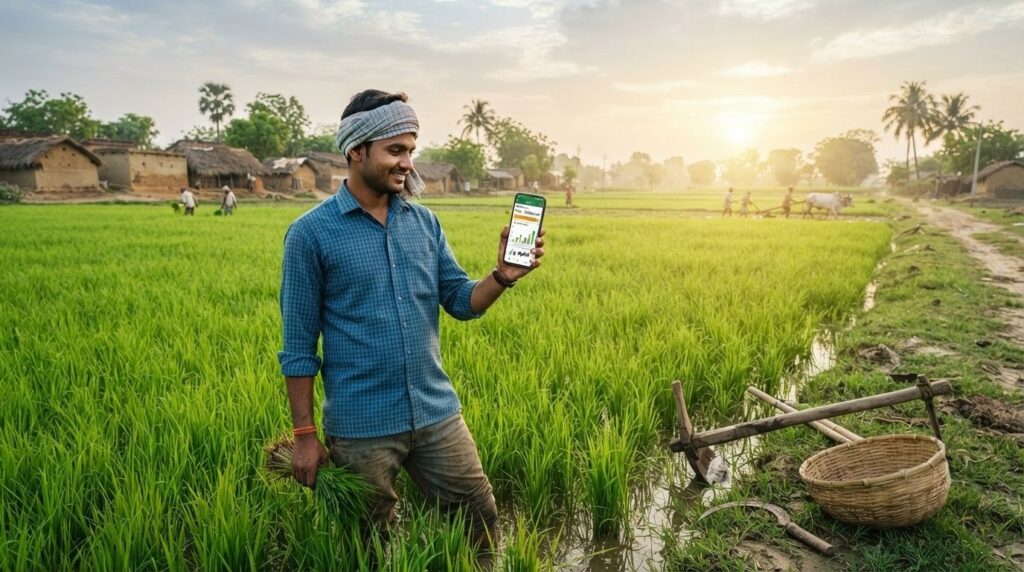
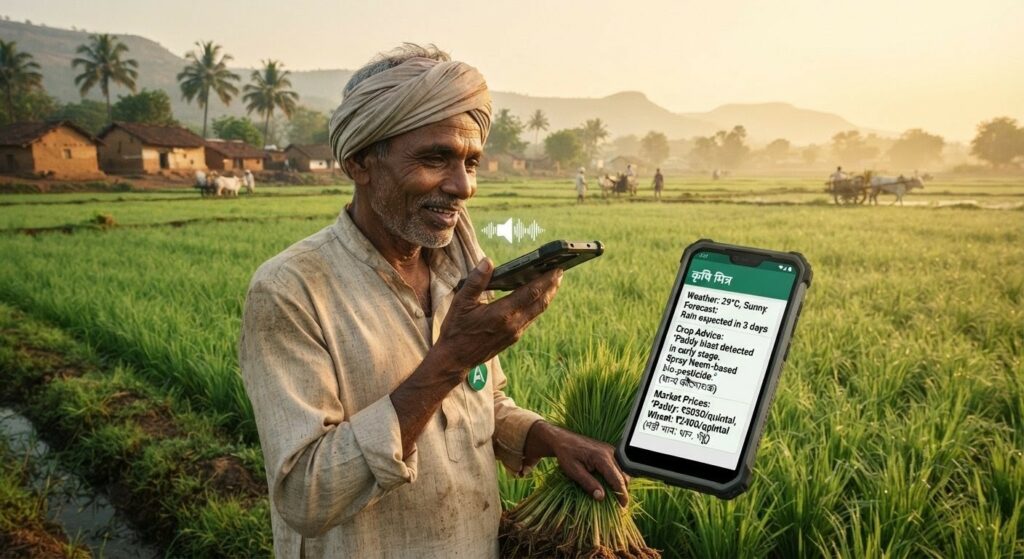
Farmers who can check weather forecasts, crop advisories, and mandi prices on their phones make better decisions and often earn more for their produce. Several state and central initiatives now push this information directly to farmers through apps, but the benefit only reaches those who know how to use them.
Consider a farmer in Odisha who uses eNAM to compare crop prices across nearby mandis before deciding where to sell. Instead of accepting whatever a local trader offers, he checks real-time prices on his phone and picks the market that pays best that week. That single habit, built on basic digital literacy, can change how much a season’s harvest is actually worth.
The Current Challenges
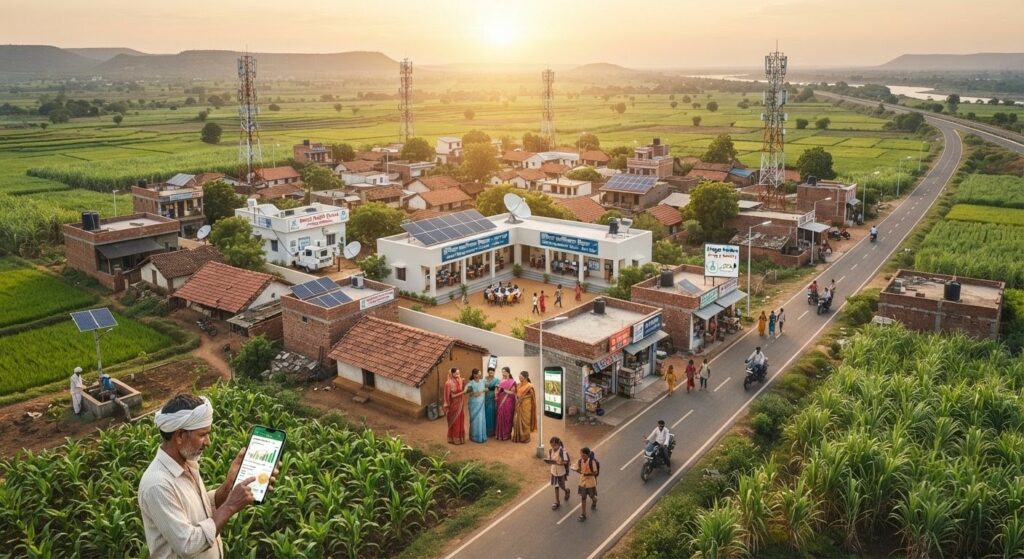
Despite the promise, digital literacy in rural India faces several real obstacles.
Limited Internet Connectivity
Coverage has expanded significantly, but speed and reliability remain inconsistent in many villages, particularly during peak hours or bad weather.
Lack of Affordable Devices
Data has become cheap in India, but a decent smartphone is still a meaningful expense for many rural households, especially when a family shares one device among several members.
Low Awareness
Many rural residents simply do not know what digital tools exist or how those tools could help them, which limits demand for training even where it is available.
Gender Gap in Digital Access
Women in rural areas often have less access to devices and less freedom to use them independently, which keeps the gender gap in digital literacy wider than the overall connectivity numbers suggest.
Language Barriers
Much of the internet’s content and most government platforms still default to English or Hindi, leaving speakers of other regional languages at a disadvantage.
Cybersecurity Awareness
First-time internet users are frequent targets for scams, phishing links, and fraudulent loan apps. Without basic cybersecurity awareness, new digital access can create new risks instead of new opportunities.
Also Read: Data-driven application for improving an education in urban areas – Indian context
Government and Community Initiatives
Digital India
Launched in 2015, Digital India set out to build infrastructure, expand internet access, and push government services online. It remains the umbrella under which most later digital literacy efforts operate.
PMGDISHA
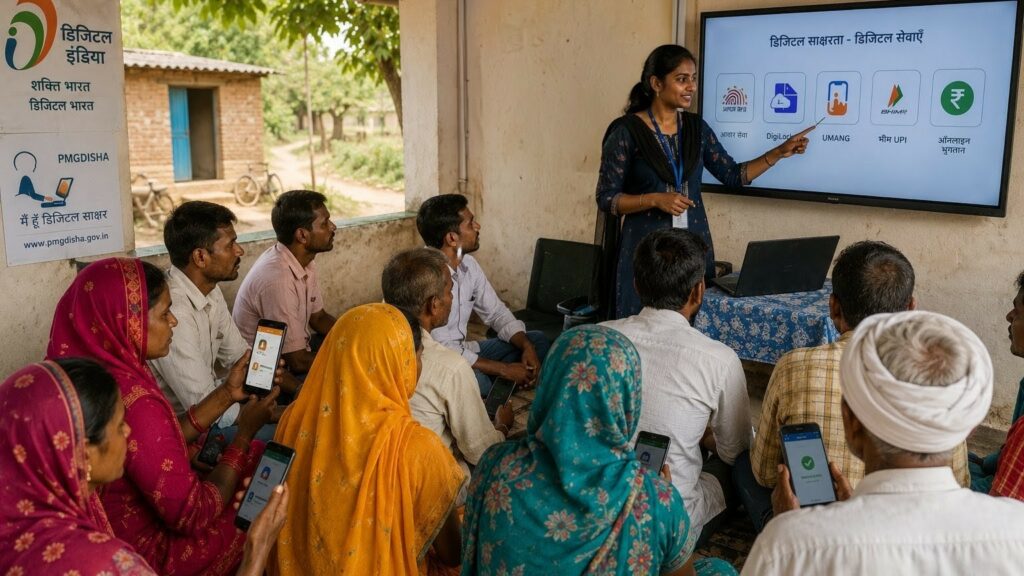
The Pradhan Mantri Gramin Digital Saksharta Abhiyan was designed specifically to make rural households digitally literate, targeting one person per eligible household. According to government figures, the scheme has trained over 48 million people through a network of more than 430,000 registered training centers across the country.
BharatNet
BharatNet aims to connect India’s gram panchayats with broadband through optical fibre, laying the physical groundwork that any digital literacy effort depends on. Without connectivity, training has nowhere to go.
Role of NGOs and Local Communities
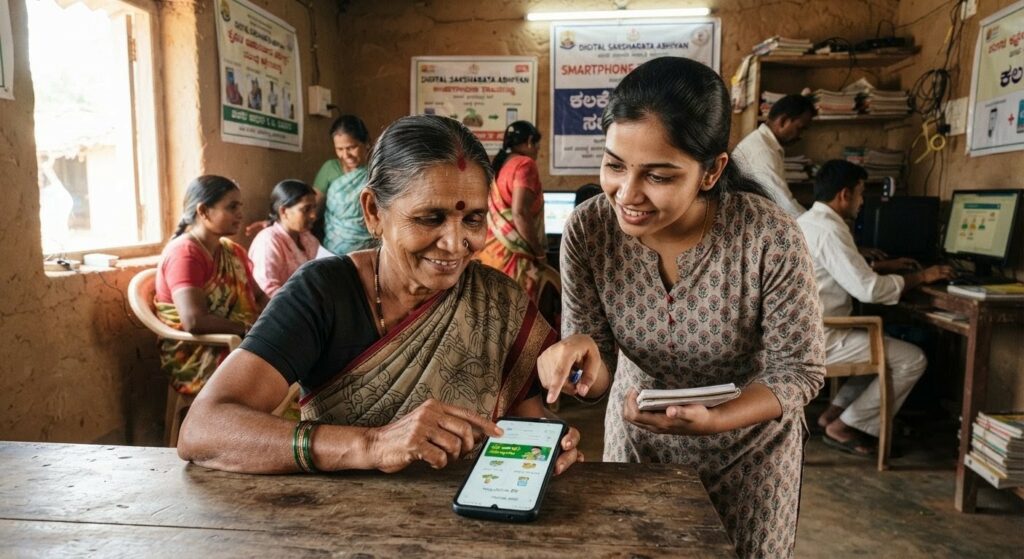
Beyond government schemes, NGOs and community groups run last-mile training that formal programs often miss. These organizations tend to understand local language needs, gender dynamics, and trust barriers better than centralized initiatives, which makes them essential partners rather than an afterthought.
How Communities Can Improve Digital Literacy
Community Training Centers
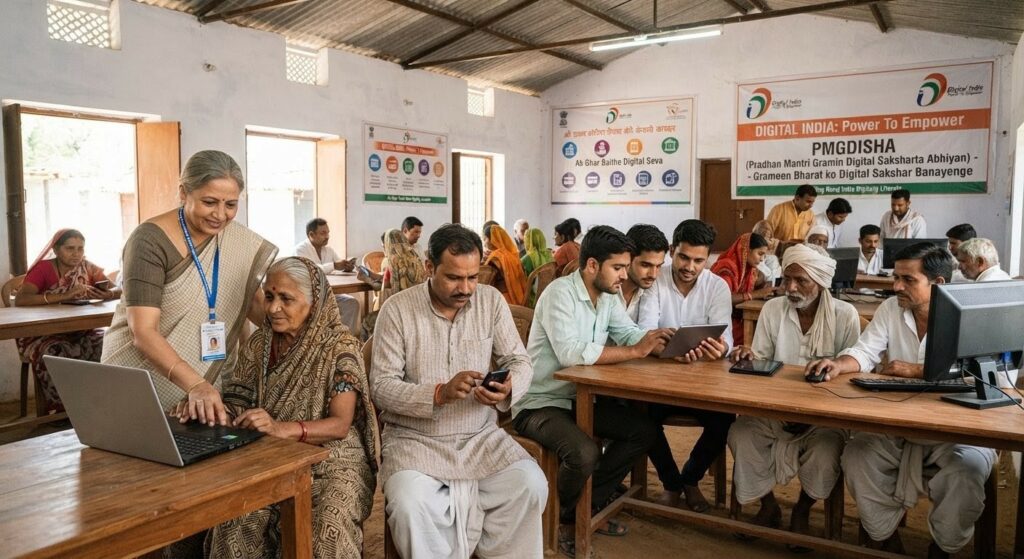
Local centers staffed by trained facilitators give people a low-pressure space to learn, ask questions, and practice without fear of judgment.
School-Based Digital Education
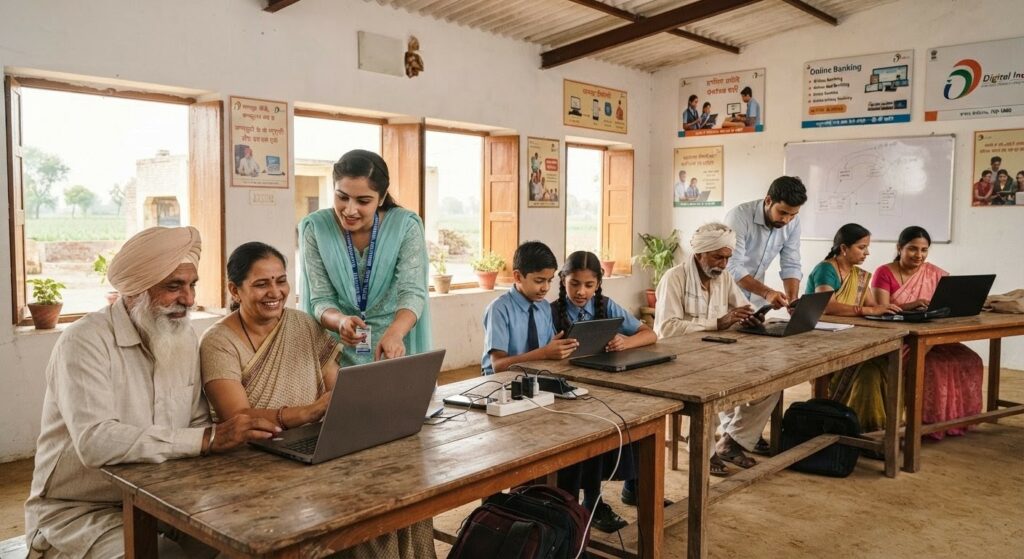
Introducing digital skills early, alongside regular schooling, builds a generation that treats digital tools as a natural extension of learning rather than an unfamiliar hurdle.
Women’s Digital Literacy Programs
Dedicated programs for women address the specific barriers they face, from limited device access to social restrictions, and have shown strong results in closing the gender gap where implemented well.
Local Language Learning Resources
Training material and apps built in regional languages remove one of the biggest barriers to adoption and make digital tools genuinely usable rather than technically available.
Public-Private Partnerships
Telecom companies, ed-tech firms, and financial institutions bring resources and reach that government programs alone cannot match. Partnerships that combine public infrastructure with private innovation tend to scale faster.
AI and Digital Literacy
Artificial intelligence has started changing what digital access can look like for rural India. Voice assistants and AI-powered translation tools now let a person ask a question in Odia, Bhojpuri, or Tamil and get a useful answer, without needing to read or type in English. Government platforms like Bhashini are already building this kind of vernacular access into everyday services, from health helplines to farming advisories.
Chatbots trained on government schemes can walk a first-time user through a subsidy application step by step, in their own language, at any hour. That is a real shift for someone who previously needed to travel to a local office and wait in line.
None of this removes the need for digital literacy. If anything, it raises the stakes. A person who cannot judge whether an AI-generated answer is accurate, or who cannot tell a genuine government chatbot from a scam one, is exposed to new risks even as new tools open up. AI can lower the barrier to using digital services well. It cannot replace the judgment and confidence that come from being digitally literate.
The Road Ahead
Closing the digital literacy gap in rural India will take coordinated effort. Government schemes can build infrastructure and set targets, but they cannot reach every household on their own. NGOs and community organizations bring the trust and local knowledge needed for training to actually stick. Educational institutions can prepare the next generation from the start. Private companies bring innovation, funding, and technology that can scale solutions faster than any single actor working alone.
None of these groups can close the gap by themselves. Real progress depends on all of them working toward the same goal, at the same time, in the same villages.
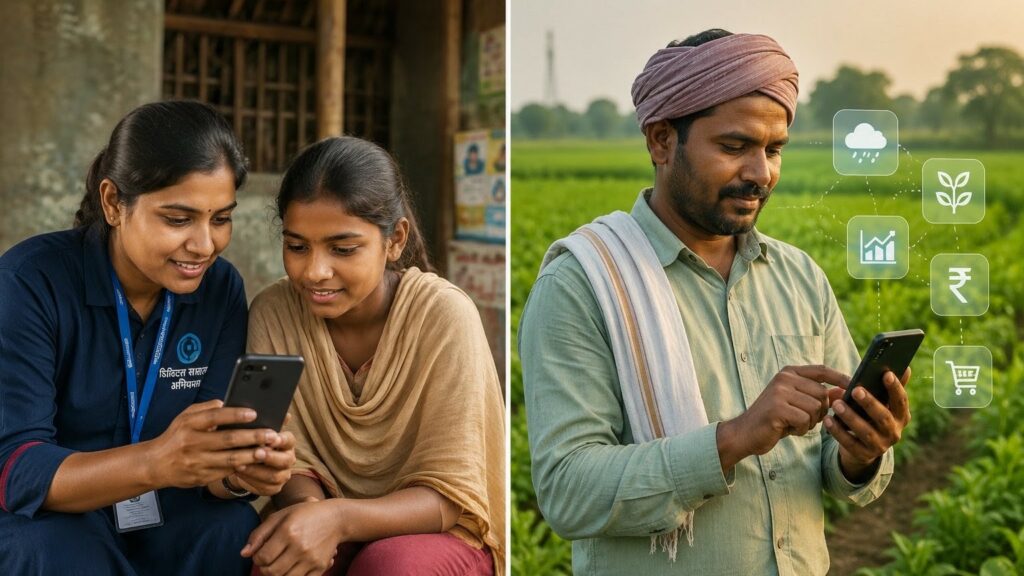
Digital literacy in rural India is ultimately about opportunity. It is about a student accessing the same study material as someone in a metro city, a woman running a small business through her phone, and a farmer negotiating a fair price instead of accepting whatever he is offered. The infrastructure is expanding. The tools exist. What remains is making sure every person, regardless of where they live, has the skills and confidence to use them.
Bridging the digital divide is not simply about expanding internet coverage. It is about ensuring that every individual has the knowledge and confidence to use technology safely and meaningfully. As India moves toward a more digital future, digital literacy will remain one of the most powerful tools for creating equal opportunities and inclusive development.
Frequently Asked Questions
What is digital literacy?
Digital literacy is the ability to use digital devices and the internet effectively and safely. It includes finding and evaluating information, communicating online, using digital services like banking and government portals, and recognizing risks such as scams or misinformation.
Why is digital literacy important in rural India?
It determines whether rural residents can access education, healthcare, financial services, and government schemes independently. Without it, digital access exists on paper but does not translate into real opportunity.
What are the main barriers to digital literacy in villages?
Limited connectivity, unaffordable devices, low awareness, a gender gap in access, language barriers, and weak cybersecurity awareness are the most common obstacles.
What is PMGDISHA?
PMGDISHA, or the Pradhan Mantri Gramin Digital Saksharta Abhiyan, is a government scheme aimed at making one person in every eligible rural household digitally literate through a nationwide network of training centers.
How can digital literacy improve farmers’ lives?
It allows farmers to check weather updates, get crop advisories, track mandi prices, and access government schemes directly through their phones, helping them make better decisions and earn fairer returns on their produce.
Also Read: Overthinking and Anxiety: What Ancient Indian Wisdom Teaches Us About Finding Calm

