


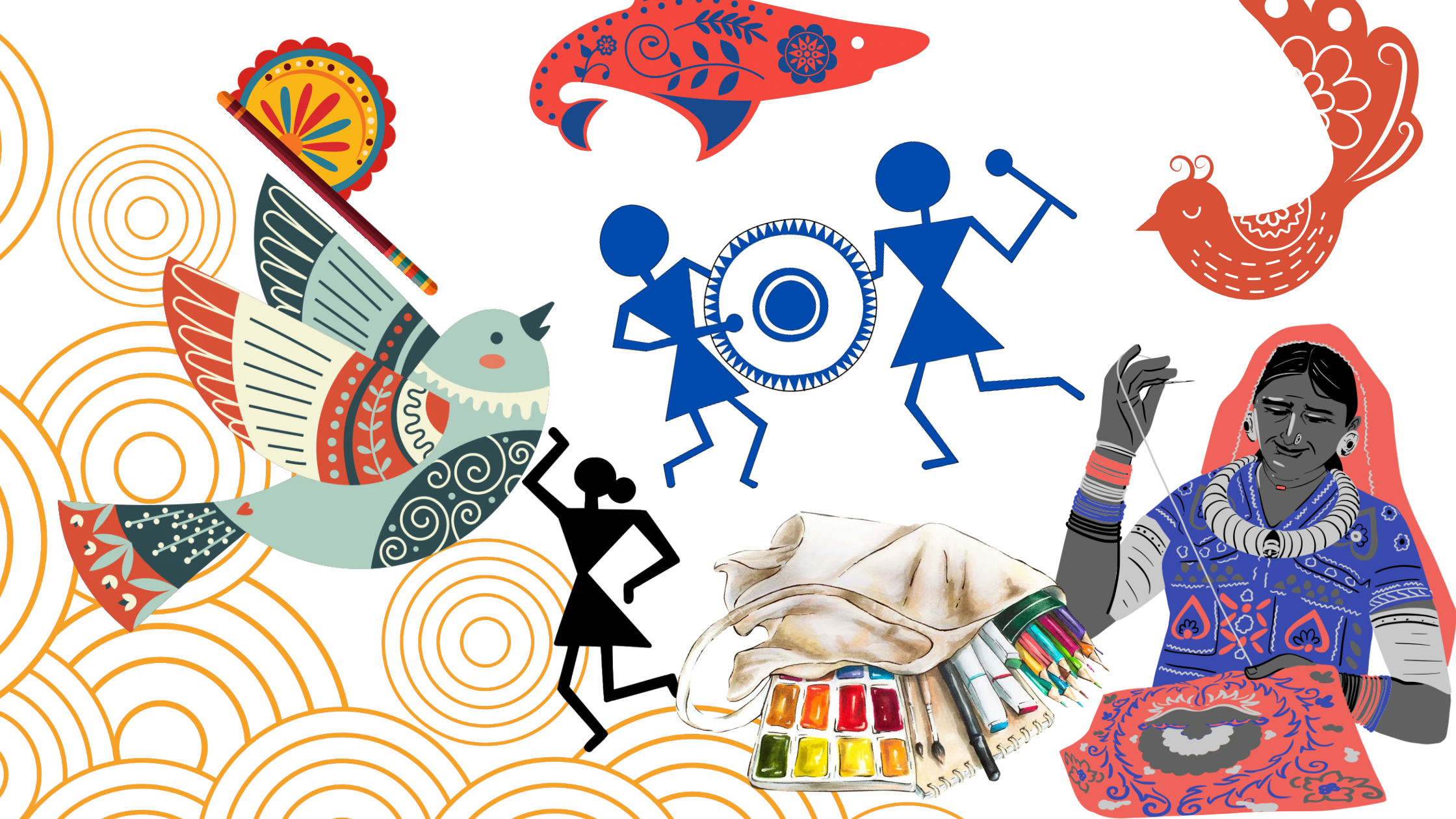
Indian handicrafts are a living testament to its diverse culture and history. Each region has unique art forms passed down through generations. Among the most iconic are Madhubani Art, Pattachitra, and Warli Art – each offering a glimpse into local traditions, mythology, and daily life.
Madhubani Art: The Colourful Stories of Mithila
Origin: Mithila region, Bihar.
Techniques: Traditionally done with fingers, twigs, and brushes using natural dyes.
Motifs: Religious themes, nature, festivals, and social events. Common elements include flowers, birds, deities, and geometric patterns.
Cultural Significance: Historically used to decorate walls during weddings and festivals. It is now popular on paper, fabric, and home decor items worldwide.
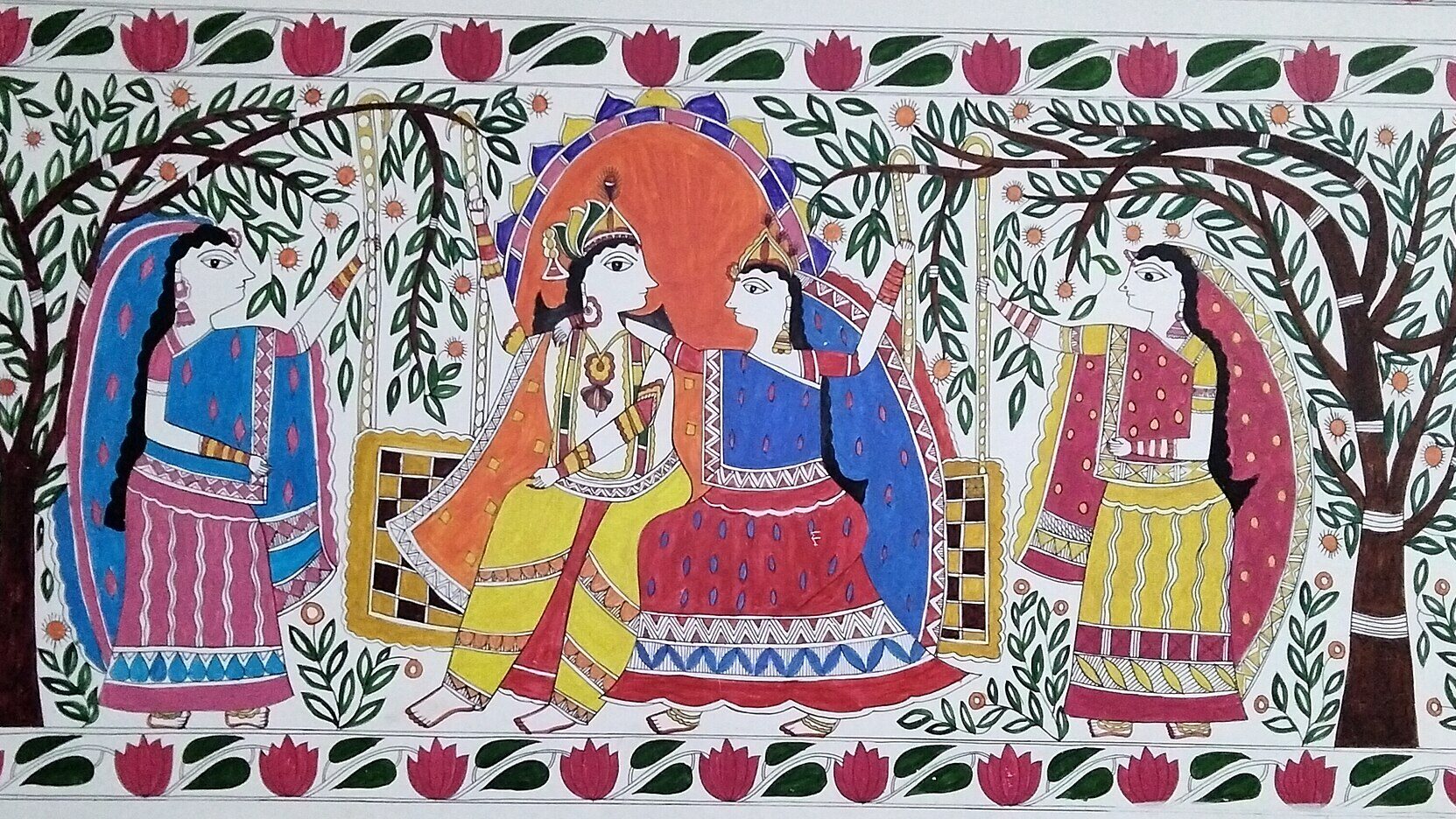
One of the most admired forms of traditional Indian folk art, Madhubani art is known for its vibrant colours, intricate detailing, and strong cultural symbolism. The paintings often reflect themes of love, fertility, spirituality, and harmony between humans and nature. Artists traditionally used handmade colours extracted from turmeric, flowers, leaves, soot, and rice paste, making the process deeply connected to nature and sustainability.
Over the years, Madhubani paintings have evolved from rural wall murals into globally appreciated artworks featured on canvas, sarees, notebooks, home decor products, and even fashion accessories. Despite this evolution, many artists continue to preserve the authenticity of the art form by following traditional techniques and themes passed down through generations.
Today, Madhubani art has become an important part of India’s cultural economy. Art lovers and collectors across the world appreciate its storytelling style and symbolic patterns. The growing popularity of handmade Indian handicrafts and sustainable art has also contributed to the global recognition of Madhubani paintings.
Pattachitra: Odisha’s Scroll Art
Origin: Odisha, especially around the town of Puri.
Techniques: Painted on cloth or dried palm leaves using natural colours and fine brushes.
Motifs: Stories from Hindu epics like the Ramayana and Mahabharata, and Jagannath temple legends.
Cultural Significance: Pattachitra artists preserve centuries-old techniques, often working in family lineages, making each piece a piece of living heritage.
Pattachitra is one of the oldest and most detailed traditional art forms in India. The word “Pattachitra” comes from the Sanskrit words patta meaning cloth and chitra meaning picture. This beautiful scroll painting tradition is deeply connected with the culture and religious traditions of Odisha, especially the rituals associated with the Jagannath Temple.
The preparation process of a Pattachitra painting itself is highly artistic and time-consuming. Artists prepare the canvas by coating cloth with a mixture of chalk and gum, which is then polished to create a smooth painting surface. Natural pigments made from minerals, stones, and plant sources are carefully used to create rich and long-lasting colours.
One of the defining characteristics of Pattachitra art is its fine detailing and decorative borders. Every painting tells a story, often depicting scenes from Hindu mythology, Lord Krishna’s life, temple traditions, or ancient folklore. Palm leaf engravings, another form of Pattachitra, showcase incredible craftsmanship where artists etch delicate illustrations onto dried palm leaves.
As interest in Indian traditional paintings and handmade crafts continues to rise, Pattachitra has found a place in modern interior decor, art exhibitions, and cultural festivals around the world. Supporting these artisans not only promotes Indian handicrafts but also helps preserve a centuries-old artistic heritage that carries deep spiritual and historical significance.
Also read: 6 Components of Bengal’s rich culture
Warli Art: The Tribal Canvas of Maharashtra
Origin: Warli tribes of Maharashtra.
Techniques: Simple white patterns on mud or clay walls using rice paste.
Motifs: Daily life, farming, festivals, and nature. Geometric shapes like circles, triangles, and squares form human and animal figures.
Cultural Significance: Warli art is a storytelling medium, often linked to rituals and social events, highlighting harmony with nature.
Unlike many traditional Indian art forms that focus on mythology and royalty, Warli art beautifully captures the simplicity of rural and tribal life. Originating from the Warli tribes of Maharashtra, this ancient tribal art form uses minimalistic shapes and earthy backgrounds to create visually powerful stories.
The unique visual language of Warli paintings lies in its use of geometric forms. Circles represent the sun and moon, triangles symbolize mountains and trees, while squares often represent sacred spaces. These simple forms come together to portray scenes of farming, dancing, hunting, weddings, and celebrations.
Warli art reflects a strong connection between humans and nature. The paintings often emphasize community living, balance, and respect for natural resources. Traditionally, these artworks were created on the walls of village homes during important occasions and rituals, especially marriages and harvest festivals.
In recent years, Warli art has gained immense popularity in contemporary design and decor. From wall paintings and stationery to clothing and eco-friendly products, the art form continues to inspire designers and art enthusiasts globally. Its minimalist aesthetic and cultural depth make it one of the most recognizable forms of Indian tribal art.
The Growing Global Popularity of Indian Folk Art
Indian folk art and handicrafts are increasingly gaining recognition in international markets for their authenticity, handmade quality, and cultural richness. In a world dominated by mass production, handmade traditional art forms like Madhubani, Pattachitra, and Warli stand out because each piece carries the personal touch and creative expression of the artisan.
Social media platforms, online art marketplaces, and cultural exhibitions have helped bring these regional art forms to a global audience. Today, many artists and craft communities are using digital platforms to showcase their work, educate audiences about their traditions, and create sustainable livelihoods through art.
The growing demand for sustainable home decor, handmade gifts, and ethnic designs has further increased appreciation for Indian handicrafts. These art forms are not only decorative but also meaningful, carrying stories, traditions, and identities that connect generations.
Appreciating Indian Handicrafts
Madhubani, Pattachitra, and Warli art are more than decorative, they are a window into India’s cultural identity. Whether you admire them as wall hangings, textiles, or souvenirs, understanding the history, techniques, and symbolism behind each craft adds depth to the experience. Supporting these artists helps preserve traditional skills for future generations.
By choosing handmade Indian handicrafts, people contribute to the survival of local artisan communities and help keep traditional art forms alive in the modern world. These artworks remind us that culture is not only preserved in museums and books but also in the hands of artists who continue to create, teach, and share their heritage every day.
Also Read: Danda Nata: A Traditional Dance Festival

