


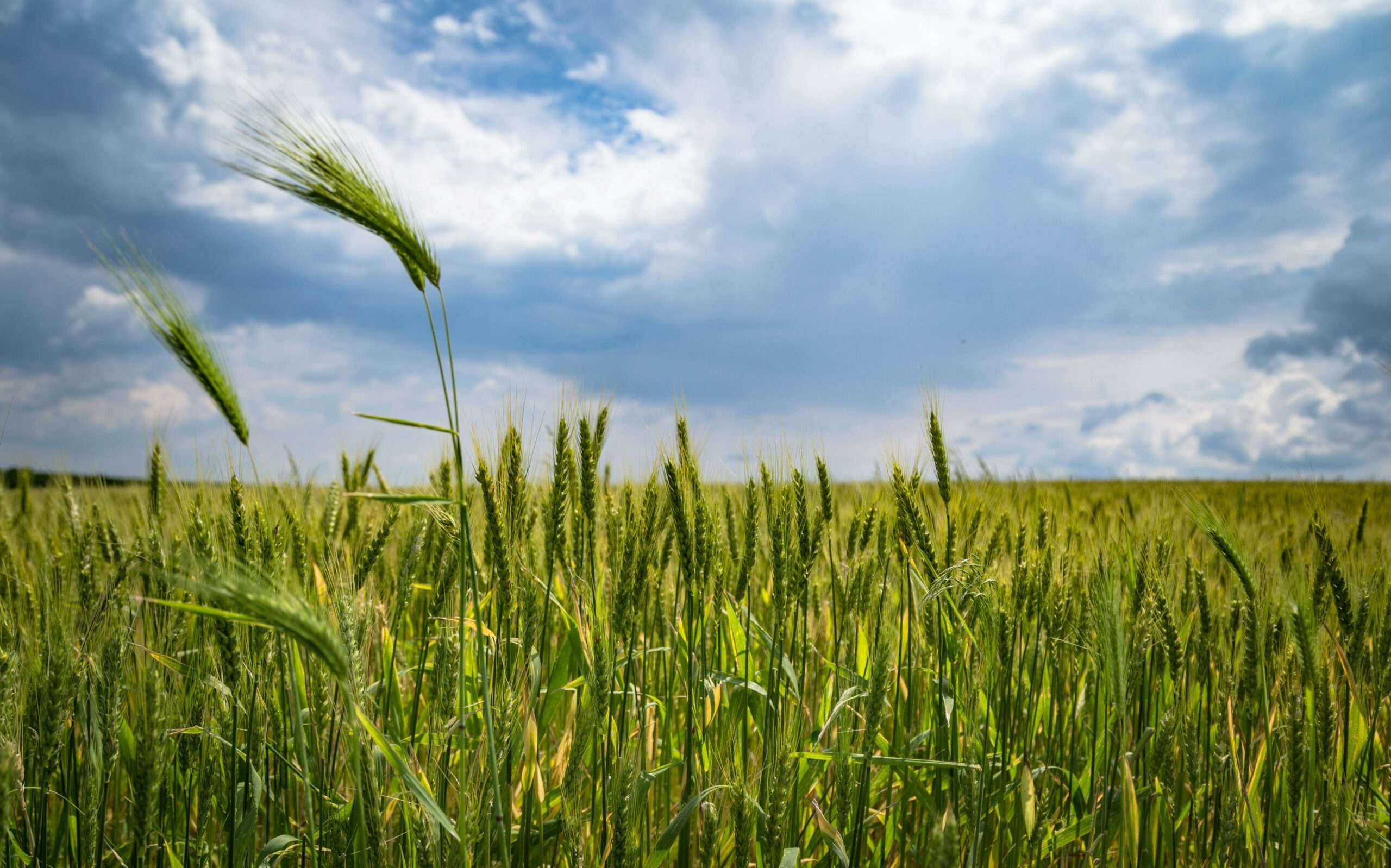
The practice of no-till farming is a combination of different ideas developed over time, many techniques and principles used in no-till farming are a continuation of traditional market gardening found in various regions like France. No-till farming (also known as zero tillage or direct drilling) is an agricultural technique for growing crops or pasture without disturbing the soil through tillage.
Table of Contents
Zero tillage farming decreases the amount of soil erosion tillage causes in certain soils, especially in sandy and dry soils on sloping terrain. Other possible benefits include an increase in the amount of water that infiltrates into the soil, soil retention of organic matter, and nutrient cycling. These methods may increase the amount and variety of life in and on the soil. While conventional no-tillage systems use herbicides to control weeds, organic systems use a combination of strategies, such as planting cover crops as mulch to suppress weeds.
In practice, there are three basic methods of no-till farming. “Sod seeding” is when crops are sown with seeding machinery into a sod produced by applying herbicides on a cover crop. “Direct seeding” is when crops are sown through the residue of previous crop. “Surface seeding” or “direct seeding” is when seeds are left on the surface of the soil; on flatlands, this requires no machinery and minimal labor.
While zero tillage farming is agronomically advantageous and results in higher yields, farmers wishing to adapt the system face a number of challenges. Established farms may have to face a learning curve, buy new equipment, and deal with new field conditions. Perhaps the biggest impediment, especially for grains, is that farmers can longer rely on the mechanical pest and weed control that occurs when crop residue is buried to significant depths.
No-till farmers must rely on chemicals, biological pest control, cover cropping, and more intensive management of fields. Tillage is dominant in agriculture today, but zero tillage methods may have success in some contexts. In some cases minimum tillage or “low-till” methods combine till and no-till methods. For example, some approaches may use shallow cultivation (i.e. using a disc harrow) but no plowing or use strip tillage.
What is Zero Tillage Farming?
Zero tillage farming also known as direct drilling or No-till farming is an agricultural technique for growing crops or pasture without disturbing the soil through tillage. No-till farming decreases the amount of soil erosion tillage causes in certain soils, especially in sandy and dry soils on sloping terrain.
Other possible benefits include an increase in the amount of water that infiltrates into the soil, soil retention of organic matter, and nutrient cycling. These methods may increase the amount and variety of life in and on the soil. While conventional no-tillage systems use herbicides to control weeds, organic systems use a combination of strategies, such as planting cover crops as mulch to suppress weeds.
Traditional farming practices often involve plowing the soil to prepare it for planting. This process, while effective for weed control and seedbed preparation, can lead to soil erosion, loss of organic matter, and degradation of soil structure. In contrast, no-tillage farming leaves the soil undisturbed, except for minimal soil disturbance during seeding. Seeds are planted directly into the residue of previous crops, maintaining the soil’s structure and organic content.
Principles of Zero Tillage Farming
- Minimal Soil Disturbance: The core principle of no-tillage farming is to keep soil disturbance to a minimum. This helps maintain soil structure, moisture, and biodiversity.
- Permanent Soil Cover: Crop residues or cover crops are left on the soil surface to protect against erosion, retain moisture, and suppress weeds.
- Diverse Crop Rotations: Implementing a variety of crops in rotation can improve soil health, reduce pest and disease pressure, and enhance biodiversity.
- Integrated Pest Management: Utilizing biological, mechanical, and chemical methods to manage pests sustainably without relying heavily on pesticides.
Benefits of Zero Tillage Farming
- Soil Health: Zero tillage improves soil structure, increases organic matter, and enhances microbial activity. This leads to healthier, more resilient soil capable of supporting robust plant growth.
- Reduced Erosion: By leaving crop residues on the field, no-tillage farming significantly reduces soil erosion caused by wind and water.
- Water Conservation: The residue cover helps retain soil moisture by reducing evaporation, which is particularly beneficial in arid and semi-arid regions.
- Carbon Sequestration: Zero tillage practices can increase carbon sequestration in the soil, helping to mitigate climate change by storing carbon that would otherwise be released into the atmosphere.
- Economic Benefits: Farmers can save on labor, fuel, and equipment costs associated with traditional tilling methods. Additionally, improved soil health can lead to higher yields over time.
Challenges of Zero Tillage Farming
- Initial Transition: Shifting from conventional to no-tillage farming can be challenging and may require significant changes in equipment and management practices.
- Weed Control: Without tillage, managing weeds can be more difficult and may necessitate the use of herbicides, which must be managed carefully to avoid resistance and environmental damage.
- Crop Residue Management: Accumulation of crop residues can sometimes interfere with planting and crop emergence. Proper residue management techniques are essential.
- Pest and Disease Pressure: Certain pests and diseases may thrive in the undisturbed soil, requiring integrated pest management strategies.
Other Challenges
- One of the main challenges facing agriculture is to produce sufficient food with minimal environmental impact.
- Agricultural practices followed in conservation agriculture and organic farming – integrated plant protection, crop rotation and the use of organic inputs – helped in reducing the productivity-environmental protection dilemma.
- Organic farming also had a reduced environmental impact, with a 46-51 per cent lower global warming potential and an 80-85 per cent reduced aquatic ecotoxicity potential per hectare, the report said.
Environmental
Agricultural practices influence a wide range of ecosystem functions and services. Conventional systems with intensive tillage showed improved performance and it can be explained by way of increased weed control and a better availability of applied nutrients. Weed cover was six to nine times higher in the organic systems, whereas reduced and no tillage had a negative impact on summer crops like maize and beans.
The use of mineral fertilizers and herbicides in conventional systems led to higher yields for wheat and maize compared to organic systems. The differences between conventional and organic systems were less pronounced for legume crops like field beans and grass-clover ley. The loss of productivity in organic systems did not mean reduced economic performance, as the highest income. Conservation agriculture (no tillage or reduced tillage) and organic farming positively influenced most soil quality variables.
Organic farming – and reduced tillage intensity in particular – have a positive impact on soil biodiversity and the abundance of macro and micro-biota. Beneficial soil biota, such as earthworms and arbuscular mycorrhizal fungi, were promoted under organic management and conservation agriculture. Soil fungi and bacteria responded positively to conservation tillage and was associated with soil carbon content increase. Organic management and conservation tillage significantly reduced sediment delivery and contributed greatly to soil protection.
An agricultural system should be able to provide the desired balance of services – food production, regulation services (soil, water and climate protection), supporting services (biodiversity and soil quality conservation) as well as providing for an ensured income and suitable working conditions. Conservation agriculture (no tillage or reduced tillage) and organic farming positively influenced most soil quality variables.
Conventional no tillage and organic reduced tillage systems are considered to reflect conservation agriculture, as the three pillars of conservation agriculture – minimum tillage, six-year crop rotation and permanent soil cover with crop residues and cover crops are largely fulfilled.
To increase environmental protection and delivery of supporting and regulating services, the total area for organic and no tillage systems needs to be substantially expanded. Tilling the soil after usage leads to soil erosion, loss of organic matter, and increased carbon dioxide emissions.
Greenhouse Gases
Zero tillage farming has been claimed to increase soil organic matter, and thus increase carbon sequestration. While many studies report soil organic carbon increases in no-till systems, others conclude that these effects may not be observed in all systems, depending on factors, such as climate and topsoil carbon content.
A combination of no-till and cover cropping could be an effective approach to climate change mitigation by sequestering more carbon than either practice alone, suggesting that the two practices have a synergistic effect in carbon capture. However, there is debate over whether the increased sequestration sometimes detected is actually occurring, or is due to flawed testing methods or other factors.
Certain no-till systems may sequester less carbon than conventional tillage systems. No-till subsurface layer is often losing more soil organic carbon stock over time than is gained in the surface layer. Additional investments in soil organic carbon (SOC) research is needed to better understand the agricultural management practices that are most likely to sequester SOC or at least retain more net SOC stocks.
No-till farming reduces nitrous oxide (N2O) emissions by 40-70%, depending on rotation. Nitrous oxide is a potent greenhouse gas, 300 times stronger than CO2, and stays in the atmosphere for 120 years.
Soil and Desertification
No-till farming improves aggregates and reduces erosion. Soil erosion might be reduced almost to soil production rates. No-till farming makes soil less erodible than ploughed soil the Plains. The first inch of no-till soil contains more aggregates and is two to seven times less vulnerable than that of ploughed soil.
More organic matter in this layer is thought to help hold soil particles together. As per the Food and Agriculture Organization (FAO), no-till farming can stop desertification by maintaining soil organic matter and reducing wind and water erosion. No ploughing also means less airborne dust.
Water
No-till farming improves water retention: crop residues help water from natural precipitation and irrigation to infiltrate the soil. Residue limits evaporation, conserving water. Evaporation from tilling increases the amount of water by around 1/3 to 3/4 inches (0.85 to 1.9 cm) per pass. Gully formation can cause soil erosion in some crops such as soybeans with no-tillage, although models of other crops under no-tillage show less erosion than conventional tillage.
Grass waterways can be a solution. Any gullies that form in fields not being tilled get deeper each year instead of being smoothed out by regular ploughing. A problem in some fields is water saturation in soils. Switching to no-till farming may increase drainage because soil under continuous no-till include a higher water infiltration rate.
Biota and Wildlife
No-tilled fields often have more annelids, invertebrates and wildlife such as deer mice.
Profit, Economics, Yield
In some cases it may reduce labour, fuel, irrigation and machinery costs. No-till can increase yield because of higher water infiltration and storage capacity, and less erosion. Another possible benefit is that because of the higher water content, instead of leaving a field fallow it can make economic sense to plant another crop instead.
A problem of no-till farming is that in spring, the soil both warms and dries more slowly, which may delay planting. Harvest can thus occur later than in a conventionally tilled field. The slower warming is due to crop residue being a lighter color than the soil which would be exposed in conventional tillage, which then absorbs less solar energy. But in the meantime, this can be managed by using row cleaners on a planter.
A problem with no-till farming is that if production is impacted negatively by the implemented process then the profitability of the practice also may decrease in relation to increasing gas prices and high labor costs. As the prices for fuel and labor continue to rise, it may be more practical for farms and farming productions to turn toward a no-till operation. In spring, poor draining clay soil may have lower production due to a cold and wet year.
The economic and ecological benefits of implementing no-till practices can require sixteen to nineteen years. The first decade of no-till implementation often will show trends of revenue decrease. Implementation periods greater than ten years in length usually show a gain in profit, rather than a decrease in profitability.
Costs and Management
No-till farming requires some different skills from those of conventional farming. A combination of technique, equipment, pesticides, crop rotation, fertilization, and irrigation have to be used for local conditions
Equipment
On some crops, like continuous no-till corn, the thickness of the residue on the surface of the field can become a problem without proper preparation and/or equipment. No-till farming requires specialized seeding equipment, such as heavier seed drills to penetrate through the residue. Ploughing requires more powerful tractors, so tractors can be smaller with no-tillage. Costs can be offset by selling ploughs and tractors, but farmers often keep their old equipment while trying out no-till farming. This results in a higher investment into equipment.
Increased Herbicide Use
One of the purposes of tilling is to remove weeds. With no-till farming, residue from the previous year’s crops lie on the surface of the field, which can cause different, greater, or more frequent disease or weed problems compared to tillage farming. Faster growing weeds can be reduced by increased competition with eventual growth of perennials, shrubs and trees.
Herbicides such as glyphosate are commonly used in lieu of tillage for seedbed preparation, which leads to more herbicide use in comparison to conventional tillage. Alternatives include winter cover crops, soil solarization or burning. The use of herbicides is not strictly necessary, as demonstrated in natural farming, permaculture, and other practices related to sustainable agriculture.
The use of cover crops to help control weeds also increases organic residue in the soil (and nutrients, when using legumes). Cover crops then need to be killed so that the newly planted crops can get enough light, water, nutrients, etc. This can be done by rollers, crimpers, choppers and other ways. The residue is then planted through, and left as a mulch. Cover crops typically must be crimped when they enter the flowering stage.
Fertilizer
One of the most common yield reducers is nitrogen being immobilized in the crop residue, which can take a few months to several years to decompose, depending on the crop’s C to N ratio and the local environment. Fertilizer needs to be applied at a higher rate. An innovative solution to this problem is to integrate animal husbandry in various ways to aid in decomposition. After a transition period the soil may build up in organic matter. Nutrients in the organic matter are eventually released into the soil.
Civil Society Initiatives
Some Civil Society Organizations and NGOs are promoting and practicing Zero tillage farming with their respective local communities and on their campuses. Many types of vegetables can be grown on degraded land like Raikia Beans, Bottle Gourd, Chillies, Pumpkins, Seasons’ last tomatoes etc., from the zero-tillage plot. Masanobu Fukuoka’s Natural Way of Farming and has gone one step forward. There is heavy emphasis on mulching and not applying much Cowdung or Vermicompost or other organic manures. The importance is on soil enrichment.
Now 30 Eco-leaders have come forward to take the success of Zero-tillage farming and according to many experts, this is the best form of Natural Farming initiated by legendary Masanobu Fukuoka. These Eco-leaders will establish Farmers Field Schools in their villages and impart training on a range of agricultural practices including zero-tillage farming. These eco-leaders will spearhead to extend this initiative to 150 villages of Rayagada and Koraput District.
The Future of Zero Tillage Farming
The adoption of no-tillage farming is growing globally as more farmers recognize its long-term benefits. Innovations in equipment and techniques, along with increased awareness and support from agricultural organizations, are facilitating this transition. Research continues to advance our understanding of no-tillage practices, optimizing them for different crops and environments.
Governments and institutions are also playing a crucial role by providing incentives, education, and resources to support farmers in adopting no-tillage methods. As concerns about climate change, soil degradation, and water scarcity intensify, no-tillage farming presents a viable solution to promote sustainable and resilient agricultural systems.
Conclusion
No-tillage farming represents a transformative approach to modern agriculture, emphasizing sustainability and environmental stewardship. By preserving soil health, reducing erosion, conserving water, and sequestering carbon, no-tillage farming not only benefits farmers but also contributes to the broader goals of sustainable development and climate resilience. As we move forward, embracing and refining no-tillage practices will be key to ensuring a productive and sustainable agricultural future.
Also read:

