


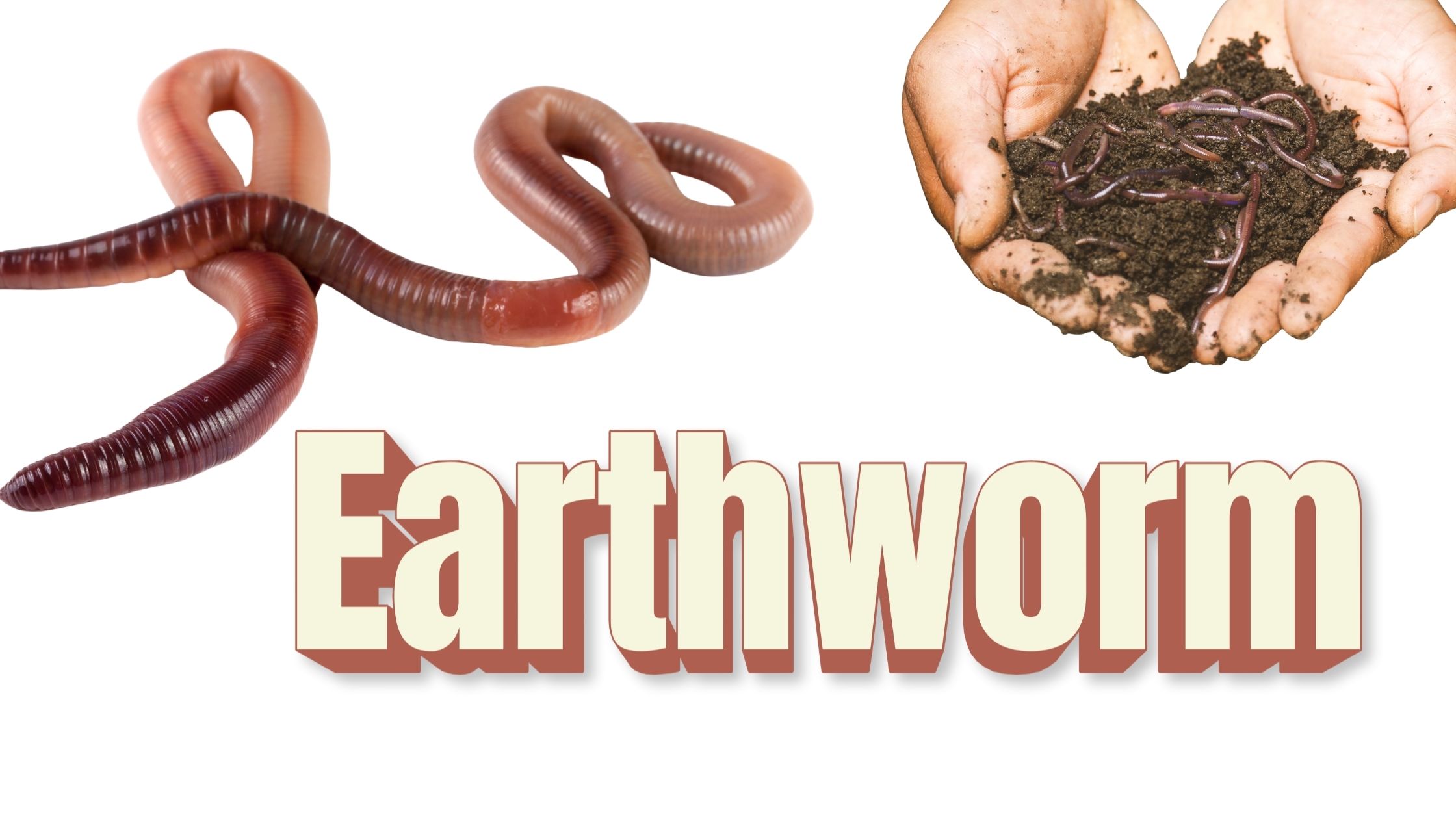
An earthworm is a soil-dwelling terrestrial invertebrate that belongs to the phylum Annelida. The term is the common name for the largest members of the class Oligochaeta. Other slang names for earthworms include “dew-worm”, “rainworm”, “nightcrawler”, and “angleworm” (from its use as angling hookbait). Larger terrestrial earthworms are also called megadriles (“big worms”) as opposed to the microdriles (“small worms”).
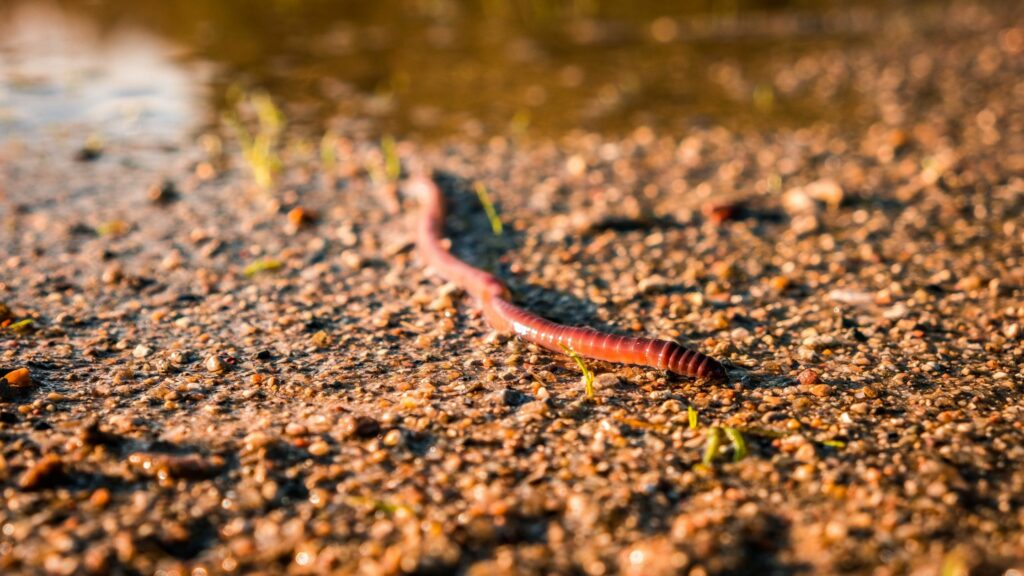
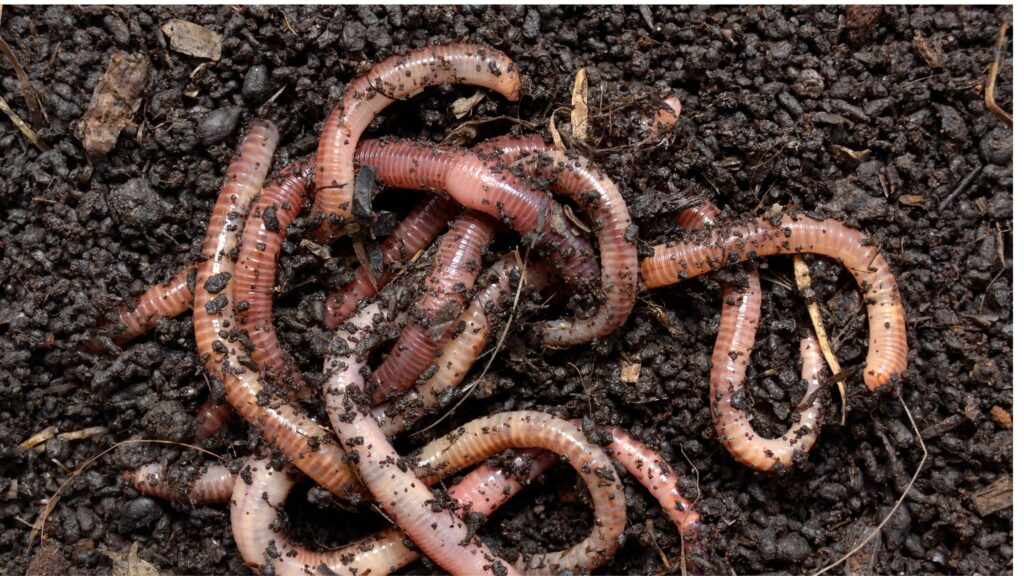
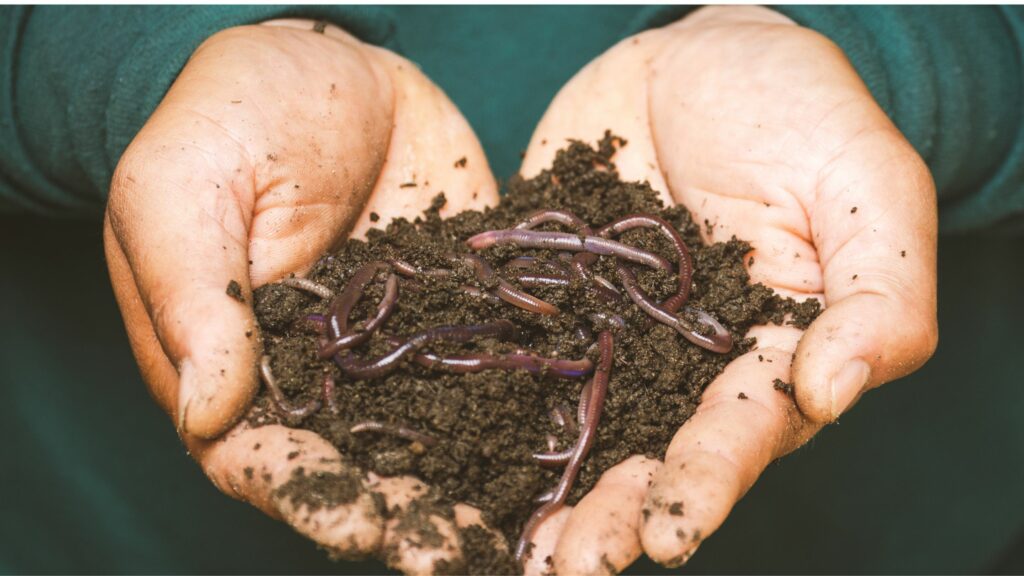
Earthworms are commonly found in moist, compost-rich soil, eating a wide variety of organic matters, which include detritus, living protozoa, rotifers, nematodes, bacteria, fungi and other microorganisms. An earthworm’s digestive system runs the length of its body. They are one of nature’s most important detritivores and coprophages, and also serve as food for many low-level consumers within ecosystems.
Body Structure of Earthworms
Earthworms exhibit an externally segmented tube-within-a-tube body plan with corresponding internal segmentations, and usually have setae on all segments. They have a cosmopolitan distribution wherever soil, water and temperature conditions allow. They have a double transport system made of coelomic fluid that moves within the fluid-filled coelom and a simple, closed circulatory system, and respire via cutaneous respiration. As soft-bodied invertebrates, they lack a true skeleton, but their structure is maintained by fluid-filled coelom chambers that function as a hydrostatic skeleton.
Earthworms have a central nervous system consisting of two ganglia above the mouth, one on either side, connected to an axial nerve running along its length to motor neurons and sensory cells in each segment. Large numbers of chemoreceptors concentrate near its mouth. Circumferential and longitudinal muscles edging each segment let the worm move. Similar sets of muscles line the gut tube, and their actions propel digested food toward the worm’s anus.
Earthworms are hermaphrodites: each worm carries male and female reproductive organs and genital pores. When mating, two individual earthworms will exchange sperm and fertilize each other’s ova.
Size and Shape
Depending on the species, an adult earthworm can be from 10 mm (0.39 in) long and 1 mm (0.039 in) wide to 3 m (9.8 ft) long and over 25 mm (0.98 in) wide, but the typical Lumbricus terrestris grows to about 360 mm (14 in) long. Probably the longest worm on confirmed records is Amynthas mekongianus that extends up to 3 m (10 ft) in the mud along the banks of the 4,350 km (2,700 mi) Mekong River in Southeast Asia.
From front to back, the basic shape of the earthworm is a cylindrical tube-in-a-tube, divided into a series of segments (called metameres) that compartmentalize the body. Furrows are generally externally visible on the body demarking the segments; dorsal pores and nephridiopores exude a fluid that moistens and protects the worm’s surface, allowing it to breathe. Except for the mouth and anal segments, each segment carries bristlelike hairs called lateral setae used to anchor parts of the body during movement; species may have four pairs of setae on each segment or more than eight sometimes forming a complete circle of setae per segment. Special ventral setae are used to anchor mating earthworms by their penetration into the bodies of their mates.
Generally, within a species, the number of segments found is consistent across specimens, and individuals are born with the number of segments they will have throughout their lives.
Digestive System of Earthworms
The gut of the earthworm is a straight tube that extends from the worm’s mouth to its anus. It is differentiated into an alimentary canal and associated glands which are embedded in the wall of the alimentary canal itself. The alimentary canal consists of a mouth, buccal cavity (generally running through the first one or two segments of the earthworm), pharynx (running generally about four segments in length), esophagus, crop, gizzard (usually), and intestine.
Food enters at the mouth. The pharynx acts as a suction pump; its muscular walls draw in food. In the pharynx, the pharyngeal glands secrete mucus. Food moves into the esophagus, where calcium (from the blood and ingested from previous meals) is pumped in to maintain proper blood calcium levels in the blood and food pH. From there the food passes into the crop and gizzard. In the gizzard, strong muscular contractions grind the food with the help of mineral particles ingested along with the food. Once through the gizzard, food continues through the intestine for digestion.
The intestine secretes pepsin to digest proteins, amylase to digest polysaccharides, cellulase to digest cellulose, and lipase to digest fats. Earthworms use, in addition to the digestive proteins, a class of surface active compounds called drilodefensins, which help digest plant material. Instead of being coiled like a mammalian intestine, in the earthworm’s intestine a large mid-dorsal, tongue-like fold is present, called a typhlosole, with many folds running along its length, increasing its surface area to increase nutrient absorption. The intestine has its own pair of muscle layers like the body, but in reverse order—an inner circular layer within an outer longitudinal layer.
Reproduction in Earthworms
Several common earthworm species are mostly parthenogenetic, meaning that growth and development of embryos happens without fertilization. Among lumbricid earthworms, parthenogenesis arose from sexual relatives many times. A few species exhibit pseudogamous parthogenesis, meaning that mating is necessary to stimulate reproduction, even though no male genetic material passes to the offspring.
Earthworm mating occurs on the surface, most often at night. Earthworms are hermaphrodites; that is, they have both male and female sexual organs. The sexual organs are located in segments 9 to 15. Earthworms have one or two pairs of testes contained within sacs. The two or four pairs of seminal vesicles produce, store and release the sperm via the male pores. Ovaries and oviducts in segment 13 release eggs via female pores on segment 14, while sperm is expelled from segment 15. One or more pairs of spermathecae are present in segments 9 and 10 (depending on the species) which are internal sacs that receive and store sperm from the other worm during copulation. As a result, segment 15 of one worm exudes sperm into segments 9 and 10 with its storage vesicles of its mate. Some species use external spermatophores for sperm transfer.
In Hormogaster samnitica and Hormogaster elisae transcriptome DNA libraries were sequenced and two sex pheromones, Attractin and Temptin, were detected in all tissue samples of both species. Sex pheromones are probably important in earthworms because they live in an environment where chemical signaling may play a crucial role in attracting a partner and in facilitating outcrossing. Outcrossing would provide the benefit of masking the expression of deleterious recessive mutations in progeny.
Copulation and reproduction are separate processes in earthworms. The mating pair overlap front ends ventrally and each exchanges sperm with the other. The clitellum becomes very reddish to pinkish in colour. Sometime after copulation, long after the worms have separated, the clitellum (behind the spermathecae) secretes material which forms a ring around the worm. The worm then backs out of the ring, and as it does so, it injects its own eggs and the other worm’s sperm into it.
Thus each worm becomes the genetic father of some of their offspring (due to its own sperm transferred to other earthworm) and the genetic mother (offsprings from its own egg cells) of the rest. As the worm slips out of the ring, the ends of the cocoon seal to form a vaguely onion-shaped incubator (cocoon) in which the embryonic worms develop. Hence fertilization is external. The cocoon is then deposited in the soil. After three weeks, 2 to 20 offspring hatch with an average of four. Development is direct that is without formation of any larva.
Movement and Burrowing
Earthworms travel underground by means of waves of muscular contractions which alternately shorten and lengthen the body (peristalsis). The shortened part is anchored to the surrounding soil by tiny clawlike bristles (setae) set along its segmented length. In all the body segments except the first, last and clitellum, there is a ring of S-shaped setae embedded in the epidermal pit of each segment (perichaetine).
The whole burrowing process is aided by the secretion of lubricating mucus. As a result of their movement through their lubricated tunnels, worms can make gurgling noises underground when disturbed. Earthworms move through soil by expanding crevices with force; when forces are measured according to body weight, hatchlings can push 500 times their own body weight whereas large adults can push only 10 times their own body weight.
Regeneration
Earthworms have the ability to regenerate lost segments, but this ability varies between species and depends on the extent of the damage.
Environmental Impacts
The major benefits of earthworm activities to soil fertility for agriculture can be summarized as:
Biological
In many soils, earthworms play a major role in the conversion of large pieces of organic matter into rich humus, thus improving soil fertility. This is achieved by the worm’s actions of pulling below the surface deposited organic matter such as leaf fall or manure, either for food or to plug its burrow. Once in the burrow, the worm will shred the leaf, partially digest it and mingle it with the earth. Worm casts can contain 40 percent more humus than the top 9 inches (230 mm) of soil in which the worm is living.
Chemical
In addition to dead organic matter, the earthworm also ingests any other soil particles that are small enough—including sand grains up to 1⁄20 inch (1.3 mm)—into its gizzard, wherein those minute fragments of grit grind everything into a fine paste which is then digested in the intestine. When the worm excretes this in the form of casts, deposited on the surface or deeper in the soil, minerals and plant nutrients are changed to an accessible form for plants to use.
Physical
The earthworm’s burrowing creates a multitude of channels through the soil and is of great value in maintaining the soil structure, enabling processes of aeration and drainage. Earthworms accelerate nutrient cycling in the soil-plant system through fragmentation and mixing of plant debris—physical grinding and chemical digestion.
Darwin estimated that arable land contains up to 53,000 per acre (130,000/ha) of worms, but more recent research has produced figures suggesting that even poor soil may support 250,000 per acre (620,000/ha), whilst rich fertile farmland may have up to 1,750,000 per acre (4,300,000/ha), meaning that the weight of earthworms beneath a farmer’s soil could be greater than that of the livestock upon its surface.
Richly organic topsoil populations of earthworms are much higher—averaging 500 per square metre (46/sq ft) and up to 400 g2—such that, for the 7 billion of us, each person alive today has support of 7 million earthworms.
Earthworms in Ecosystem Restoration
The ability to break down organic materials and excrete concentrated nutrients makes the earthworm a functional contributor in restoration projects. In response to ecosystem disturbances, some sites have utilized earthworms to prepare soil for the return of native flora.
Research from the Station d’écologie Tropicale de Lamto asserts that the earthworms positively influence the rate of macroaggregate formation, an important feature for soil structure. The stability of aggregates in response to water was also found to be improved when constructed by earthworms.
Though not fully quantified yet, greenhouse gas emissions of earthworms likely contribute to global warming, especially since top-dwelling earthworms increase the speed of carbon cycles and have been spread by humans into many new geographies.
Also read – Nature-Based Solutions: Addressing Challenges and Unlocking Benefits
Threats
Nitrogenous fertilizers tend to create acidic conditions, which are fatal to the worms, and dead specimens are often found on the surface following the application of substances such as DDT, lime sulphur, and lead arsenate.
In Australia, changes in farming practices such as the application of superphosphates on pastures and a switch from pastoral farming to arable farming had a devastating effect on populations of the giant Gippsland earthworm, leading to their classification as a protected species.
Globally, certain earthworms populations have been devastated by deviation from organic production and the spraying of synthetic fertilizers and biocides, with at least three species now listed as extinct, but many more endangered.
Economic Impact
Various worms are used in vermiculture, the practice of feeding organic waste to earthworms to decompose food waste. These are usually Eisenia fetida (or its close relative Eisenia andrei) or the brandling worm, commonly known as the tiger worm or red wiggler. They are distinct from soil-dwelling earthworms. In the tropics, the African nightcrawler Eudrilus eugeniae and the Indian blue Perionyx excavatus are used.
Earthworms are sold all over the world; the market is sizable. Doug Collicutt states, “In 1980, 370 million worms were exported from Canada, with a Canadian export value of $13 million and an American retail value of $54 million.”
Earthworms provide an excellent source of protein for fish, fowl, and pigs, but have also been used traditionally for human consumption. Noke is a culinary term used by the Māori of New Zealand to refer to earthworms, which they consider delicacies for their chiefs.
Also Read: Beyond the Shell: Why Turtles Matter More Than We Think

