


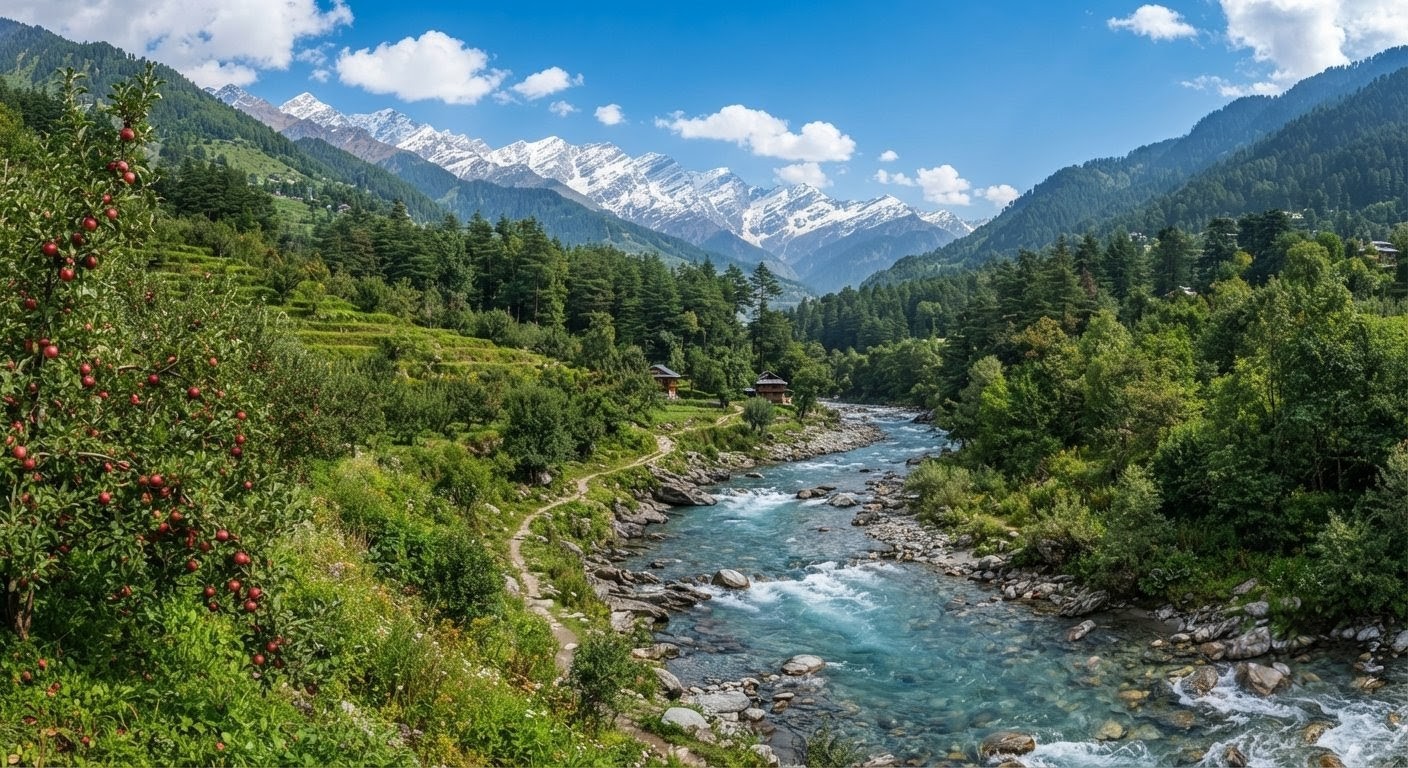
If you are searching for a Himalayan getaway that still feels wild, Tirthan Valley in Himachal Pradesh is one of the last Himalayan destinations where a river still flows freely without dams. Hidden in the Kullu district, this peaceful valley combines crystal-clear waters, world-class trout fishing, eco-tourism, and access to the Great Himalayan National Park, making it one of India’s most rewarding nature escapes.
That last part matters more than it sounds. Almost every other valley in Himachal has been dammed for hydel power. Tirthan Valley is the exception, and that single fact shapes everything about what you will experience here, from the sound of the river to the trout swimming in it to the way local communities earn their living.
This guide covers what makes Tirthan Valley worth visiting, how trout fishing works here, the best time to go, how to reach the valley, and answers to the questions most travelers ask before booking a trip.
Table of Contents
What Makes Tirthan Valley Different From Other Himachal Destinations
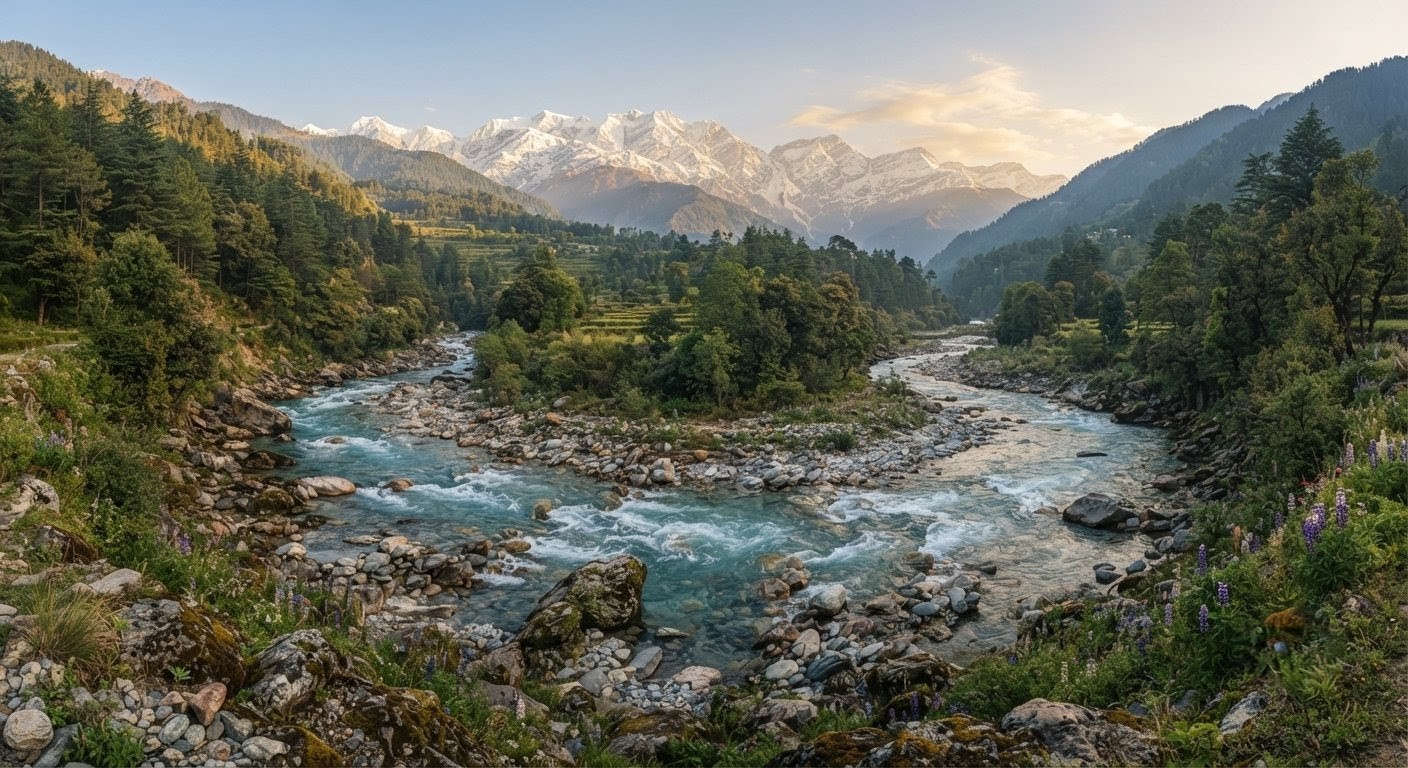
Most hill stations in Himachal Pradesh have grown around roads, markets, and hotels built for volume tourism. Tirthan Valley grew around the river instead.
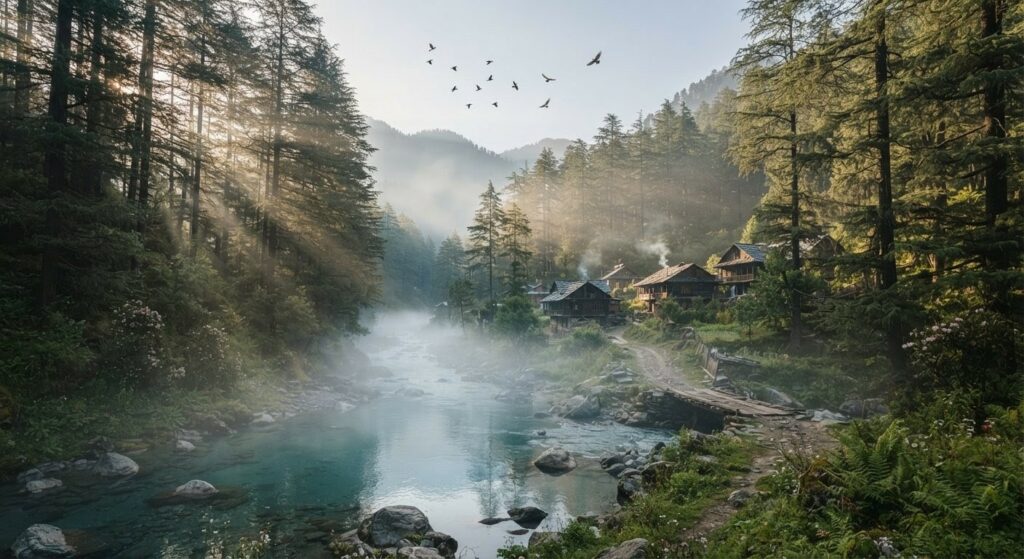
Himachal Pradesh has more dams and hydel power projects per capita than any other state in India, and most valleys have at least one. Tirthan Valley was originally slated for seventeen proposed dams. None of them were built, thanks to sustained opposition from local residents. That decision, made decades ago, is the reason the valley looks the way it does today.
A Valley Built Around Conservation, Not Construction
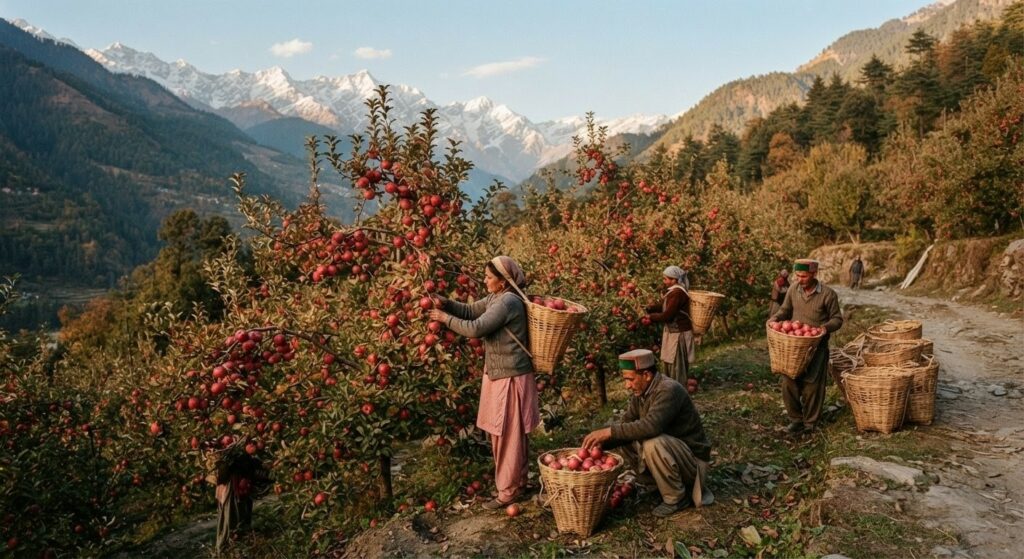
Instead of turbines and reservoirs, Tirthan Valley built its economy around eco tourism. There is no industrial zone here, no waste flowing into the river, and no smoke stacks on the skyline. What you find instead are orchards heavy with apples, pears, apricots, and persimmons, homestays run by local families, and a river clean enough to support wild trout.
Trout Fishing in Tirthan Valley
Ask most visitors why they came to Tirthan Valley and fishing is usually part of the answer. The Tirthan river is known across India and beyond for its trout, and angling here draws visitors from as far as Europe and the US.
Rainbow Trout vs Brown Trout in the Tirthan River
Two types of trout live in the Tirthan river, and knowing the difference matters if you plan to fish here.
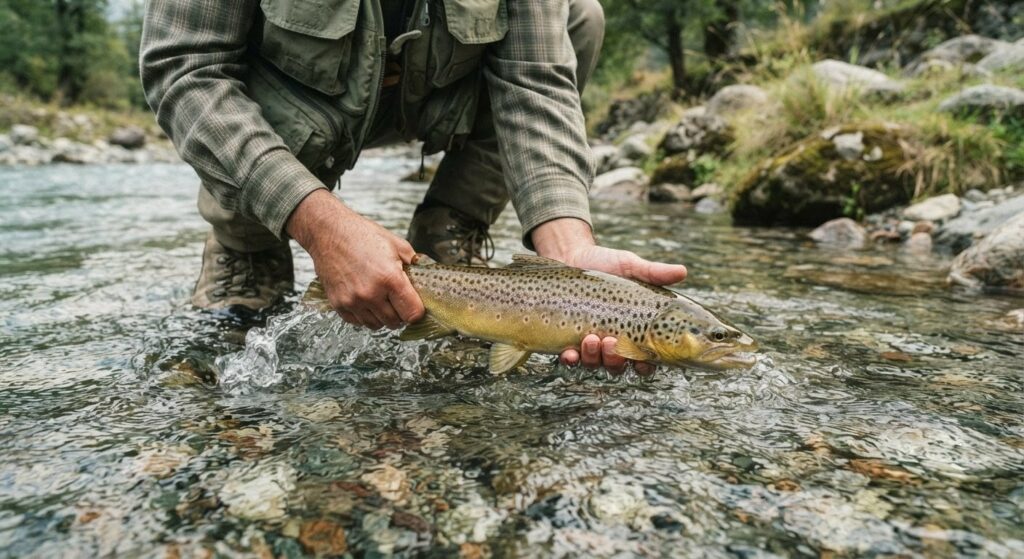
- Brown trout are wild and native to the river. Anglers almost always release brown trout back into the water.
- Rainbow trout are raised in government run hatcheries and released to keep the population stable. Anglers occasionally keep a rainbow trout, though most release these too.
This catch and release culture is not just tradition. A healthy trout population means steady income for the valley, so protecting fish stocks is directly tied to local livelihoods.
How Fishing Permits and Ghillies Work
You will need a fishing permit issued by the Himachal Pradesh Fisheries department to fish legally in Tirthan Valley. Daily permits typically allow a limited catch with conditions attached, and local ghillies, residents who work as fishing guides, help enforce the rules on the ground. Ghillies watch for anglers fishing without permits and for anyone polluting the river, which keeps the ecosystem in check without heavy government policing.
What a Day of Fly Fishing on the Tirthan Looks Like
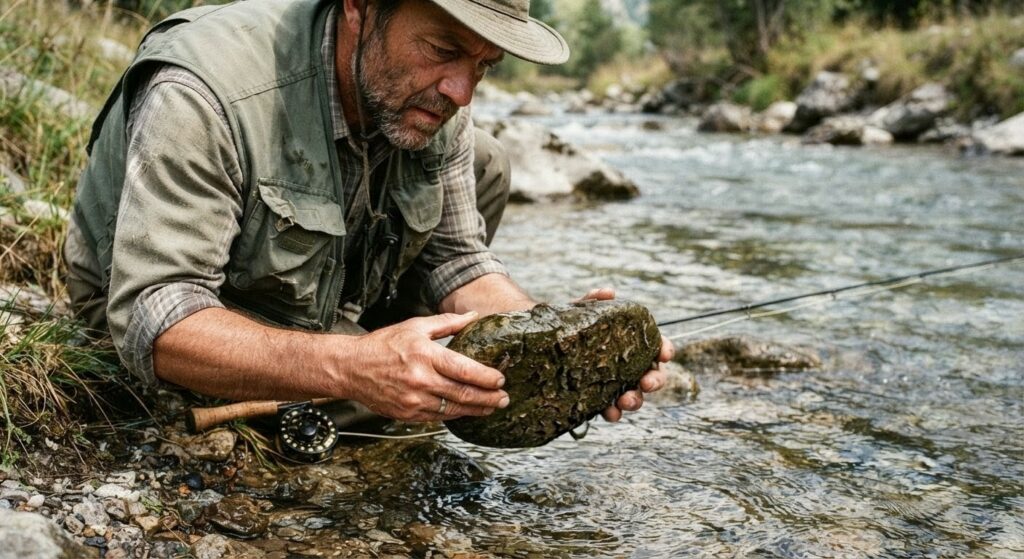
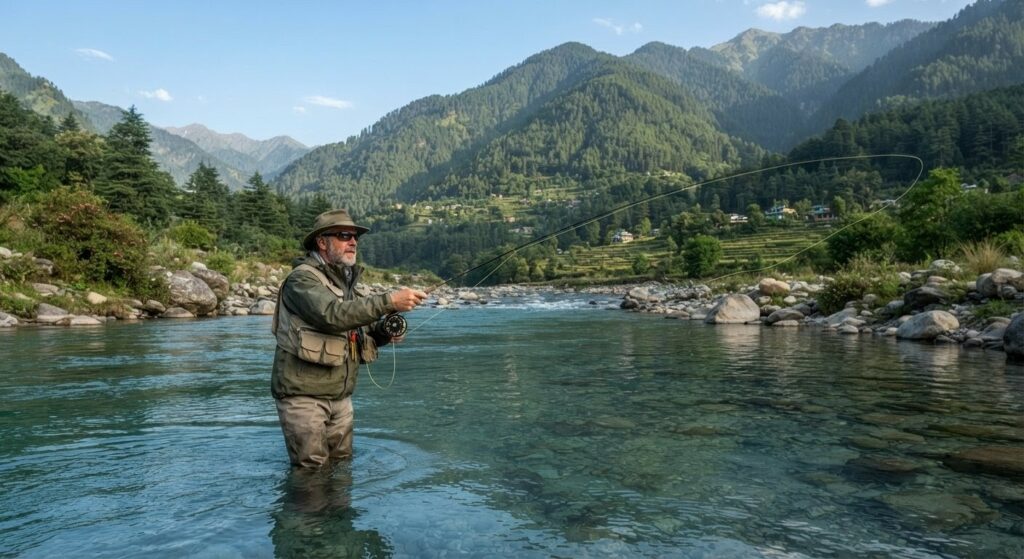
Fly fishing here is unhurried by design. A typical day starts early, before the sun fully clears the ridgeline. Anglers study the river before casting a single line, checking where the current runs deep, where fish are rising, and what insects are hatching that morning. Turning over a streambed stone or two often reveals exactly what the trout are feeding on.
From there, it is a slow back and forth along the bank, casting again and again, waiting for a subtle pull on the line. Most days bring long stretches of stillness broken by the occasional bite. When a trout is landed, it usually goes straight back into the water. The point was never really to keep the fish. It was to spend a few hours paying close attention to a river that rewards patience.
Things to Do in Tirthan Valley Beyond Fishing
Fishing draws a lot of visitors, but it is far from the only reason to come.
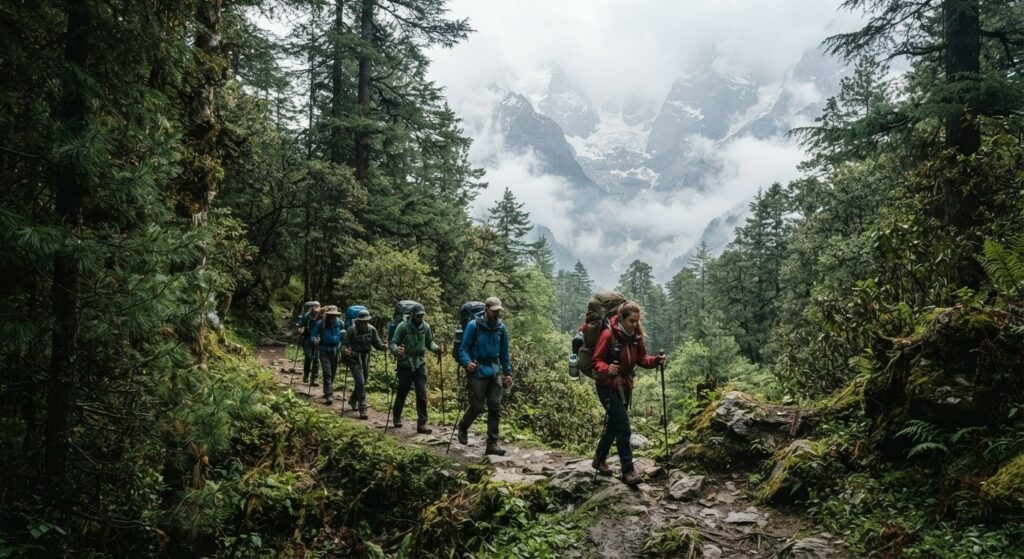
- Trek toward the Great Himalayan National Park. The park is a UNESCO World Heritage Site and home to species like the Western Tragopan and the Himalayan tahr. Permits are required for treks into the core zone.
- Walk to Chhoie waterfall or the twin waterfalls near Gushaini, both reachable on a half day hike.
- Visit Serolsar Lake through the Jalori Pass, a trail popular for its forest views and the Budhi Nagin temple along the way.
- Try river crossing or rock climbing, both offered by local homestays and adventure operators.
- Explore Raghupur Fort, a lesser known historical site above the valley.
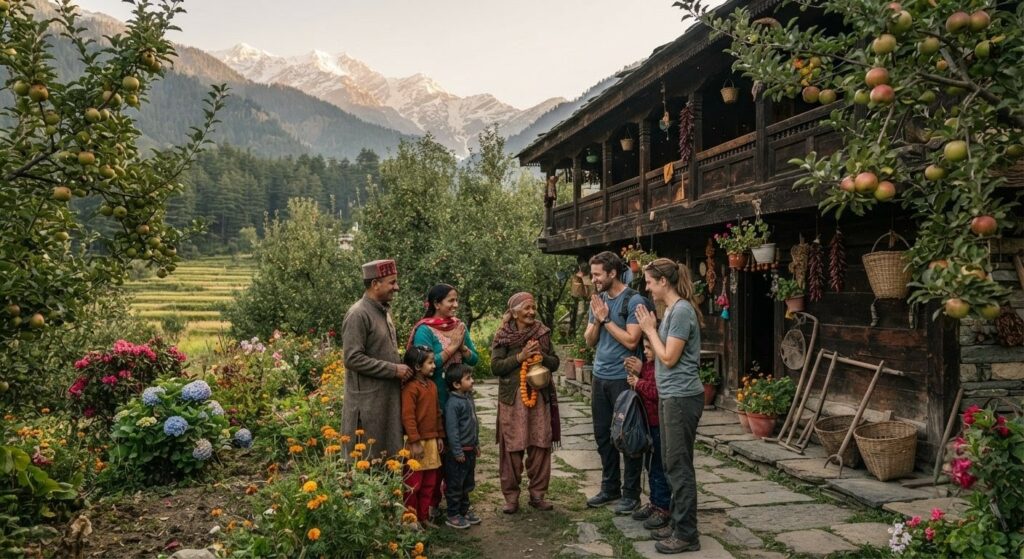
- Stay in a homestay in villages like Gushaini, Nagini, or Sai Ropa and eat local Himachali food such as sidu and babru.
How the Valley Supports Itself Without Dams or Factories
Tirthan Valley’s economy runs almost entirely on tourism tied to the river and its surrounding forest. The government earns revenue from angling permits and hatchery sales. Local families run homestays, manage orchards, and work as guides for trekkers and ghillies for anglers. None of this requires cutting forest cover or diverting the river, which is exactly why the model has held up as a long term alternative to hydel development.
Also Read: Odisha Tourist Destinations And Food Items
Best Time to Visit Tirthan Valley
The valley is pleasant for most of the year, but two windows stand out.
- March to June: Spring brings orchards into bloom and the weather stays mild, which also makes this a strong season for high altitude treks before summer heat sets in on the plains.
- September to November: Autumn brings clearer skies and is considered one of the best stretches for trout fishing.
Monsoon months from July to September bring heavy rain and are best avoided for trekking. Winters, from December to February, turn cold with occasional snow at higher points in the valley.
How to Reach Tirthan Valley
There is no railway station or airport directly in Tirthan Valley, so most journeys end with a road trip through Aut, a town on the Delhi-Manali highway.
- By air: Bhuntar Airport near Kullu is the closest, roughly 50 km away, with flights from Delhi and Chandigarh. From there, a taxi takes about two hours.
- By train: Chandigarh and Joginder Nagar are the commonly used railway stations, both still a few hours from the valley by road.
- By road: From Delhi, the drive covers roughly 500 km and takes 12 to 14 hours. Overnight Volvo or HRTC buses run from Delhi’s Kashmere Gate ISBT toward Aut, where you switch to a local bus or taxi for the final stretch to Banjar, Gushaini, or Jibhi.
Once you arrive, expect little to no mobile signal in the more remote parts of the valley, particularly beyond Gushaini. It is worth informing your homestay of your arrival time in advance.
FAQs About Tirthan Valley
Is Tirthan Valley good for a weekend trip?
It can work as a short trip if you are flying into Bhuntar, but most visitors find three to four days lets them fit in fishing, a short trek, and time to actually slow down, which is the point of visiting.
Do I need a permit to fish in Tirthan Valley?
Yes. Fishing without a permit from the Himachal Pradesh Fisheries department is not allowed, and local ghillies actively watch for unpermitted anglers.
Is Tirthan Valley safe for solo travelers?
Yes, the valley is generally considered safe and welcoming, with homestays being the most common and comfortable way to visit for solo travelers.
What is the difference between Tirthan Valley and Jibhi?
Jibhi and Tirthan Valley both sit within the broader Banjar Valley area, close to each other and often visited together. Jibhi tends to be slightly more developed for tourism, while Tirthan proper stays quieter.
Can I visit the Great Himalayan National Park from Tirthan Valley?
Yes. Tirthan Valley is essentially the gateway to the park. The outer ecozone near Gushaini and Sai Ropa is open to walk through freely, while deeper treks into the core zone require a permit and a registered guide.
Why the Tirthan River Is Worth Protecting
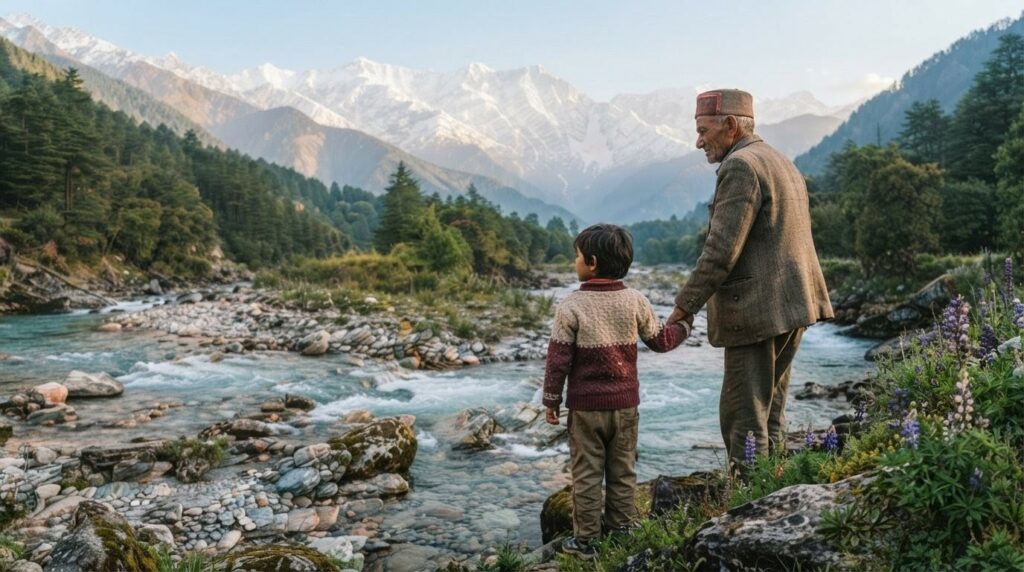
Development across the Himalayas has often meant more dams, more concrete, and less river. Tirthan Valley shows what the alternative looks like. A river left to run free can still support an entire local economy, just through fishing permits, homestays, and guided treks instead of turbines.
That balance is the real reason people keep coming back to Tirthan Valley. Not just for the trout, or the waterfalls, or the orchards, but for a rare chance to see what an unspoiled Himalayan river valley actually looks like.
Also Read: Bihar Tourism: Land of History and Culture

