


India’s skewed sex ratio at birth continues to be a challenge. Despite decades of laws and programmes, the preference for sons still continues to threaten the survival of daughters. States like Haryana show signs of improvement, while others, such as Karnataka, have experienced worrying declines.
In 2020, Pune’s municipal data recorded 946 girls per 1,000 boys at birth. By 2024, this number had fallen to 911. For a city known for its educational institutions and urban progress, this is a stark warning of gender bias embedded in the culture. Activists believe the decline reflects systemic failure in enforcing the Pre-Conception and Pre-Natal Diagnostic Techniques (PCPNDT) Act, 1994, which was passed to prevent female foeticide and improve the declining child sex ratio in India.
Even as authorities verify ‘Form F’ submissions (required for ultrasounds to prevent misuse of diagnostics) and raid unregistered sonography centres, many pregnant women—either fearful or complicit—often refuse to cooperate, rendering sting operations and prosecutions ineffective.

Table of Contents
Enforcement Gaps and the Last Mile Problem in India’s Skewed Sex Ratio
The PCPNDT Act (amended in 2003) is meant to regulate the use of diagnostic techniques for prenatal testing and outlaw sex determination. Yet in practice, local bodies like Pune Municipal Corporation complain that they lack adequate manpower, technical capacity, and incentives to bring about aggressive compliance.
Furthermore, doctors and diagnostic centres argue that prosecutions often collapse on technicalities: forms not filled correctly, inadequate documentation, or lack of explicit confession. Pune, though, is definitely not an outlier.
Media reports and studies of centres continuing clandestine sex determination with impunity are common.
Also Read: Must Know Legal Rights for Every Working Woman

India’s Skewed Sex Ratio Across Different States
Across India, sex ratio at birth (SRB) has long hovered well below the natural biological norm of 950–975 girls per 1,000 boys (or 105 male births per 100 female births).
The Sample Registration System reports sex ratios at birth in the past decade fluctuating between 900 and 930 girls per 1,000 boys.
Among the states that have shown progress are Haryana, which improved its deeply skewed sex ratio (around 832) to over 870 in recent years, and Rajasthan, which moved from 857 to 911.
On the other hand, Bihar and Karnataka saw deterioration.
According to the Sample Registration System Statistical Report 2020, Bihar’s sex ratio at birth was about 895 girls per 1,000 boys in 2014-16, while Karnataka’s dropped to around 916 in 2018–20, compared to higher levels in previous years.
In Maharashtra, the fifth National Family Health Survey 2019-21 (NFHS-5) reported a sex ratio at birth of 913 girls per 1,000 boys, down from 924 in NFHS-4 (2015-16).
These inter‐state contrasts reflect differing enforcement zeal, social norms, and programmatic interventions.
How States Are Improving India’s Skewed Sex Ratio
While some states have recorded progress, India’s skewed sex ratio continues to reflect deep-rooted social and cultural preferences that cannot be addressed through legislation alone.
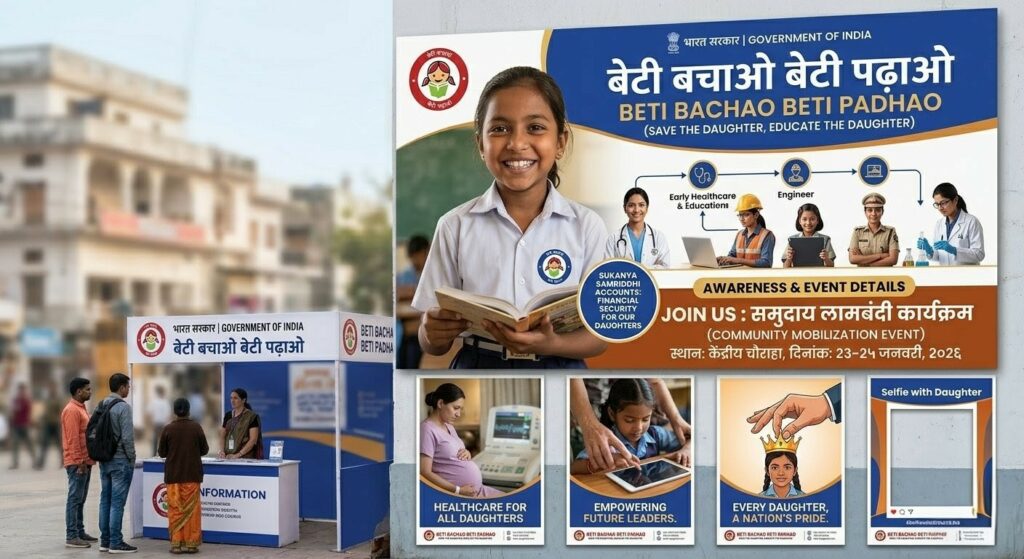
India’s flagship response to the declining sex ratio at birth has been the Beti Bachao Beti Padhao (BBBP) initiative, which was launched in 2015 to prevent gender-biased sex selection, ensure survival/development of the girl child, and promote education. A mid‐term evaluation suggests that in many districts, SRB improved by the mid to late 2010s, especially where community mobilisation and district‐level accountability were strong.
A few states, including Haryana, track post-abortion records to detect suspicious sex‐selective terminations. It recently proposed issuing unique IDs to pregnant women, linking scans to those IDs to prevent misuse. In addition, Haryana’s “Daughters’ Nameplate” campaign has also encouraged families to proudly display nameplates for newborn girls as part of a broader social change push.
Stricter licensing and audits, coordination of NGOs with civil society and a multisectoral approach tying female education, financial incentives and health infrastructure with gender programming have created a longer‐term shift in norms.
In districts where enforcement was backed by community vigilance, SRB gains were observed to be more durable.

Persistent Causes Behind India’s Skewed Sex Ratio
Mid-term evaluations of Beti Bachao Beti Padhao, NFHS data, media investigations, qualitative studies by NGOs, and Parliamentary Committee Reports on the PCPNDT Act show that the decline in sex ratio at birth is driven by multiple interconnected factors.
The persistence of India’s skewed sex ratio is driven by multiple interconnected factors, including son preference, weak enforcement, social pressure, and gaps in monitoring systems.
Deep-seated son preference continues to influence families, who favour male children for lineage, inheritance, old-age security, and ritual roles, despite broader economic and social changes.
Smaller family sizes have intensified this bias, as parents with fewer children feel greater pressure to “ensure” a son. Weak deterrents for violators exacerbate the problem, as fines, license cancellations, or legal action often fail to prevent clinics or doctors from flouting the law, partly because prosecutions are delayed or collapse on technicalities.
On the demand side, these sources show that pregnant women under pressure from husbands or in-laws may resist enforcement or seek extra-legal scans outside the jurisdiction. Data and reporting gaps, including misreporting of births, movement of pregnancies across districts, and lagging transparency, obscure the true scale of the problem.
Across India, the more successful states have combined strict enforcement with social norm transformation.
Addressing India’s skewed sex ratio requires more than a legal regime. It needs vigilant citizens, willing mothers, and accountable institutions. Unless small towns and metros hold health systems accountable, the newborn girl will remain vulnerable. Changing that will require alignment of regulation, technology, social change, and uncompromising accountability.
Also Read: Women in Forest Management: Challenges and Solutions

